TRENDING

Monday, 5 October 2026
----------------------
24 Rabi' Al-Thani 1448 AH
Pope Leo XIV's symbolic visit to Lampedusa, Italy, served as a powerful rebuke to restrictive migration policies in the US and EU, underscoring the Vatican's role as a moral authority in global affairs. The visit highlighted the humanitarian crisis in the Mediterranean and called for humane, shared responsibility in addressing international migration.
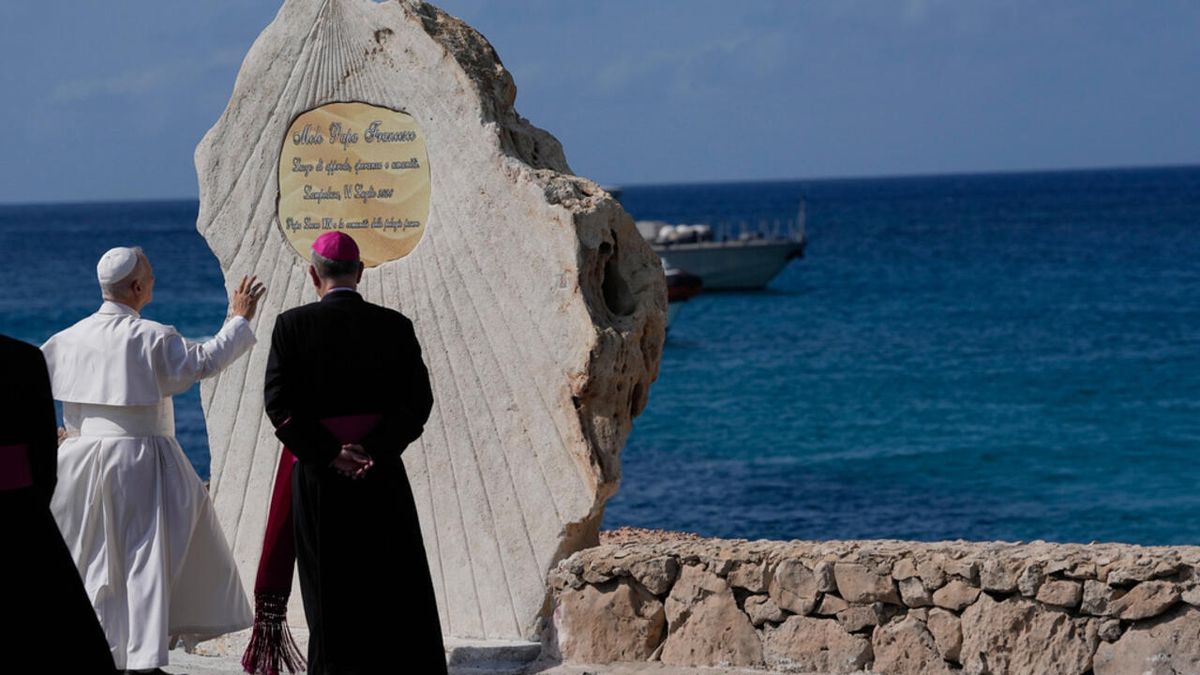
On July 4, 2026, Pope Leo XIV undertook a highly symbolic pastoral visit to Lampedusa, Italy, a small Mediterranean island that serves as a critical frontline in Europe's ongoing migration crisis. The visit, strategically timed to coincide with the 250th anniversary of US independence, was widely interpreted as a direct challenge to increasingly restrictive immigration policies in both the United States and the European Union. This event underscores the Vatican's persistent role as a moral voice in global affairs, particularly on humanitarian issues, and highlights the complex geopolitical dimensions of international migration.
The Context of the Visit: A Moral Rebuke to Hardening Policies
Pope Leo XIV, the first American pontiff, has consistently made the defense of migrants a cornerstone of his papacy, echoing the stance of his predecessor, Pope Francis, who also chose Lampedusa for his inaugural trip in 2013. His arrival on the island, located just 90 miles off the coast of Tunisia, came barely two weeks after the European Union approved new migrant rules that grant broader detention powers and facilitate the creation of deportation centers outside the bloc. This policy shift, aimed at hardening border protections and deterring irregular migration, stands in stark contrast to the Pope's call for "safe and legal pathways" for immigration and "shared responsibility" over "borders and deterrence."
Furthermore, the Pope's decision to mark the United States' Independence Day on a migration frontline carried significant weight. He has previously clashed with the administration of US President Donald Trump over its treatment of migrants, describing certain measures as "inhuman." In a speech preceding his Lampedusa visit, Pope Leo XIV called for "moderation" in US public discourse and emphasized how "successive waves of immigrants" have shaped the nation. By choosing this particular date and location, the pontiff leveraged a moment of national celebration in his home country to deliver a global message on human dignity and the historical contributions of migrants, implicitly criticizing policies that diverge from these ideals.
Lampedusa: A Symbol of Crisis and Compassion
Lampedusa itself is more than just a geographical waypoint; it is a potent symbol of the human cost of the migration crisis. The island has witnessed countless tragedies, including the 2013 shipwreck that claimed over 360 lives, and continues to be the primary landing point for thousands of migrants attempting the perilous Central Mediterranean crossing from North Africa. This route is recognized by the International Organization for Migration (IOM) as the deadliest in the world, with approximately 1,330 people reported dead or missing in the previous year alone. The Pope's actions on the island – praying at the unmarked graves of shipwreck victims, speaking with migrant families, and standing at the "Door of Europe" monument – served to humanize the crisis and draw global attention to the urgent need for increased search and rescue efforts.
The islanders of Lampedusa, a community of 6,000, have long been praised by the Vatican for their generosity and compassion towards arriving migrants, often despite their own limited resources. This local response stands as a counter-narrative to the broader political rhetoric of deterrence and border control, highlighting the moral imperative of humanitarian aid and solidarity.
Geopolitical Implications and the Vatican's Role
Pope Leo XIV's visit carries significant geopolitical implications. It represents a powerful exercise of soft power by the Holy See, using moral authority to influence international policy and public opinion. By directly challenging the migration policies of major global actors like the EU and the US, the Vatican positions itself as a leading advocate for human rights and international law, particularly concerning vulnerable populations. This stance can create diplomatic pressure, encourage debate within political blocs, and potentially galvanize civil society organizations and faith-based groups to advocate for more humane migration policies.
For Europe, the Pope's intervention complicates the narrative surrounding the EU's new migration pact. While member states seek to manage borders and address internal political pressures, the Vatican's moral critique introduces an ethical dimension that cannot be easily dismissed, especially in predominantly Catholic countries. It highlights the internal tension within Europe between security concerns and humanitarian obligations.
For the United States, the Pope's criticism of its immigration policies, particularly from an American pontiff, adds a unique layer of domestic and international scrutiny. It underscores the global perception of US immigration practices and could influence public discourse and policy debates within the country.
In essence, Pope Leo XIV's visit to Lampedusa was not merely a pastoral trip but a carefully orchestrated geopolitical statement. It served to re-center the global conversation on migration around humanitarian principles, challenging the prevailing political discourse focused on borders and deterrence. The ongoing crisis in the Mediterranean, exacerbated by geopolitical instability in North Africa and the Middle East, ensures that migration will remain a critical issue demanding coordinated international responses, with the Vatican continuing to play a significant, morally-driven advocacy role.
Source referenced: FRANCE24
This brief was synthesized by our Editorial Engine and reviewed by The Ground Narrative team.


