TRENDING

Thursday, 17 September 2026
----------------------
6 Rabi' Al-Thani 1448 AH
A Russian drone struck a petrol station and a train near the Poland‑Ukraine frontier, prompting Warsaw to vow a “non‑provocative but serious” response. The incident lays bare the shifting calculus of Polish security, public opinion, and NATO’s eastern flank.
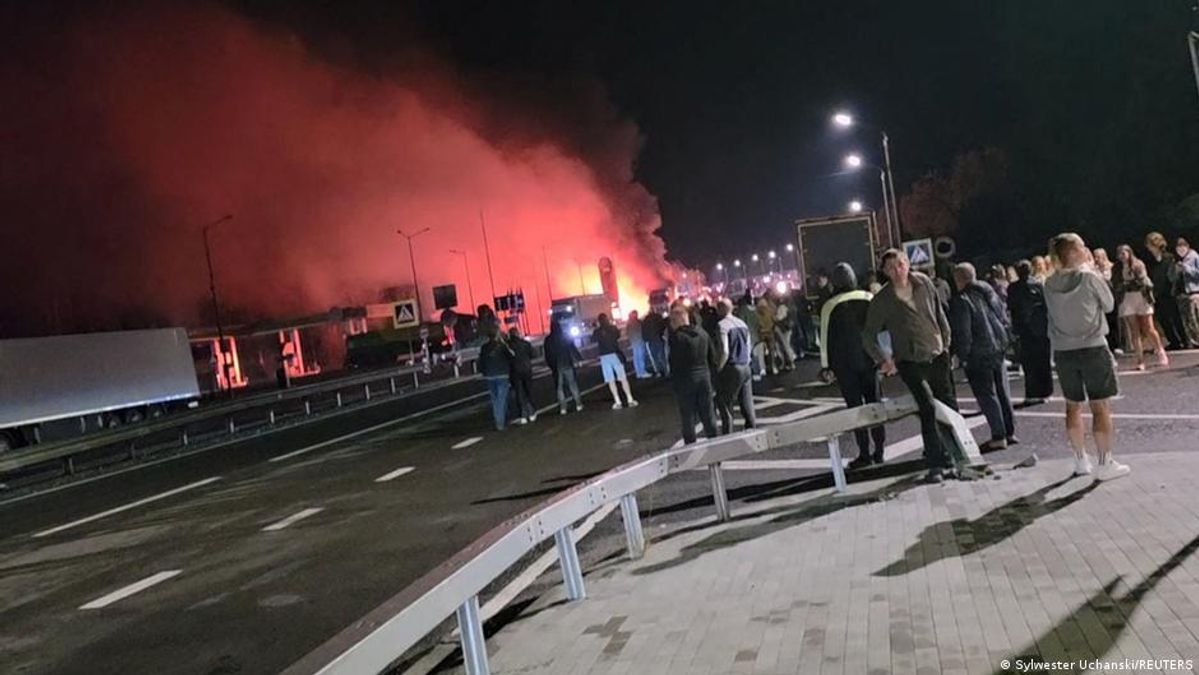
On Sunday a Russian‑launched drone hit a petrol station and the locomotive of a passenger train just inside Ukraine, close to the Dorohusk‑Yahodyn crossing that borders Poland. The attack forced the evacuation of a Kyiv‑Warsaw train carrying former European leaders and security experts, none of whom were harmed. Polish officials, led by Prime Minister Donald Tusk and Deputy Prime Minister Władysław Kosiniak‑Kamysz, framed the strike as a direct escalation and pledged a “non‑provocative but serious” response while convening senior military commanders.
Poland’s response is shaped by three intersecting incentives. First, geographic proximity: a spillover at the border threatens Polish territory and forces the government to demonstrate deterrence credibility to NATO allies. Second, domestic political survival: the ruling Civic Platform must balance a waning public appetite for aid to Kyiv—support has fallen from 77% in 2022 to just over half—against the risk of being portrayed as soft on Russian aggression. Third, Alliance calculus: Warsaw seeks to extract a coordinated NATO posture, using the incident to press for forward‑deployed assets or air‑defence upgrades that it cannot fund alone. The drone’s jet‑engine design signals a Russian shift toward faster, harder‑to‑intercept weapons, forcing Poland to reconsider its air‑space monitoring and border‑security budget allocations.
The human toll extends beyond the symbolic gas station. Residents of border towns now face heightened anxiety, disrupted commerce, and the specter of further strikes on civilian infrastructure. Ukrainian refugees in Poland, already strained by housing shortages, risk being caught in a security clampdown that could limit cross‑border movement. Polish railway workers, tasked with rerouting trains and repairing damaged tracks, confront longer hours and safety hazards without additional compensation. Meanwhile, the broader Polish electorate—particularly older voters in rural areas—feel the pressure of rising energy prices as attacks target fuel supplies, deepening economic insecurity.
Official statements stress a “non‑provocative” stance, yet they omit the strategic messaging behind the drone’s target selection. By striking a fuel depot and a rail line that feeds Warsaw, Moscow signals that any Polish support for Kyiv carries a direct cost to Polish civilians. The narrative also downplays the propaganda battle within Poland: Russian media and covert networks have been amplifying anti‑Ukrainian sentiment, a factor the government acknowledges only in vague references to “forces spreading Russian propaganda.” What remains hidden is the extent to which NATO’s delayed delivery of modern air‑defence systems leaves Poland vulnerable, a gap that Moscow may be exploiting to test the alliance’s resolve.
Watch for three developments. 1) Polish defence procurement: any acceleration of Patriot, SAMP/T, or indigenous systems will reveal how Warsaw translates rhetoric into capability. 2) NATO’s diplomatic response: a joint statement or concrete deployment to Poland’s eastern flank will indicate whether the alliance views the border attacks as a trigger for collective action. 3) Domestic polling trends: a sharp dip in support for Ukrainian aid could pressure the government to scale back assistance, altering the strategic balance in the region. The interplay of these factors will determine whether Poland remains a bulwark for Kyiv or is forced into a more cautious, self‑preserving posture.
Source referenced: DW
This brief was synthesized by our Editorial Engine and reviewed by The Ground Narrative team.


