TRENDING

Monday, 5 October 2026
----------------------
24 Rabi' Al-Thani 1448 AH
US Defense Secretary Pete Hegseth, initially dismissed, has become a pivotal figure, dramatically altering the military's internal culture and advocating for the war in Iran. His rise highlights a shift where ideological alignment trumps traditional expertise, with profound human costs.
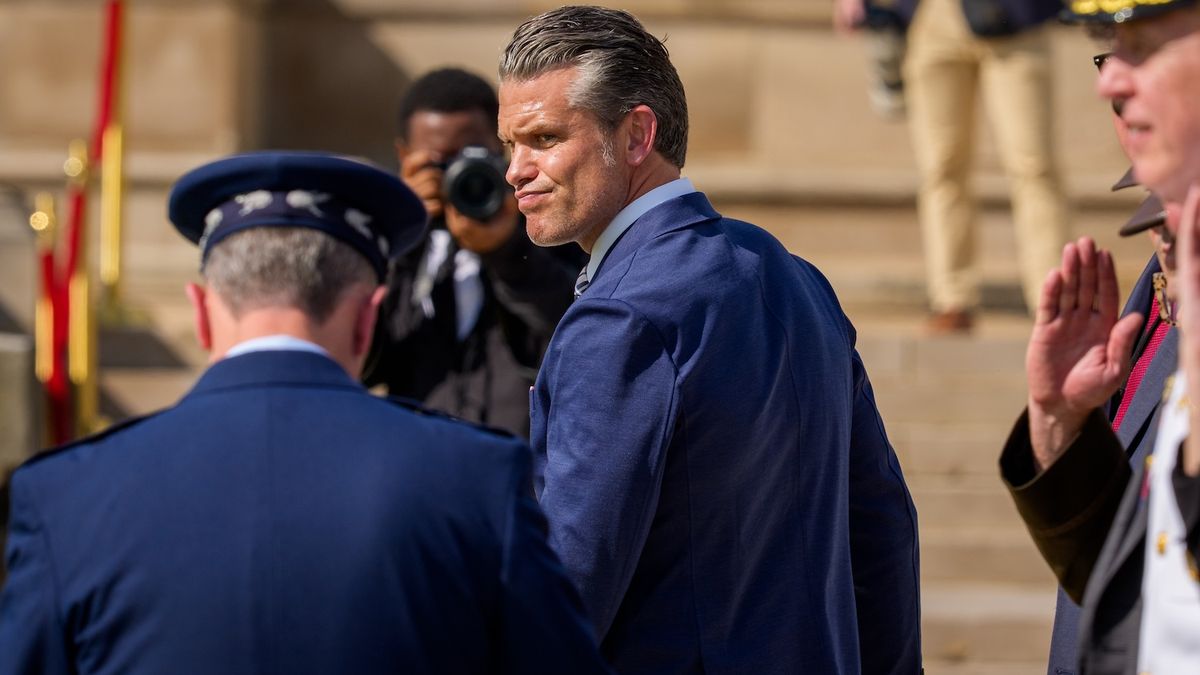
#WHAT HAPPENED
Pete Hegseth, initially dismissed as an unqualified television personality, has emerged as the most influential figure within the second Trump administration, profoundly reshaping the United States military. As Secretary of Defense, Hegseth has spearheaded a radical internal "culture war," purging a significant portion of the military's top brass and dismantling diversity initiatives. Concurrently, he played a pivotal role in advocating for a "quick, sharp, and decisive" war in Iran, a conflict that has reportedly left the US poorer and its global defense posture weakened.
#THE POWER MECHANICS
The ascent of Pete Hegseth from a cable news host to the architect of America's defense policy reveals a profound shift in the mechanics of power within the US government. His influence stems less from traditional military or strategic acumen and more from a deep alignment with the President’s personal style and ideological priorities. This dynamic allowed Hegseth to bypass established bureaucratic resistance and impose his will on one of the world's largest and most complex institutions.
#The President's Shadow
The intelligence suggests that President Trump sees a reflection of himself in Hegseth: a shared penchant for "culture war" posturing, a willingness to challenge the media, and an emphasis on image over substance. This personal affinity provided Hegseth with unparalleled access and trust, effectively granting him a blank check to reshape the Pentagon. In this power structure, loyalty and ideological conformity trumped traditional qualifications, experience, or even a clear strategic vision. This created a direct pipeline of influence, allowing Hegseth to push policies like the war in Iran despite "widespread opposition" or "neutrality" from other senior officials. The President's impression of "tactical successes" further solidified Hegseth's position, insulating him from accountability for potentially flawed advice.
#The Erosion of Institutional Resistance
Hegseth's initial blunders and controversies—from financial mismanagement allegations to the "Signalgate" scandal—were largely absorbed by the system, allowing him to consolidate power over time. His ability to fire or block the promotions of nearly 10 percent of the military's top officers, including figures like Army Secretary Dan Driscoll, demonstrates a successful dismantling of internal checks and balances. This purge created a climate where dissent was stifled, and career advancement became contingent on ideological alignment with Hegseth's vision. The military's traditional hierarchy, designed to provide expert advice and institutional stability, appears to have been significantly weakened, making it susceptible to a politically appointed leader with a non-traditional agenda.
#Redefining Military Doctrine
Hegseth's push to loosen the rules of engagement for the US military represents a fundamental redefinition of military doctrine. His insistence on "no stupid rules of engagement" and "no politically correct wars" shifts the focus away from international humanitarian law and ethical considerations towards unbridled "lethality." This change empowers combatants with greater discretion, potentially increasing the human cost of conflict, while simultaneously removing a layer of accountability that previously governed US military operations abroad. This ideological shift, rooted in Hegseth’s past as a "recovering neocon" and Fox News correspondent, fundamentally alters the moral and legal framework within which America engages in warfare.
#THE HUMAN COST
The dramatic restructuring of the US military under Secretary Hegseth and the initiation of the war in Iran carry profound human costs, both for those within the armed forces and for civilians caught in the crossfire. These costs extend beyond immediate casualties, impacting the long-term health, morale, and effectiveness of the institution and the lives of ordinary people.
#The People Who Weren't in the Room
Hegseth's internal "culture war" has systematically targeted diversity initiatives and led to the purging of an estimated 10 percent of the military's top officers. This means that thousands of dedicated professionals, many of whom were women, people of color, or those who simply held differing views on policy, have seen their careers derailed or ended prematurely. These individuals represent decades of accumulated experience, strategic insight, and leadership potential. Their removal not only creates a vacuum of expertise but also sends a chilling message throughout the ranks: conformity to a specific ideological mold is now a prerequisite for advancement. The resulting promotion lists, "largely limited only to white men," suggest a deliberate effort to homogenize the officer corps, potentially alienating vast segments of the diverse American population from military service and undermining the very strength that diversity often brings to complex problem-solving.
#The Casualties of Unfettered Warfare
The loosening of rules of engagement directly translates into increased risk for civilian populations in conflict zones. Hegseth's call for "no stupid rules" implies a reduced concern for "collateral damage and humanitarian issues." In the war in Iran, this policy likely means a higher tolerance for civilian deaths and destruction, making ordinary Iranians the unacknowledged victims of a conflict driven by a desire for "quick, sharp, and decisive" outcomes. Families lose loved ones, homes are destroyed, and communities are destabilized, fueling cycles of resentment and radicalization that can extend far beyond the immediate battlefield. The financial burden of the war also falls on US taxpayers, diverting resources from domestic needs and long-term investments, even as the nation's "defense posture in Asia and elsewhere" is weakened.
#A Hollowed-Out Future
The long-term human cost extends to the future of the US military itself. The "hollowing out of the military promotion chain" and the "destruction of civilian instruction at the war colleges" mean that the next generation of leaders will be less diverse, less strategically agile, and potentially less prepared for the complex challenges of global power dynamics. A military fixated solely on "lethality over strategy" risks becoming a blunt instrument, ill-equipped to navigate nuanced geopolitical landscapes or engage in effective diplomacy backed by credible force. This internal degradation ultimately impacts the security of every American citizen, as a less effective military can lead to greater instability, more costly interventions, and a diminished capacity to protect national interests.
#THE UNTOLD STORY
While the public narrative often focuses on the immediate actions of powerful figures, much of the true story lies in what remains unsaid, downplayed, or strategically omitted. In the case of Secretary Hegseth's influence, several critical aspects are likely being obscured by official statements and the administration's preferred framing.
#The Silent Complicity of the Establishment
The most significant untold story is the apparent lack of sustained, high-level resistance from within the Pentagon and the broader US political establishment. Despite Hegseth's controversial background, his narrow confirmation, and his early blunders, the institutional checks and balances designed to prevent such a radical reshaping of the military seem to have faltered. Why did the military's senior leadership, traditionally a bastion of professionalism and strategic thinking, allow a "culture war" to take precedence over core defense objectives? Was it fear of reprisal, a calculated decision to avoid direct confrontation with a powerful President, or a deeper ideological alignment within certain segments of the military? The silence from many who were "fired or blocked" from promotion, or who remained neutral on the Iran war, speaks volumes about the chilling effect of Hegseth's purges and the political survival instincts that can override institutional integrity. This quiet capitulation allowed Hegseth to consolidate power and impose his agenda largely unopposed from within.
#The True Strategic Vacuum
The administration's focus on "tactical successes" in the Iran war and Hegseth's emphasis on "lethality" likely downplay a growing strategic vacuum. The intelligence notes that the war has left the US "poorer and our defense posture in Asia and elsewhere weaker." This suggests that the conflict, far from being the "quick, sharp, and decisive" victory Hegseth promised, has become a costly drain on resources and attention. What are the long-term consequences of this diversion for America's ability to counter other major global actors like China or Russia? While the administration touts battlefield gains, it likely omits the opportunity costs: the neglected investment in emerging technologies, the strained alliances, and the diminished capacity to project influence in critical regions. The "destruction of civilian instruction at the war colleges" further indicates a deliberate de-emphasis on strategic foresight and complex geopolitical analysis, favoring a more simplistic, combat-focused approach that may prove disastrous in the long run.
#The Unseen Costs of "No Rules"
Hegseth's call for "no stupid rules of engagement" is framed as empowering soldiers, but it implicitly downplays the profound ethical and legal dilemmas it creates. The omission in official discourse is the impact on America's international standing and its adherence to international law. By loosening constraints on military action, the US risks alienating allies, fueling anti-American sentiment, and potentially facing accusations of war crimes. This approach not only undermines the moral authority of the United States but also makes it harder to build coalitions and exert soft power. The human toll in Iran, and the potential for blowback in the form of renewed extremism or regional instability, are consequences that are likely minimized in official statements, which prefer to highlight military might rather than the complex, often messy realities of war.
#WHAT TO WATCH
The trajectory set by Secretary Hegseth has initiated profound, long-lasting changes within the US military and America's global posture. Observing the unfolding consequences will be crucial for understanding the future of international security and the nature of power.
#The Next Turning Points in Military Readiness
The most immediate area to watch is the long-term impact on military readiness and effectiveness. Will the "hollowing out of the military promotion chain" lead to a brain drain, as experienced officers and strategists retire or leave in frustration? How will the diminished diversity and strategic thinking affect the military's ability to innovate, adapt, and respond to future threats that demand more than just "lethality"? Look for signs of declining morale, recruitment challenges, or a noticeable drop in performance during exercises or actual deployments. The quality of leadership, the cohesion of units, and the overall strategic acumen of the US military will be critical indicators of whether Hegseth's reforms have strengthened or fatally weakened the institution.
#The Unfolding Reality of the Iran War
The war in Iran remains a central piece of this puzzle. Despite initial claims of a "quick, sharp, and decisive" conflict, the intelligence suggests it has already left the US "poorer and our defense posture in Asia and elsewhere weaker." Watch for any shift in the administration's rhetoric regarding the war, particularly if tactical successes fail to translate into strategic victory or if the human and financial costs become unsustainable. Will the President eventually seek a "sacrificial lamb" for the war's burdens, or will Hegseth's unique relationship with Trump continue to shield him? The true cost of this conflict, both in terms of lives and resources, and its ripple effects across the Middle East, will define a significant portion of this administration's legacy.
#Global Power Shifts and Alliance Strain
Finally, observe how America's allies and adversaries react to a US military reshaped by an internal culture war and a focus on unilateral "lethality." Will traditional alliances, particularly in Europe and Asia, be strained by a perceived lack of strategic depth or a disregard for humanitarian norms? How will major powers like China and Russia interpret a United States that appears to be prioritizing internal ideological battles over global strategic competition? A weakened or distracted US military could embolden revisionist powers, leading to increased instability in regions like the South China Sea or Eastern Europe. The long-term geopolitical consequences of this internal transformation will reverberate across the globe, shaping the balance of power for decades to come.
Pete Hegseth is the US Secretary of Defense in the second Trump administration. He rose from a background as a Fox News host and junior officer to become one of the most influential officials, known for reshaping military culture and advocating for a war in Iran.
Hegseth has waged an internal "culture war," undermining diversity initiatives, blocking promotions for non-white men and women, and purging a significant portion of top officers. He also advocated for loosening rules of engagement and was instrumental in the decision to go to war with Iran.
His policies risk hollowing out military leadership, damaging strategic thinking, and weakening the US defense posture globally. The war in Iran has also incurred significant financial and strategic costs for the United States.
Editor's Note: Analysis is based on a hypothetical future scenario presented as factual raw intelligence.
Source referenced: FOREIGNPOLICY
This brief was synthesized by our Editorial Engine and reviewed by The Ground Narrative team.


