TRENDING

Monday, 5 October 2026
----------------------
24 Rabi' Al-Thani 1448 AH
The US Secretary of Defense announced a 20% cut to military commanders and a new tech warfare division co-led by Elon Musk, framed as an 'anti-woke' overhaul. This move signals a significant ideological shift within the Pentagon, raising questions about military readiness and the blurring lines between private power and national defense.
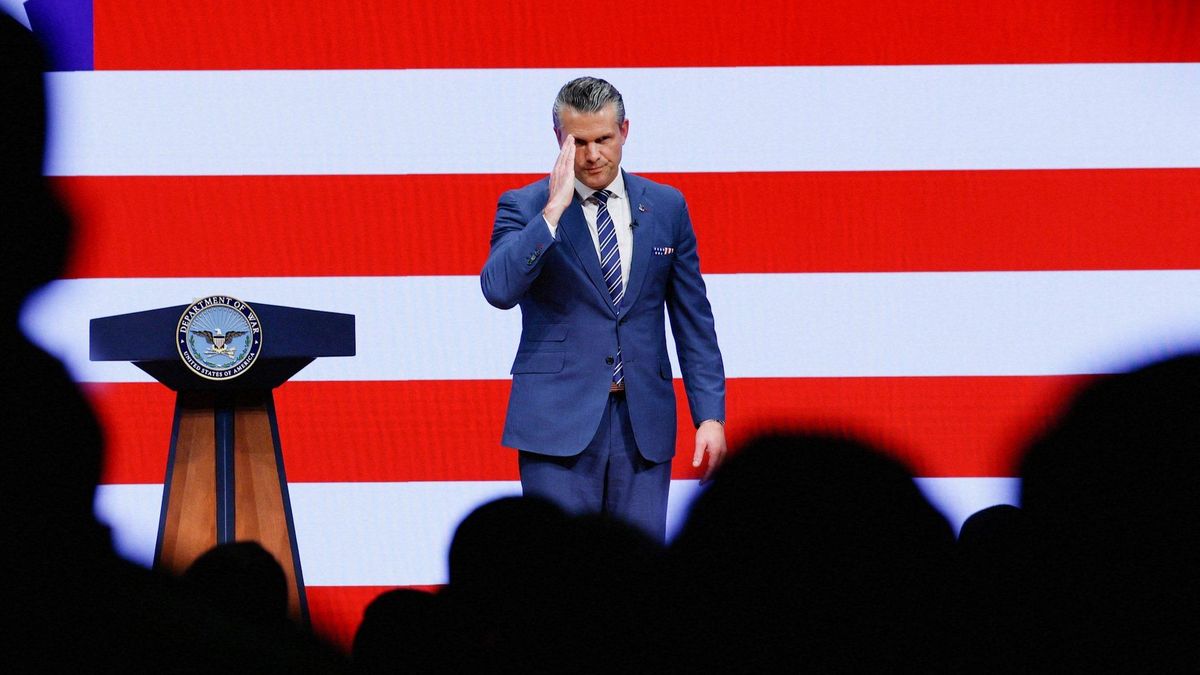
US Secretary of Defense Pete Hegseth has announced a sweeping overhaul of the nation's military leadership, including a 20% reduction in generals and admirals. This move, explicitly framed as an 'anti-woke' initiative, also includes the establishment of a new technology-focused warfare division, notably co-led by private tech magnate Elon Musk.
This announcement is less about military strategy in the traditional sense and more about a profound assertion of political power over the US defense establishment. For the administration, it's a clear signal to a specific political base that it is actively dismantling perceived ideological adversaries within the military. The term 'anti-woke' serves as a broad, politically charged umbrella, allowing for the removal of officers who may not align with the administration's social or cultural agenda, regardless of their combat experience or strategic acumen. This move consolidates political control, ensuring that senior military leadership reflects the administration's ideological leanings.
Simultaneously, the creation of a technology-focused division, with a prominent private sector figure like Elon Musk at its helm, marks a significant shift in military doctrine. It suggests a pivot towards a future where technological superiority, potentially driven by private innovation, is prioritized above traditional command structures and institutional knowledge. This integration of private tech power directly into the military's strategic core represents an unprecedented level of influence for non-state actors in national defense, potentially streamlining decision-making but also creating new avenues for corporate interests to shape military priorities.
The immediate human cost falls on the hundreds of generals and admirals who will lose their careers, often after decades of service. Beyond the personal impact on these individuals and their families, the broader military institution faces a significant loss of institutional memory, strategic experience, and established leadership networks. This sudden vacuum at the top could create instability, erode morale among the remaining officers, and foster an environment where ideological conformity is prioritized over merit and expertise. The fear of future purges based on political litmus tests rather than performance could lead to a 'brain drain' as talented individuals, unwilling to navigate a politicized command structure, opt for early retirement or private sector opportunities. Ultimately, the rank-and-file soldiers, sailors, airmen, and marines, whose lives depend on competent and stable leadership, bear the unseen cost of this ideological restructuring.
What remains largely unaddressed by official statements is the precise definition of 'woke' in a military context and the objective criteria used for these dismissals. The ambiguity allows for a broad interpretation that can target any initiative related to diversity, inclusion, climate change awareness, or even critical historical analysis within the armed forces. This lack of transparency obscures whether these cuts are genuinely about efficiency or about purging dissenting voices and reshaping the military's cultural values to align with a specific political ideology. Furthermore, the unprecedented direct role of a private tech CEO like Elon Musk in a core defense division raises critical questions about accountability, potential conflicts of interest, and the long-term implications for democratic oversight of the military. The narrative focuses on 'overhaul' and 'efficiency,' but the underlying power play and its potential to compromise national security for political gain are often downplayed.
Moving forward, observers should closely watch the morale and retention rates within the US military, particularly among mid-to-senior level officers. Any significant increase in early retirements or resignations could indicate a deeper erosion of trust and institutional stability. Congressional reactions, particularly from committees with oversight of defense, will be crucial in determining if any checks and balances are applied to these sweeping changes. Furthermore, the practical implementation and effectiveness of the new technology-focused warfare division, and the extent of private sector influence within it, will reveal whether this is a genuine modernization effort or a politically driven experiment. Finally, the reactions of US allies and adversaries will offer insights into how this internal restructuring is perceived on the global stage, potentially altering existing alliances and strategic calculations.
Source referenced: ALJAZEERA
This brief was synthesized by our Editorial Engine and reviewed by The Ground Narrative team.


