TRENDING

Wednesday, 11 November 2026
----------------------
1 Jumada Al-Thani 1448 AH
Despite official bans and heightened political tensions, Pakistan's imports of essential medicines and pharmaceutical raw materials from India are quietly but steadily increasing. This resurgence highlights the complex interplay between economic necessity and geopolitical rivalry.
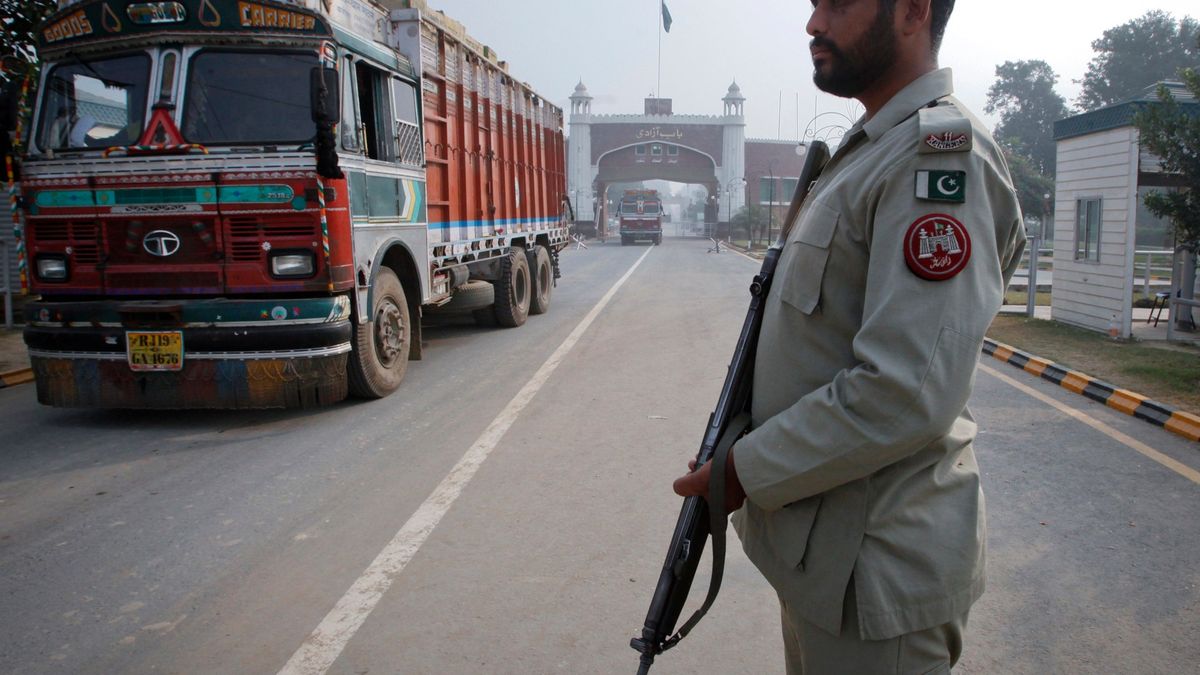
In a striking development that underscores the often-contradictory nature of geopolitics, Pakistan's imports from India have seen a significant recovery, particularly in critical pharmaceutical products, despite a severe political and military standoff in 2025. Following a deadly attack in India-administered Kashmir that April, which New Delhi blamed on Pakistan, both nuclear-armed neighbors escalated tensions, suspending trade, closing borders, and even exchanging missile and drone strikes. However, eighteen months after a fragile ceasefire, data from Pakistan's central bank indicates a 69% increase in imports from India in the July-September 2026 quarter compared to the same period a year earlier, with essential medicines and their raw materials forming the overwhelming majority of these transactions.
The quiet resurgence of trade between Pakistan and India is a testament to the powerful, often invisible, mechanics of economic necessity overriding political animosity. At its core, this situation reveals a fundamental imbalance in industrial capacity and supply chain resilience that leaves Pakistan heavily reliant on its larger neighbor for critical goods.
India has meticulously cultivated a robust and globally competitive pharmaceutical industry, particularly in the production of Active Pharmaceutical Ingredients (APIs) and generic medicines. This industrial strength translates into significant economic leverage. For Pakistan, sourcing these essential components from India offers unparalleled advantages: competitive pricing, consistent product availability, and crucial geographical proximity. These factors drastically reduce freight costs, insurance, and delivery times, making Indian suppliers often the most viable option. To switch suppliers for these complex inputs, as experts note, could escalate costs by 40 to 50 percent, a burden Pakistan's already strained economy can ill afford.
While Pakistan's National Security Committee (NSC) imposed a sweeping ban on all trade with India in April 2025, the reality of globalized supply chains and domestic humanitarian needs quickly exposed the limitations of such blanket restrictions. The initial ban in 2019, following India's revocation of Kashmir's special status, already contained a critical exemption for therapeutic products regulated by Pakistan's Drug Regulatory Authority (DRAP). This pre-existing loophole, driven by pragmatic concerns for public health, became a vital conduit. Even when direct routes like the Wagah border are closed, goods can be rerouted through third countries like Dubai or Malaysia. While this adds layers of complexity and cost, it ensures the flow of essential items, demonstrating that economic interdependence, especially for vital sectors, is difficult to sever completely without severe self-harm.
At the heart of Pakistan's policy flexibility lies the concept of "national interest." As a DRAP official anonymously stated, trade decisions ultimately hinge on whether imports from India are deemed necessary for the national interest. This broad interpretation allows the government to prioritize public health and economic stability over political posturing when faced with a critical shortage or prohibitive cost alternatives. It highlights a pragmatic, albeit unstated, understanding that the welfare of its citizens, particularly concerning medicine, cannot be sacrificed to political rivalry. This clause serves as an internal mechanism to bypass the very restrictions the state imposes, revealing the tension between ideological stance and practical governance.
India's decision to put the Indus Waters Treaty in abeyance in 2025 was a significant escalation, weaponizing a fundamental resource that Pakistan relies on for agriculture and energy. This move showcased New Delhi's willingness to exert maximum pressure on Islamabad, highlighting the depth of the political animosity. The fact that economic ties, particularly in pharmaceuticals, are quietly recovering despite such profound diplomatic and security challenges underscores the unique and non-negotiable nature of certain trade relationships, even amidst broader strategic confrontation.
While the political rhetoric between India and Pakistan often focuses on national pride and territorial disputes, the real consequences of their strained relationship, and the quiet mechanisms designed to circumvent them, are borne by ordinary citizens. The recovery of trade in essential goods, particularly medicines, has a direct and profound impact on the daily lives of millions.
The most immediate human cost, or benefit in this case, revolves around access to affordable healthcare. For the average Pakistani family, the availability of competitively priced medicines and vaccines from India is a matter of life and death. If Pakistan were to strictly adhere to a complete trade ban, the cost of importing pharmaceuticals from more distant or less efficient suppliers would skyrocket by as much as 40-50 percent. This increase would inevitably be passed on to consumers, making essential drugs unaffordable for a significant portion of the population, particularly the poor and vulnerable. Such a scenario would lead to a public health crisis, increased mortality rates, and a severe decline in overall quality of life.
Beyond direct medicine costs, the pharmaceutical industry in Pakistan relies heavily on Indian APIs for local manufacturing. A disruption in this supply chain would not only increase the cost of imported finished products but also cripple domestic production. This would lead to job losses in the pharmaceutical sector, reduced availability of locally manufactured drugs, and a ripple effect across the economy. Small businesses and pharmacies would struggle with higher procurement costs, further squeezing consumer budgets already battling inflation and economic instability. The informal routes used to circumvent bans also add costs, which are ultimately absorbed by the end-user, making goods more expensive than if direct trade were permitted.
The constant flux in relations, from outright conflict to quiet trade resumption, creates an environment of pervasive uncertainty for communities living along the border and for those involved in cross-border trade. The closure of the Wagah border crossing in 2025, for example, directly impacted livelihoods for transporters, laborers, and local businesses that depend on the flow of goods and people. While the current trade is largely indirect, the underlying political instability means that this vital economic lifeline remains precarious. Ordinary citizens on both sides are caught in a cycle where their economic well-being is held hostage to political decisions made by powerful actors, often with little regard for the immediate human impact.
Beneath the official statements and public posturing, there's a deeper narrative at play in the India-Pakistan trade dynamic – one of pragmatic necessity, strategic ambiguity, and the quiet circumvention of declared policies. What governments and powerful actors often downplay or omit reveals more about the true mechanics of power than what they explicitly state.
While Pakistan officially maintains a ban on Indian goods, the explicit exemption for therapeutic products, and the broader appeal to "national interest," serves as a significant, yet understated, loophole. What is downplayed is the sheer breadth of what can be categorized under this umbrella. It's not just finished medicines; it's the raw materials, the APIs, and potentially other critical inputs that are deemed indispensable. This allows for a selective, often opaque, application of the ban, ensuring that politically inconvenient but economically essential trade continues without public acknowledgment of its scope.
Both Indian and Pakistani officials are likely downplaying the scale and sophistication of indirect trade through third countries. While acknowledged by some experts, the precise routes, the network of intermediaries in places like Dubai and Malaysia, and the financial mechanisms involved remain largely unpublicized. This opacity serves multiple purposes: it allows both governments to maintain a public stance of non-engagement while ensuring essential goods flow; it creates a lucrative, unregulated market for those facilitating the trade; and it obscures the true economic interdependence that persists despite political rhetoric. The added costs of this indirect trade, which ultimately burden Pakistani consumers, are rarely highlighted in official discourse.
Powerful actors on both sides frequently emphasize the severing of ties and the suspension of trade as a show of strength and resolve. However, the quiet recovery of pharmaceutical imports exposes this narrative as largely symbolic, especially concerning critical sectors. The reality is that complete economic decoupling is often unfeasible without inflicting severe economic pain on one's own population. Governments downplay this inherent limitation, preferring to project an image of unwavering political will. This creates a significant disconnect between the official narrative and the lived economic reality for businesses and consumers, who must navigate these contradictions daily.
The raw intelligence mentions US President Donald Trump claiming credit for the 2025 ceasefire. This hints at the significant, often unacknowledged, role of external diplomatic pressure in de-escalating tensions and potentially facilitating economic detentes. While both India and Pakistan prefer to present themselves as sovereign actors making independent decisions, the influence of major global powers, particularly in preventing nuclear-armed rivals from open conflict, is likely a powerful, yet publicly downplayed, factor in the pragmatic decisions that allow for quiet trade resumption.
The fragile recovery of trade between Pakistan and India, particularly in life-saving pharmaceuticals, offers a critical lens through which to observe the future trajectory of their complex relationship. Several key indicators will reveal whether this quiet economic reconnection signals a deeper thaw or remains a purely pragmatic, temporary arrangement.
Will the current upward trend in imports be sustained, or is it merely a temporary measure to address immediate shortages? Any further political or security escalations, such as another cross-border incident or a renewed dispute over Kashmir, could quickly jeopardize this fragile economic lifeline. Observing the monthly and quarterly trade figures will be crucial to understand the resilience of this pragmatic engagement.
The recent gestures of goodwill, such as the release of fishermen and handshakes between sports teams, suggest a potential, albeit slow, easing of tensions. The critical question is whether these symbolic acts will translate into a gradual, official reopening of direct trade channels, starting with humanitarian goods. A move towards formalizing trade, even in limited sectors, would signal a significant shift away from the current reliance on indirect and often more costly routes, indicating a greater political will to prioritize economic stability.
While Pakistan's reliance on Indian pharmaceuticals is currently driven by cost and availability, it will be important to watch for any genuine, long-term efforts by Islamabad to diversify its supply chains. Investments in domestic API production or establishing stable, cost-effective alternative sourcing from other countries would indicate a strategic intent to reduce dependence on India. The pace and scale of such diversification, or the lack thereof, will reveal the true balance between political aspirations for self-reliance and the economic realities of global supply chains.
India's decision to put the Indus Waters Treaty in abeyance was a major point of contention. The full restoration of the treaty, or continued ambiguity regarding its status, will be a significant barometer of the broader political relationship. Progress on this front could signal a willingness to de-escalate tensions on a more fundamental level, potentially paving the way for broader economic cooperation.
Finally, observers should consider the long-term impact of this indirect trade on Pakistan's domestic pharmaceutical manufacturing capabilities. Does the continued, albeit indirect, influx of affordable Indian raw materials provide essential inputs that foster local production, or does it stifle the growth of a truly independent Pakistani pharmaceutical industry? The balance between immediate consumer benefit and long-term industrial development will be a key dynamic to monitor.
Pakistan relies heavily on India for affordable and readily available pharmaceutical raw materials and finished medicines. Economic necessity and public health concerns often override political tensions, with official exemptions for therapeutic products allowing this vital trade to continue, sometimes indirectly.
Trade continues primarily through exemptions for essential goods like medicines, which were in place even before recent escalations. Additionally, goods are often routed through third countries like Dubai or Malaysia, allowing them to reach Pakistan while circumventing direct border closures, albeit at a higher cost.
Editor's Note: Analysis is based on interpreting the provided raw intelligence, focusing on power dynamics, human cost, and unstated implications as per TGN doctrine.
Source referenced: ALJAZEERA
This brief was synthesized by our Editorial Engine and reviewed by The Ground Narrative team.