TRENDING

Wednesday, 11 November 2026
----------------------
1 Jumada Al-Thani 1448 AH
China's invitation of a Pakistani astronaut to its space station marks a significant deepening of their strategic alliance. This move projects China's technological prowess and reinforces its regional influence, while Pakistan gains access to critical space capabilities.
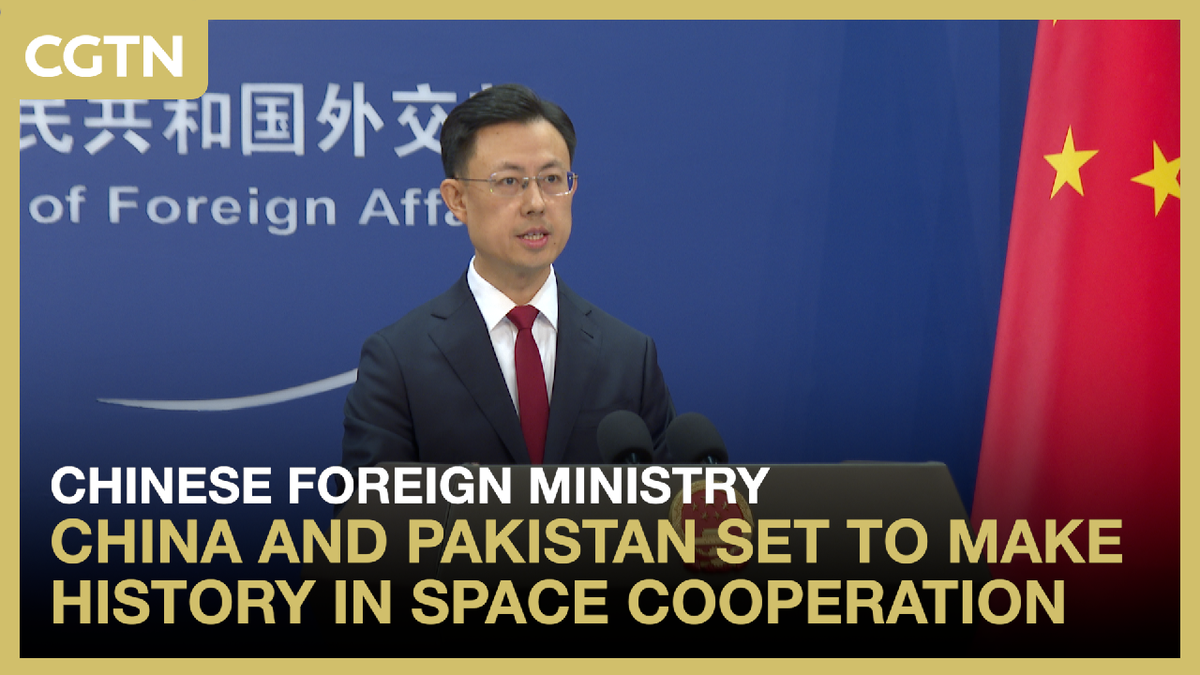
China has officially confirmed that a Pakistani astronaut will join the Shenzhou-24 crewed mission, destined for the Chinese space station. This historic collaboration marks the first instance of a foreign astronaut participating in a joint flight under China's burgeoning crewed space program. The mission is set to coincide with the 75th anniversary of diplomatic relations between the two nations, signaling a profound deepening of their strategic partnership in a domain traditionally dominated by established space powers.
This seemingly scientific endeavor is, at its core, a potent display of China's expanding global influence and a strategic reinforcement of its most enduring alliance. For Beijing, inviting a Pakistani astronaut to its space station serves multiple critical objectives. Firstly, it showcases China's technological prowess and self-reliance in space, positioning it as a credible alternative to the International Space Station (ISS), which has historically been led by the United States. This move allows China to cultivate its own network of space partners, setting future norms and standards in orbital activities, distinct from Western influence.
Secondly, the mission significantly deepens China's strategic relationship with Pakistan. This alliance, often described as an "all-weather friendship," is a cornerstone of Beijing's foreign policy, particularly in its efforts to counterbalance India's growing regional influence and its closer ties with the United States. By offering Pakistan access to advanced space technology and prestige, China solidifies its position as a reliable patron, providing capabilities that Pakistan might struggle to acquire elsewhere. This isn't merely about scientific exchange; it's about embedding Pakistan further into China's technological and strategic ecosystem, creating a shared stake in future space endeavors that can have dual-use applications, both civilian and military.
For Pakistan, participation in the Shenzhou-24 mission offers invaluable technological transfer, training, and a significant boost to national pride and scientific ambition. It provides a direct pathway to acquiring sophisticated space capabilities, which are crucial for everything from communication and navigation to resource mapping and national security surveillance. This access helps Pakistan bridge technological gaps and enhances its standing in a region where India is also rapidly advancing its own space program, often with Western collaboration. The symbolic gesture of a Pakistani astronaut in space, facilitated by China, sends a powerful message about the strength and depth of their bilateral ties, demonstrating a shared vision for technological advancement and strategic autonomy in a multipolar world. The alliance math here is clear: China gains a loyal partner in a critical domain, while Pakistan gains access to cutting-edge technology and a powerful diplomatic shield, reinforcing their collective position against rival blocs.
While the image of a Pakistani astronaut orbiting Earth might evoke national pride, the ground reality for many ordinary citizens in Pakistan presents a stark contrast. The pursuit of ambitious space programs, while offering long-term technological benefits, often comes with significant opportunity costs for a nation grappling with persistent economic instability, high inflation, and widespread poverty. Resources, both financial and intellectual, diverted to a high-profile mission like this could otherwise be allocated to pressing domestic needs such as improving healthcare, enhancing primary education, or developing critical infrastructure like clean water and sanitation systems.
The lack of transparency surrounding the true financial commitments and long-term economic implications of such deep strategic partnerships can further burden the public. While official statements emphasize mutual benefit and friendship, the actual terms of engagement, especially in high-tech sectors, are often opaque. This can lead to concerns about Pakistan's increasing economic reliance on China, potentially creating debt vulnerabilities or unequal trade relationships that disproportionately affect the common citizen through higher taxes or reduced public services. The benefits of space technology, such as satellite communication or remote sensing, might take years to trickle down to the broader population, while the immediate costs are borne by the public purse.
Furthermore, the strategic implications of this enhanced cooperation can inadvertently raise regional tensions. As China and Pakistan deepen their military-technological alliance, neighboring countries, particularly India, are likely to respond by accelerating their own defense and space programs, potentially leading to an arms race in the region. This escalation of strategic competition carries the human cost of increased instability, diverting even more national resources towards military expenditure rather than human development. For communities living near contested borders, such heightened tensions translate into a constant state of anxiety and the very real threat of conflict, disrupting daily life and hindering economic progress. The grand narratives of scientific achievement and strategic partnership often overshadow the immediate and tangible sacrifices demanded from the general populace, who are rarely consulted on such high-level strategic decisions.
Beneath the celebratory narrative of scientific cooperation and enduring friendship, a more complex geopolitical reality unfolds. What governments often downplay or omit in their official statements is the inherent dual-use nature of space technology. While the mission is framed as a peaceful scientific endeavor, the capabilities gained—from advanced satellite imagery and communication systems to precision navigation—have clear military and intelligence applications. For China, this collaboration strengthens its ability to project power and gather intelligence across a crucial region. For Pakistan, it enhances its surveillance capabilities and potentially its missile guidance systems, adding a strategic edge in its long-standing rivalry with India. This strategic dimension is rarely articulated, yet it is a fundamental driver of such partnerships.
Moreover, this space collaboration is not an isolated event but a critical piece in China's broader strategy to build an alternative global order, one where its technological standards and geopolitical influence can challenge the existing US-led system. By inviting a Pakistani astronaut, Beijing is not just sharing technology; it is cultivating loyalty and establishing a precedent for future international cooperation around its own space infrastructure. This move subtly undermines the International Space Station (ISS) and the norms established by Western space powers, positioning China as a leader capable of offering independent space access and partnership to nations that may feel excluded or constrained by existing alliances. The long-term goal is to normalize China's leadership in space, creating a network of dependent partners that extends its terrestrial influence into orbit.
The narrative of "equal partnership" also often obscures Pakistan's increasing economic and strategic dependency on China. While Pakistan gains access to advanced technology, it simultaneously deepens its reliance on Beijing for financial support, infrastructure development through the Belt and Road Initiative (BRI), and diplomatic backing on the international stage. This growing dependency can limit Pakistan's foreign policy autonomy and economic diversification options, potentially locking it into a trajectory that serves China's broader strategic interests more than its own long-term national independence. The "friendship" narrative, while emotionally resonant, often glosses over the asymmetrical power dynamics inherent in such a relationship.
Finally, the mission is a clear, if unspoken, message to India and the United States. It demonstrates the resilience and deepening of the China-Pakistan axis, directly challenging India's aspirations for regional dominance and its growing strategic alignment with the US. This space initiative is a symbolic and tangible counter to the burgeoning Quad alliance and other US-led efforts to contain China's influence. By projecting power into space with a key ally, China signals its intent to compete across all domains, including the final frontier, and to support its partners in doing the same, regardless of Western objections. The quiet ascent of China's space program is thus inextricably linked to its terrestrial geopolitical ambitions.
The Shenzhou-24 mission, with its Pakistani crew member, sets a significant precedent, and its aftermath will be closely scrutinized for further signals regarding the evolving global power landscape. Observers should first watch for any announcements of future international collaborations involving the Chinese space station. Will other nations, particularly those within the Belt and Road Initiative or those seeking alternatives to Western space programs, follow Pakistan's lead? The identity and geopolitical alignment of these potential partners will indicate the success of China's strategy to build its own multilateral space bloc.
Secondly, the regional response, particularly from India, will be critical. How will New Delhi react to this deepening of the China-Pakistan space alliance? We can expect India to further accelerate its indigenous space program, potentially seeking enhanced cooperation with the United States, France, or other Western powers to maintain its strategic balance in the region. Any new joint space ventures or defense agreements between India and these nations could be a direct countermeasure to Beijing's expanding orbital influence.
Beyond the immediate space mission, attention should be paid to the practical applications and dual-use developments stemming from this cooperation. Will Pakistan's satellite capabilities see a noticeable enhancement in areas such as remote sensing, communication, or navigation, and how might these integrate with its existing military infrastructure? The subtle evolution of Pakistan's technological base, particularly in areas that could have defense implications, will be a key indicator of the long-term strategic dividends for both partners.
Finally, the economic implications for Pakistan warrant close observation. While the mission offers prestige, the financial costs and benefits for the Pakistani populace remain to be seen. Will this high-profile collaboration translate into tangible economic development and improved living standards for ordinary citizens, or will it exacerbate existing fiscal pressures and deepen reliance on Chinese financing? The transparency and accountability of future space-related investments in Pakistan will be crucial in assessing the true human cost and benefit of this ambitious orbital partnership. The trajectory of China's space diplomacy is not just about rockets and astronauts; it is about reshaping global alliances and power dynamics on Earth.
The mission signifies a major deepening of the China-Pakistan strategic alliance, showcasing China's advanced space capabilities and offering Pakistan access to critical technology and prestige. It also positions China as a leading alternative in international space cooperation.
This collaboration strengthens the China-Pakistan axis, challenging the US-led global order in space and signaling a counterweight to India's growing regional influence. It highlights the dual-use nature of space technology for both civilian and military applications.
While bringing national pride and potential long-term technological benefits, the mission also raises questions about opportunity costs. Resources allocated to ambitious space programs could divert funds from pressing domestic needs like healthcare and education, potentially increasing economic reliance on China.
Source referenced: CGTN
This brief was synthesized by our Editorial Engine and reviewed by The Ground Narrative team.