TRENDING

Tuesday, 6 October 2026
----------------------
25 Rabi' Al-Thani 1448 AH
Nigerian forces rescued 308 kidnap victims, hailed as a major success by President Tinubu. Yet, the operation's details reveal a state struggling to dismantle the criminal networks that hold communities hostage and undermine national stability.
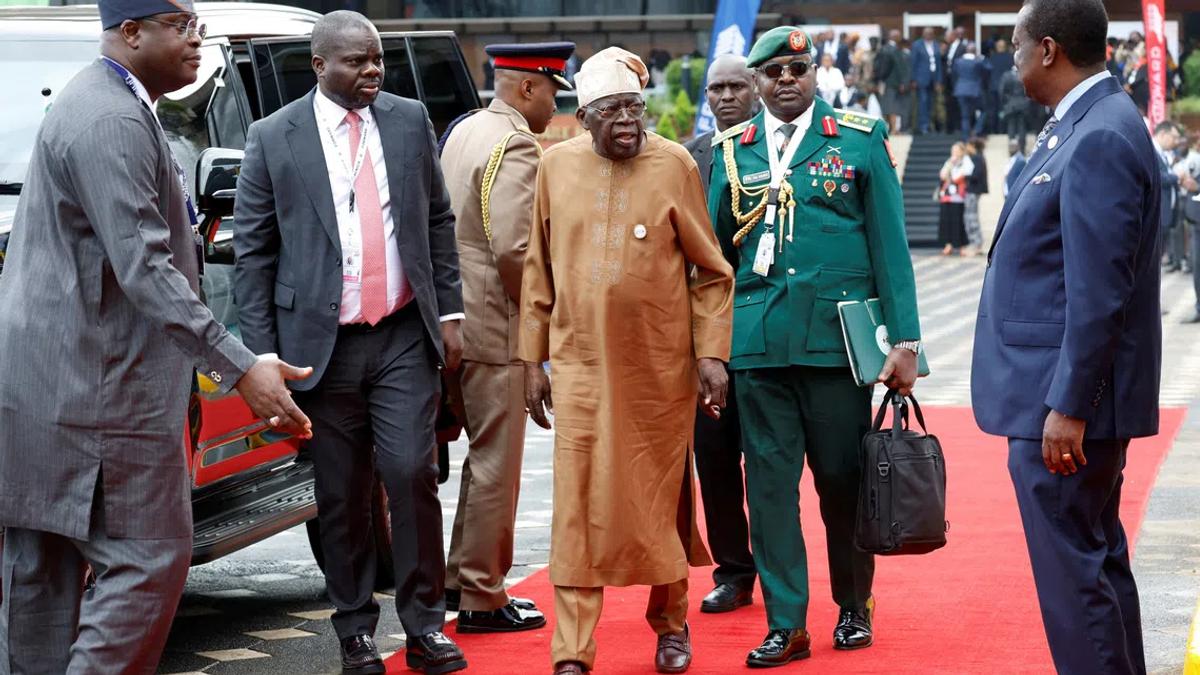
Nigerian security forces recently announced the rescue of 308 individuals abducted in separate incidents across Niger and Kwara states. President Bola Tinubu hailed the operation as the largest same-day rescue by a joint security team. The victims, some held since February after an attack that killed 170 others in Kwara, were freed from the Kainji Lake National Park forest.
This rescue, while presented as a decisive victory, illuminates the complex power dynamics at play in Nigeria's ongoing security crisis. For President Tinubu, who faces re-election in January, a high-profile rescue operation serves as a crucial political statement. It aims to project an image of a government capable of protecting its citizens and asserting control over lawless regions, directly addressing public frustration with pervasive insecurity. The timing, coupled with recent approvals for significant pay raises (up to 80%) for armed forces, suggests a strategic move to bolster military morale and performance, linking security outcomes directly to the welfare of the troops. However, this also reveals a reliance on reactive, episodic interventions rather than a systemic dismantling of the criminal infrastructure. The fact that these gangs can operate with such impunity, holding large groups of people for months within national park forests, underscores a profound challenge to state authority. The kidnappers, often well-armed and organized, wield considerable local power, exploiting weak governance and economic desperation to sustain their operations, whether for ransom or to destabilize.
While the rescue brings immense relief, the human cost of Nigeria's kidnapping epidemic extends far beyond the immediate trauma of captivity. The 308 rescued individuals, along with their families, face the long-term psychological scars of abduction, fear, and uncertainty. For the communities in Kwara and Niger states, the terror is palpable; the attack in Kwara alone claimed 170 lives, leaving countless families shattered and livelihoods destroyed. Farmers are unable to tend their fields, traders are afraid to travel, and children are kept out of schools, creating a cycle of poverty and vulnerability. This pervasive insecurity erodes social cohesion and trust in public institutions, forcing ordinary citizens to live in a constant state of alert, often resorting to self-defense or paying ransoms themselves when the state cannot guarantee their safety. The economic fabric of entire regions is unraveling, pushing already marginalized populations further into desperation.
The official narrative, while celebrating the rescue, conspicuously omits a critical detail: whether any suspects were apprehended during the operation. A rescue without arrests means the criminal networks responsible for these mass abductions remain largely intact, free to regroup and strike again. This silence suggests a prioritization of the immediate optics of a successful rescue over the more difficult, long-term work of dismantling the underlying criminal enterprises. What is also downplayed are the systemic failures that allow these groups to flourish: widespread poverty, high unemployment, particularly among youth, and a proliferation of small arms. Corruption within security forces and local governance structures often provides a fertile ground for these criminal elements to operate with relative impunity. The government's focus on boosting military pay, while necessary for morale, can also be viewed as a symptom of a deeper problem – a reliance on military solutions to issues that are fundamentally socio-economic and governance-related, without addressing the root causes that drive individuals into banditry or allow it to persist.
Looking ahead, the true test of Nigeria's resolve will not be measured by single rescue operations, however large, but by sustained efforts to dismantle the criminal infrastructure that enables mass kidnappings. Observers should watch for any significant arrests and successful prosecutions of high-level commanders within these bandit groups. The impact of the armed forces' pay raises on long-term security performance and troop loyalty, especially in the run-up to the elections, will be crucial. Furthermore, attention should be paid to whether the government moves beyond military-centric responses to implement comprehensive strategies addressing the socio-economic drivers of insecurity, such as poverty alleviation, job creation, and strengthening local governance. President Tinubu's re-election campaign will heavily hinge on his perceived ability to restore security, making any future incidents or successes highly scrutinized. The ability of the Nigerian state to reassert its monopoly on force and protect its citizens will define its stability and future trajectory.
Source referenced: STRAITSTIMES
This brief was synthesized by our Editorial Engine and reviewed by The Ground Narrative team.