TRENDING

Monday, 5 October 2026
----------------------
24 Rabi' Al-Thani 1448 AH
New Zealand's Prime Minister has opened the door to a referendum on the nation's proportional voting system, sparking a debate about who truly holds power in government formation and whose voices are heard.
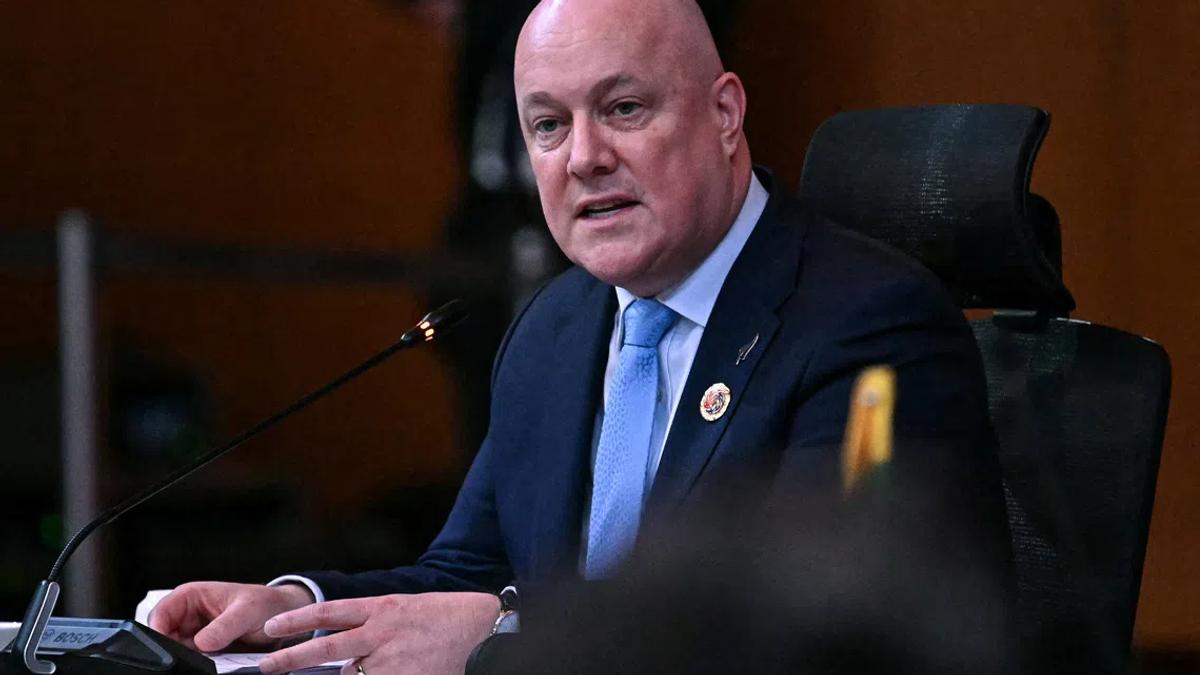
New Zealand Prime Minister Christopher Luxon has indicated his openness to a referendum on the country's mixed-member proportional (MMP) electoral system. This statement has ignited a vigorous national debate, with critics quickly labeling any such move as a potential "power grab" by the nation's larger political parties. The MMP system, adopted in 1996, allows voters two ballots – one for a local candidate and one for a party – and has consistently led to coalition governments, ensuring a broader array of voices in Parliament than its predecessor, the first-past-the-post (FPTP) system.
The core of this debate lies in the fundamental mechanics of political power. The MMP system, by design, diffuses power. It ensures that a party's representation in Parliament largely mirrors its national vote share, preventing situations where a party with a minority of the popular vote can secure an outright majority of seats. This proportionality means that smaller parties, often representing distinct ideological or community interests, frequently hold the balance of power, becoming crucial "kingmakers" in forming governments. This forces larger parties into negotiations, compromises, and shared governance arrangements.
For larger parties, particularly those aspiring to govern alone or with minimal concessions, the MMP system can be a source of frustration. It necessitates constant coalition building, policy adjustments to satisfy junior partners, and a less predictable path to stable majorities. A return to an FPTP system, or a modified version that leans closer to it, would likely consolidate power within the two dominant parties, reducing the influence of smaller factions and streamlining decision-making for the governing party. This shift would fundamentally alter the leverage points within New Zealand's political landscape, centralizing authority and potentially reducing the need for broad consensus building.
The human cost of such a systemic change would be borne most acutely by ordinary citizens, particularly those whose political affiliations lie outside the two largest parties. Under MMP, a vote for a smaller party directly contributes to its proportional representation, ensuring that a wider spectrum of views has a voice in legislative debates and policy formation. Should New Zealand revert to a system that favors larger parties, many votes could effectively become "wasted" if their chosen candidate or party fails to win a plurality in a given electorate. This can lead to feelings of disenfranchisement and a perception that the political system does not truly represent the diversity of the population.
Furthermore, specific communities, such as Māori, who benefit from reserved Māori electorates under the current system, could see their unique representation diluted or challenged in a less proportional framework. The MMP system was initially adopted to address concerns about the exclusion of smaller parties and minority voices, making any move away from it a direct challenge to the principle of inclusive representation for all citizens.
What governments and official statements often downplay in such debates is the underlying political motivation. While arguments for a more "stable" or "decisive" government might be presented, the unspoken truth is often a desire by larger parties to escape the constraints of coalition politics. The constant need to negotiate with smaller partners, to cede ministerial portfolios, and to compromise on policy initiatives can be seen as an impediment to a clear governing agenda. The "power grab" accusation, therefore, points to a fundamental tension: the desire for efficient, unencumbered governance versus the imperative of broad, proportional representation.
The historical context is also often minimized. New Zealand moved to MMP precisely because the FPTP system was deemed unrepresentative and unfair. The current debate is not merely about procedural efficiency but about revisiting a foundational democratic choice, with significant implications for how political power is distributed and exercised.
Moving forward, observers should closely watch several key developments. Firstly, whether a referendum is indeed called, and crucially, the specific wording of the question posed to voters. A vaguely worded question could obscure the true implications of the change. Secondly, the mobilization efforts of smaller parties, civil society groups, and indigenous organizations will be critical in shaping public opinion and advocating for the preservation of proportional representation. Finally, the political calculus of the major parties will be paramount: will they risk public backlash by pushing aggressively for a change that is perceived as self-serving, or will the debate evolve into a more nuanced discussion about the future of New Zealand's democracy? The outcome will determine not just how New Zealand is governed, but whose voices are truly heard in its halls of power.
Source referenced: STRAITSTIMES
This brief was synthesized by our Editorial Engine and reviewed by The Ground Narrative team.