TRENDING

Thursday, 8 October 2026
----------------------
27 Rabi' Al-Thani 1448 AH
New Mexico's Attorney General has formally accused the U.S. Department of Justice of obstructing the state's investigation into Jeffrey Epstein's activities at Zorro Ranch, raising significant questions about federal transparency and inter-governmental cooperation. This dispute underscores broader concerns regarding accountability in high-profile cases and the integrity of the justice system.
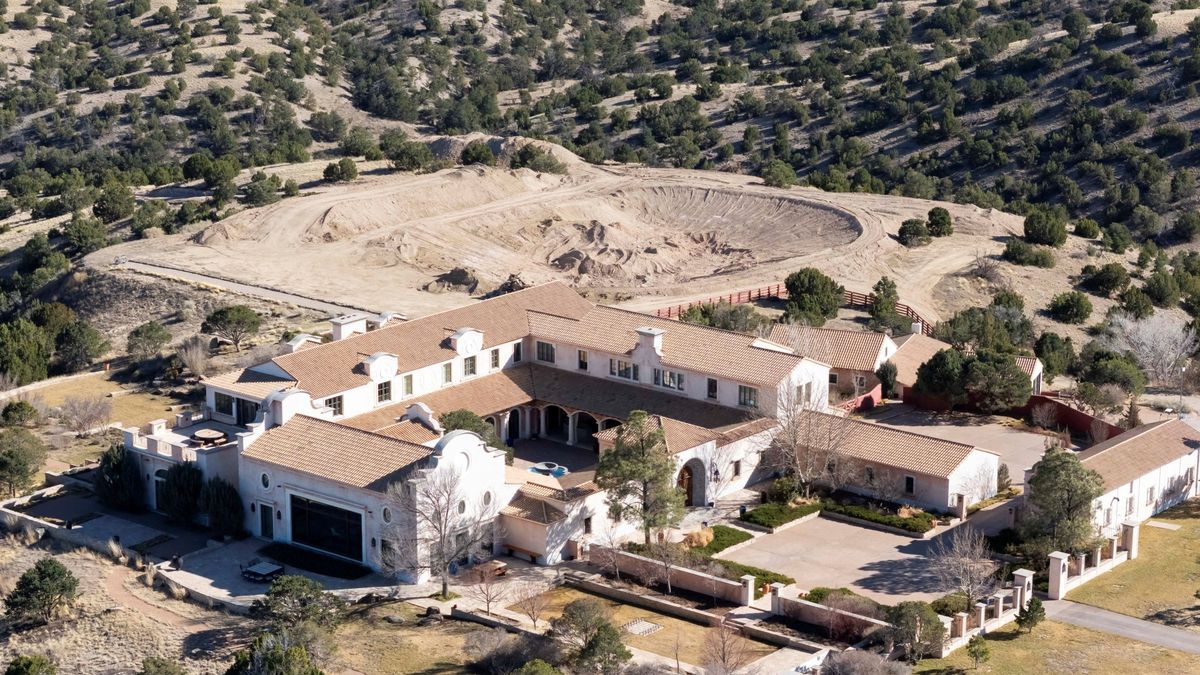
A significant jurisdictional and transparency dispute has emerged between the state of New Mexico and the United States Department of Justice (USDOJ). New Mexico Attorney General Raul Torrez has publicly accused the federal government of impeding his state's investigation into the late financier and convicted sex offender Jeffrey Epstein, particularly concerning alleged activities at Epstein's Zorro Ranch property. This accusation, detailed in a letter dated June 30 and published on July 9, 2026, highlights escalating tensions and raises critical questions about federal accountability, the rule of law, and the pursuit of justice for victims.
Jeffrey Epstein, a wealthy financier with extensive connections, owned Zorro Ranch in central New Mexico from 1993. While he built a sprawling complex on the property, allegations of sex trafficking and abuse there have never been fully investigated. New Mexico initially attempted to launch an investigation into Epstein's activities at the ranch in 2019. However, this effort was reportedly suspended at the request of federal prosecutors, who sought to pursue their own case against Epstein. Following Epstein's death in 2019 while awaiting federal trial for allegedly masterminding a sex-trafficking ring, and the subsequent release of millions of federal files related to the case, New Mexico reopened its investigation in February 2026.
Attorney General Torrez, a Democrat, asserts that the state's renewed probe is a continuation of the work interrupted by federal intervention. The state's efforts are particularly focused on the Zorro Ranch, where reports, including a 2019 *New York Times* article, have alleged disturbing plans by Epstein to impregnate women and spread his DNA. Furthermore, an FBI form from 2019 indicated a tip about abuse at the ranch, including claims of videos and buried foreign girls, underscoring the gravity of the allegations New Mexico seeks to investigate.
The core of New Mexico's complaint centers on the USDOJ's alleged failure to provide access to crucial records. Despite verbal assurances of cooperation dating back to February 2026, Torrez states that the USDOJ has not granted access to requested documents, nor has it provided a substantive response for over 130 days. Torrez's letter explicitly states that this constitutes an "unreasonable delay" and is causing "real and escalating harm" to the state's investigation. He argues that the USDOJ now holds the very records that would allow New Mexico to resume its interrupted probe.
This dispute unfolds against the backdrop of the "Epstein Files Transparency Act," signed into law by President Donald Trump in late 2025. This legislation mandated the USDOJ to publish all records pertaining to Epstein within 30 days, with minimal redaction to protect victims' identities. While a first batch of documents was released in December, millions more followed in late January 2026, many heavily redacted. Legislators have questioned the Trump administration's compliance with the law, and critics have accused the administration of a lack of transparency, partly fueled by President Trump's past social ties to Epstein, which he has denied influenced his actions.
The standoff between New Mexico and the USDOJ carries significant implications for domestic governance and the rule of law. Firstly, it highlights the inherent tensions in the U.S. federal system regarding jurisdictional authority, particularly in high-profile criminal investigations. New Mexico is asserting its sovereign right to investigate crimes within its borders, especially when federal action is perceived as incomplete or obstructive.
Secondly, the controversy underscores broader concerns about government transparency and accountability. The Epstein case, with its connections to powerful individuals and allegations of systemic abuse, has long been a touchstone for public distrust in institutions. The USDOJ's alleged withholding of records, despite a federal transparency act, risks further eroding public confidence in the justice system's impartiality and commitment to uncovering the full truth. Attorney General Torrez explicitly warned that "Every day that the USDOJ withholds these records, the foundation upon which a New Mexico prosecution could be built erodes," citing the loss of witnesses, fading memories, and degrading evidence.
Finally, the political dimension cannot be overlooked. A Democratic state attorney general is challenging a USDOJ operating under a Republican presidential administration, an administration that has faced scrutiny over its handling of Epstein-related matters. This political dynamic adds another layer of complexity and potential partisan scrutiny to a case already fraught with public interest and moral urgency. New Mexico's bipartisan "truth commission," established in February to investigate Epstein's crimes, also awaits a report by the end of the year, but its work may be hampered without full federal cooperation.
The accusation by New Mexico's Attorney General represents a critical juncture in the ongoing pursuit of justice related to Jeffrey Epstein's crimes. It is a test of federal-state cooperation, governmental transparency, and the commitment to ensuring accountability for heinous acts. The outcome of this dispute will not only determine the future of New Mexico's investigation into Zorro Ranch but will also set a precedent for how high-stakes, politically sensitive cases are handled across different levels of government, ultimately impacting public trust in the integrity of the American justice system.
Source referenced: ALJAZEERA
This brief was synthesized by our Editorial Engine and reviewed by The Ground Narrative team.