TRENDING

Wednesday, 7 October 2026
----------------------
26 Rabi' Al-Thani 1448 AH
U.S. President Donald Trump's initial threat to halt trade with Spain over defense spending was reportedly softened after he was informed of Madrid's significant increase in NATO contributions. This incident at the 2026 NATO summit highlights ongoing transatlantic burden-sharing debates and the transactional nature of U.S. alliance policy.
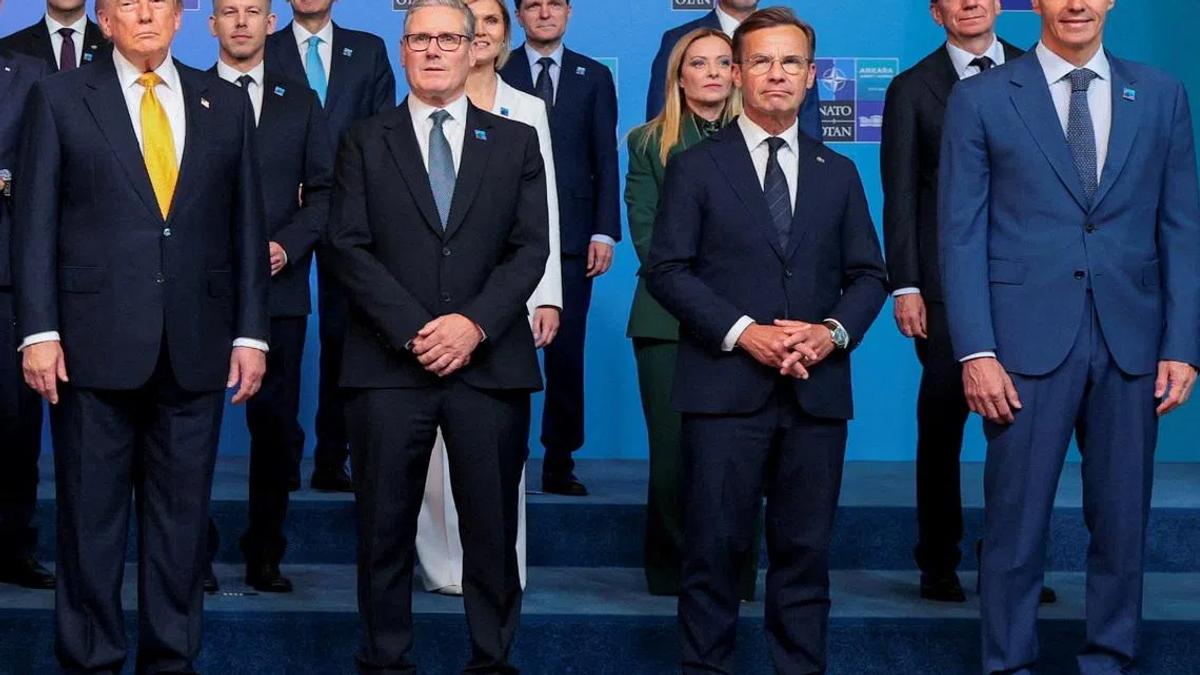
At the NATO summit in Ankara on July 8, 2026, U.S. President Donald Trump publicly labeled Spain a "terrible partner" and threatened an immediate halt to all trade with the country. This strong condemnation stemmed from long-standing disputes over defense spending within the North Atlantic Treaty Organization (NATO) and, as reported, disagreements concerning the Iran war. However, within hours, a notable shift in rhetoric occurred. Spanish Prime Minister Pedro Sanchez's office confirmed that President Trump softened his stance after being made aware of Spain's substantial increase in defense contributions to the alliance in recent years.
Upon his return to the United States, President Trump acknowledged Spain's newfound generosity, stating, "Spain was very generous today," and confirming that Madrid had "honoured a request for lots of payments." This turnaround was attributed to Spain's commitment to reaching NATO's former defense spending target of 2% of GDP, a goal it expects to achieve in 2026. Spain's nominal defense spending has more than doubled from 0.98% of GDP in 2017 to nearly €33 billion ($37.7 billion), a significant budgetary allocation that Prime Minister Sanchez highlighted during the summit.
This incident underscores the persistent geopolitical tension surrounding burden-sharing within NATO, a theme that has characterized U.S. foreign policy, particularly under President Trump's administrations. The United States has consistently pressed European allies to increase their defense expenditures, arguing that many members have historically underinvested, relying disproportionately on U.S. military capabilities. President Trump's transactional approach to alliances views financial contributions as a primary metric of commitment and partnership, often linking security cooperation directly to economic leverage.
Spain's journey to meet the 2% target reflects a broader trend among European NATO members to bolster their defense capabilities in response to evolving global security challenges, including the war in Ukraine and heightened geopolitical instability. However, the Spanish government, a left-wing coalition, has expressed reservations about committing to a new, more ambitious target of 5% of GDP by 2035, citing domestic priorities and the need to balance defense spending with social welfare programs. This divergence highlights the internal political and economic constraints faced by European nations when responding to U.S. demands for increased military outlays.
President Trump's threat to halt trade with Spain, a NATO ally and significant economic partner, represents a potent use of economic leverage to enforce security policy objectives. While the immediate trade threat appeared to dissipate with the softened rhetoric, U.S. officials indicated that federal agencies were preparing a "menu" of potential Spanish products for embargo, suggesting the seriousness with which such threats are considered. The potential invocation of the International Emergency Economic Powers Act (IEEPA) to impose trade restrictions would have significant economic ramifications for both nations, disrupting supply chains and potentially impacting U.S. businesses with investments in Spain, such as major tech firms in the Aragon region.
Such public disputes, even if quickly resolved, can strain the cohesion of the transatlantic alliance. They create uncertainty among member states about the reliability of U.S. commitments and the stability of diplomatic relations. While Spanish officials reportedly downplayed the rift, likening it to a "staged fight lacking actual conflict," the incident provided fodder for domestic political criticism, with opposition parties like Vox and the People's Party (PP) using it to challenge the government's foreign policy credibility.
This episode offers a critical insight into the dynamics of U.S.-European relations, particularly in an era where the U.S. continues to advocate for greater European strategic autonomy while simultaneously demanding increased financial contributions to collective defense. The incident demonstrates that while the U.S. may exert significant pressure, tangible evidence of increased commitment, such as Spain's boosted defense spending, can lead to a de-escalation of tensions. However, the underlying philosophical differences regarding the nature of alliance obligations—whether they are purely transactional or based on shared values and strategic interests—remain a persistent challenge.
Looking ahead, the debate over defense spending and the use of economic tools to enforce alliance commitments will likely continue to shape the future of NATO. European nations will need to navigate the delicate balance between meeting U.S. expectations, addressing their own security needs, and managing domestic political and economic realities. The Spanish case serves as a microcosm of these broader transatlantic dynamics, illustrating the complexities of maintaining alliance solidarity in a rapidly evolving geopolitical landscape.
Source referenced: STRAITSTIMES
This brief was synthesized by our Editorial Engine and reviewed by The Ground Narrative team.