TRENDING

Tuesday, 6 October 2026
----------------------
25 Rabi' Al-Thani 1448 AH
Türkiye, Saudi Arabia, and Pakistan have signed a trilateral defense agreement, aiming to build a sustainable security architecture in the region. The pact's implications are far-reaching, with potential consequences for the US-Iran conflict and the regional balance of power.
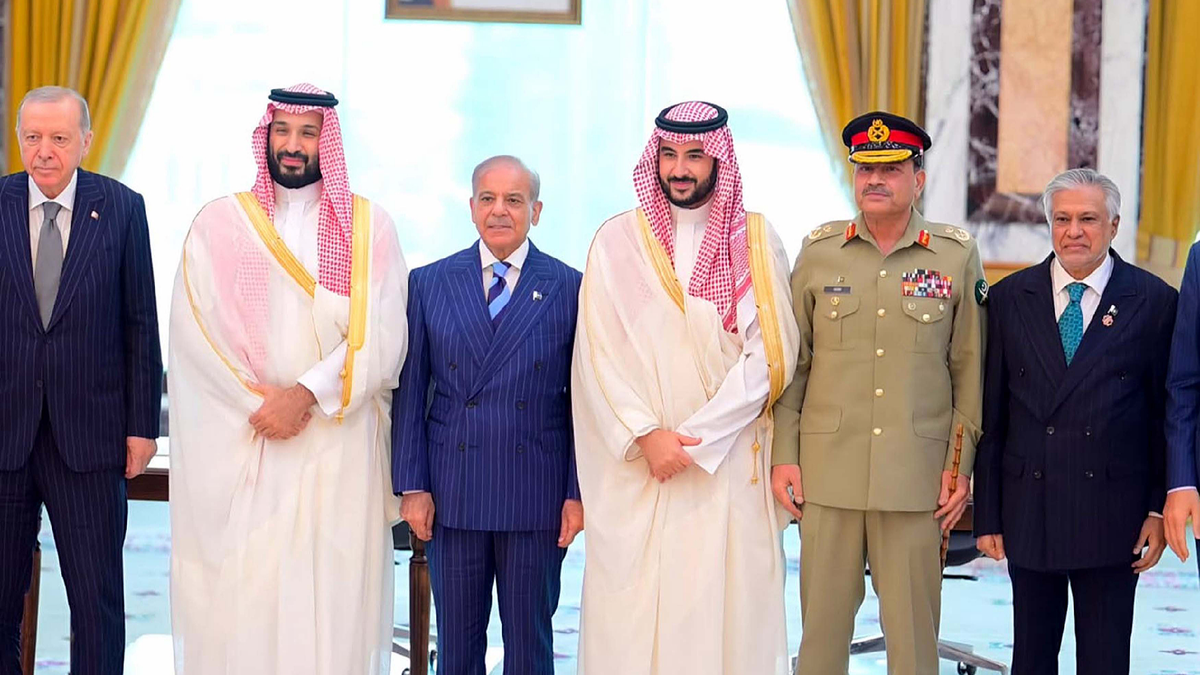
Türkiye, Saudi Arabia, and Pakistan have signed the Makkah Joint Defense Agreement, a trilateral defense pact that stipulates an attack on one country will be considered an attack on all. The agreement was signed in the Saudi city of Makkah, with leaders from the three countries gathering to formalize the deal.
The decision to sign the pact at this moment cannot be separated from the shifting geopolitical landscape in the Middle East. The US-Iran conflict has created an environment of heightened tensions, with Saudi Arabia facing increased security risks. The pact aims to build an autonomous security architecture led by defense and security cooperation among regional countries. This move is a clear indication that regional countries are seeking to hedge against the uncertainty of US security commitments.
The people of the region, particularly those in Saudi Arabia, Yemen, and Iran, will bear the human cost of this agreement. The pact's focus on building sustainable capabilities and addressing the immediate crisis of disrupted shipping through the Strait of Hormuz may lead to increased militarization and tensions in the region. This could result in further instability and conflict, ultimately affecting the lives of ordinary citizens.
What is being downplayed by the powerful actors involved in this agreement is the potential for increased tensions with Iran. The pact's strong collective-defense clause may be seen as a provocation by Tehran, leading to further escalation in the region. Additionally, the involvement of Pakistan in the agreement may be seen as an attempt to expand the security framework into a broader network spanning the Gulf, the Red Sea, the Arabian Sea, and South Asia. This could have significant implications for the regional balance of power and the role of external actors such as the US and China.
Readers should watch for the operational implications of the pact, particularly in terms of joint military maneuvers or patrols in sensitive areas such as the Strait of Hormuz. The reaction of Iran and other regional actors to the agreement will also be crucial in determining the pact's impact on the regional security landscape. Furthermore, the involvement of Pakistan in the agreement may lead to increased cooperation between the three countries on issues such as counter-terrorism and maritime security.
Editor's Note: The analysis is based on publicly available information and may not reflect the full complexity of the situation on the ground.
Source referenced: CGTN
This brief was synthesized by our Editorial Engine and reviewed by The Ground Narrative team.