TRENDING

Monday, 5 October 2026
----------------------
24 Rabi' Al-Thani 1448 AH
Moldovan Prime Minister Alexandru Munteanu's resignation has triggered a government collapse, posing a significant challenge to the nation's pro-EU trajectory and stability in a geopolitically sensitive region.
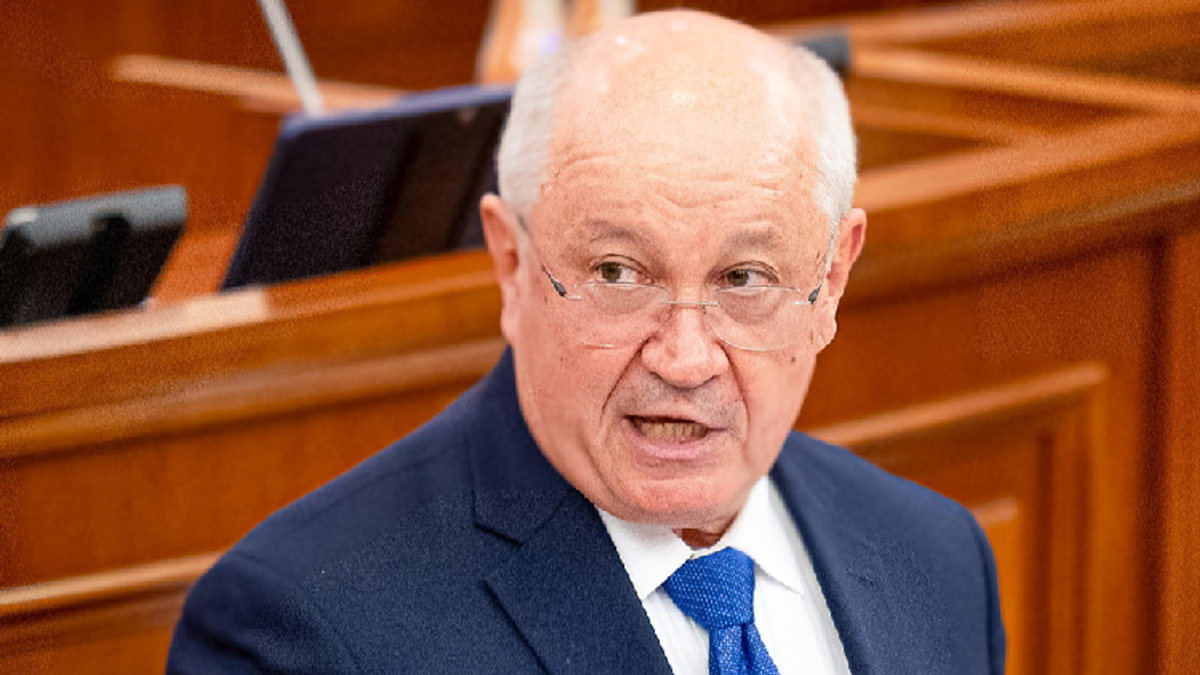
The unexpected resignation of Moldovan Prime Minister Alexandru Munteanu on Friday, July 3, 2026, has plunged the small Eastern European nation into a fresh period of political uncertainty. Munteanu's departure, announced via social media, automatically triggered the dismissal of his entire government, as stipulated by Moldova's constitution. This development, occurring just eight months after his appointment in November 2025, underscores the persistent fragility of Moldova's political landscape and carries significant implications for its pro-Western trajectory and regional stability.
Prime Minister Munteanu cited an inability to perform his duties "in accordance with his principles and beliefs" as the reason for his resignation. While the specific disagreements or pressures leading to this decision were not detailed, such a statement often indicates fundamental policy clashes, a loss of parliamentary support, or an inability to navigate complex internal political dynamics. His short tenure suggests deep-seated challenges within the governing coalition or the broader political establishment.
Following Munteanu's announcement, President Maia Sandu initiated consultations with parliamentary factions to designate a new prime minister candidate. Under Moldovan law, the outgoing executive branch will continue to administer public affairs until a new government is sworn in. The designated prime minister will then have 15 days to seek a parliamentary vote of confidence for their proposed cabinet and government program. This constitutional process aims to ensure continuity, but the speed and outcome of these negotiations will be critical in determining the extent of the political disruption.
Moldova's political stability is inextricably linked to its precarious geopolitical position. Situated between Ukraine and Romania, the country finds itself at a critical juncture in Eastern Europe, navigating the complex interplay between Russian influence and its aspirations for closer integration with the European Union. Moldova was granted EU candidate status in June 2022, a landmark decision that galvanized its pro-Western forces but also intensified internal and external pressures.
The resignation of a prime minister, particularly one leading a pro-EU government, can be viewed through several geopolitical lenses. Firstly, it risks slowing down the pace of reforms necessary for EU accession. Political instability often diverts governmental focus from legislative and institutional changes, potentially delaying progress on critical areas such as justice reform, anti-corruption measures, and economic liberalization – all prerequisites for EU membership.
Secondly, internal political turmoil in Chisinau could be perceived as an opportunity by external actors seeking to undermine Moldova's pro-Western orientation. The breakaway region of Transnistria, supported by Russia, remains a persistent security challenge and a potential flashpoint. Any prolonged political vacuum or the emergence of a less stable, more fragmented government could exacerbate existing vulnerabilities and potentially embolden forces less aligned with Moldova's European path.
Beyond the immediate political drama, Moldova faces significant socio-economic challenges that often fuel political discontent and contribute to governmental instability. As one of Europe's poorest countries, it grapples with high energy costs, inflation, and a substantial reliance on remittances from its diaspora. These economic pressures, coupled with persistent concerns about corruption and governance, create a fertile ground for public dissatisfaction, which can manifest in political shifts and leadership changes.
The Munteanu government, like its predecessors, was tasked with addressing these formidable challenges while simultaneously pursuing a demanding EU integration agenda. The difficulty of balancing these domestic imperatives with the strategic foreign policy goals likely contributed to the pressures that led to the Prime Minister's resignation.
The immediate future for Moldova involves a delicate period of political negotiation and government formation. President Sandu, a staunch advocate for European integration, will be under pressure to quickly assemble a new cabinet capable of maintaining political cohesion and and continuing the reform agenda. The success of this process will be crucial for reassuring international partners, particularly the European Union, of Moldova's commitment to its chosen path.
A swift and stable resolution could limit the long-term damage, allowing Moldova to regain momentum on its EU accession journey. However, a protracted political crisis, marked by infighting or the inability to form a viable government, could jeopardize Moldova's European aspirations, weaken its resilience against external pressures, and potentially lead to early parliamentary elections. Such an outcome would introduce further uncertainty at a time when regional stability is paramount, given the ongoing conflict in neighboring Ukraine. The international community will be closely watching Chisinau's next steps, recognizing that Moldova's internal political health has broader implications for the security and geopolitical balance of Eastern Europe.
Source referenced: CGTN
This brief was synthesized by our Editorial Engine and reviewed by The Ground Narrative team.


