TRENDING

Wednesday, 21 October 2026
----------------------
10 Jumada Al-Awwal 1448 AH
The Middle East faces escalating tensions as the US conducts repeated strikes on Iranian targets, while Iran-backed Houthi rebels disrupt Red Sea shipping, causing global oil prices to surge. These actions are intertwined with US diplomatic maneuvers aimed at reshaping regional alliances against Iran.
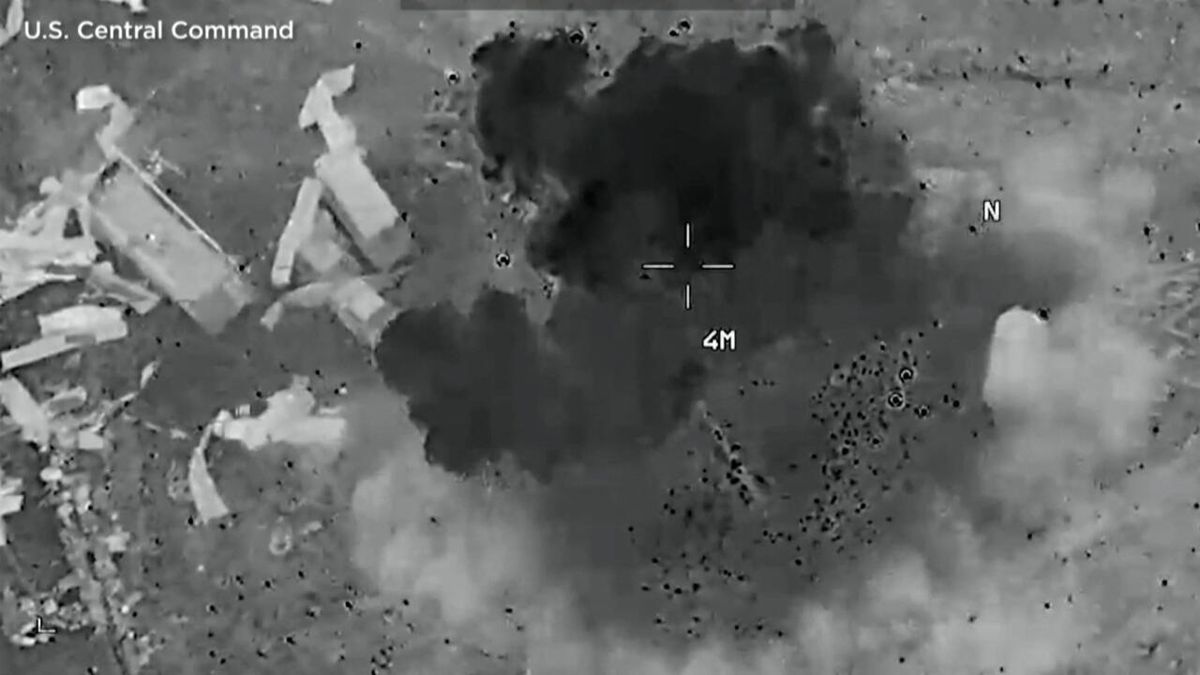
The Middle East is experiencing a significant escalation of military and economic tensions, marked by a series of US strikes on Iranian targets and disruptive actions by Iran-backed Houthi rebels in the Red Sea. These developments, occurring in late July 2026, underscore a deepening regional crisis with global implications, particularly for energy markets and international shipping.
For 13 consecutive nights, the United States military has conducted strikes against targets within Iran, with the latest wave occurring on July 24, 2026. These actions, confirmed by US Central Command, represent a sustained military campaign. The stated motivation behind these strikes, as articulated by US President Donald Trump, is to hold Iran responsible for attacks on Saudi oil tankers in the Red Sea carried out by Houthi rebels. This direct attribution of responsibility to Tehran for the actions of its proxies signals a significant shift in US policy, moving beyond proxy-on-proxy engagement to direct military action against the perceived state sponsor.
Simultaneously, Houthi rebels have opened what they describe as a "second front" in the conflict, targeting Saudi oil tankers in the Red Sea. These attacks, which have been confirmed to have struck at least two vessels, are strategically significant. The Red Sea, particularly the Bab el-Mandeb Strait, is a critical maritime chokepoint for global trade and energy shipments. By targeting this route, the Houthis aim to disrupt a vital artery of international commerce, exert pressure on Saudi Arabia, and demonstrate their capacity to inflict economic pain on regional adversaries and, by extension, global markets.
The immediate and most tangible consequence of these escalating hostilities has been a dramatic surge in global oil prices. Following the Houthi attacks on Saudi tankers, Brent crude futures briefly surpassed $100 a barrel for the first time since May, with both Brent and West Texas Intermediate (WTI) futures recording substantial weekly gains of 13.5% and 10.9% respectively. This sharp increase reflects profound market fears over the disruption of oil supplies from the Middle East, a region that remains central to global energy security. The Red Sea attacks, coupled with an unrelated temporary output cut in Kazakhstan affecting its main export route, have collectively fueled anxieties about supply stability, pushing prices higher and threatening broader economic implications globally.
Beyond military action, the crisis has unfolded on diplomatic and legal fronts. US President Trump's threat to seize frozen Iranian assets to pay for damages to ships and cargo has drawn a sharp rebuke from Tehran. Iranian Foreign Minister Abbas Araghchi condemned this as an "incendiary precedent," arguing that seizing a nation's assets for unrelated future claims sets a dangerous standard in international law. This move, if implemented, would represent a significant escalation of economic pressure on Iran, potentially further isolating its economy and complicating any future diplomatic resolution.
Domestically, the US House of Representatives narrowly passed a resolution aimed at halting US military action in Iran. This legislative action serves as a warning to President Trump, highlighting growing congressional concern over the scope and cost of military engagement, which has already reportedly reached $37.5 billion. It underscores the ongoing tension between the executive and legislative branches regarding war powers and the strategic direction of US foreign policy in the Middle East.
In a parallel development, President Trump introduced a new condition to a recently signed US-Saudi nuclear deal, insisting that the agreement was "totally subject to" Saudi Arabia joining the Abraham Accords and normalizing relations with Israel. This strategic linkage aims to integrate Saudi Arabia into a broader regional alignment against Iran, effectively seeking to formalize an anti-Iran bloc that includes key Arab states and Israel. Such a move would fundamentally reshape the geopolitical landscape of the Middle East, further isolating Iran and potentially solidifying new security architectures in the region.
The confluence of these events—sustained US military strikes, Houthi-led maritime disruptions, soaring oil prices, contentious asset seizure threats, and efforts to forge new regional alliances—paints a picture of a Middle East on the precipice. The strategic motivations are clear: the US seeks to deter and contain Iranian influence and its proxy network, while Iran and its allies aim to demonstrate their capacity for regional disruption and resistance. The immediate future suggests continued volatility, with significant risks of further escalation, economic instability, and a potential reordering of regional power dynamics. The international community watches closely as the conflict teeters on the "edge of the imaginable," as described by the UN chief, with profound implications for global peace and economic stability.
Source referenced: FRANCE24
This brief was synthesized by our Editorial Engine and reviewed by The Ground Narrative team.