TRENDING

Wednesday, 14 October 2026
----------------------
3 Jumada Al-Awwal 1448 AH
Mexico has agreed to host the Iranian national football team's base camp for the 2026 World Cup in Tijuana, following a refusal by the United States to accommodate the squad overnight. This decision highlights the complex interplay of sports, diplomacy, and active geopolitical tensions, particularly in the context of an ongoing conflict involving the U.S. and Israel in Iran.
In a move that underscores the intricate relationship between global sports and international geopolitics, Mexico has announced its willingness to host the Iranian national football team's base camp during the 2026 FIFA World Cup. This decision, confirmed by Mexican President Claudia Sheinbaum on May 25, 2026, comes after the United States declined to provide overnight accommodation for the Iranian squad, despite Iran being scheduled to play all its group stage matches on American soil. The team's base will now be established in Tijuana, Mexico, just south of the U.S. border, a logistical adjustment confirmed by FIFA and Iran's football federation.
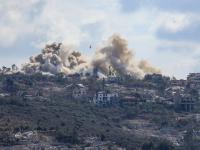
The U.S. refusal to host the Iranian team overnight is deeply rooted in the severe diplomatic and security tensions between Washington and Tehran. The article explicitly notes this development against the backdrop of a "war in Iran, which the US and Israel launched on 28 February." This critical context elevates the significance of the U.S. decision from a mere logistical challenge to a direct manifestation of active military conflict and heightened security concerns. The U.S. government's stance reflects a broader policy of isolating Iran, with existing sanctions likely complicating any extended stay for the Iranian delegation within U.S. borders. While the U.S. State Department issued a statement affirming that the Iranian team was welcome to participate in the tournament, it notably avoided addressing the specifics of their accommodation, indicating a nuanced diplomatic position that separates sporting participation from a full diplomatic presence.
Originally, the Iranian team had planned to base itself in Tucson, Arizona. However, with the escalation of tensions and the outbreak of conflict, security concerns and the complexities of U.S. sanctions made such an arrangement untenable. The Iranian football federation cited the move to Tijuana as a means to "avoid visa-related complications" and facilitate direct flights from Iran, further illustrating the practical challenges imposed by the strained U.S.-Iran relationship.
Mexico's decision to host the Iranian team, articulated by President Sheinbaum as having "no problem" with the arrangement, positions the nation as a neutral facilitator in a highly charged international environment. This move can be interpreted as a strategic assertion of Mexico's independent foreign policy, demonstrating its willingness to engage with nations irrespective of their relationships with the United States. By stepping in where its northern neighbor declined, Mexico enhances its image as a reliable international partner and a sovereign actor on the global stage. This act of hospitality, while seemingly minor in the grand scheme of international relations, carries symbolic weight, showcasing Mexico's capacity to navigate complex geopolitical landscapes and potentially bolstering its diplomatic standing within the Americas and beyond.
For FIFA, the global governing body of football, the situation presented a significant challenge to its mission of organizing a seamless international tournament. Faced with the U.S. refusal, FIFA's proactive approach in seeking an alternative host underscores its commitment to ensuring all participating teams can compete without undue political interference, even as it must contend with the realities of global power dynamics. The World Cup, co-hosted by the U.S., Canada, and Mexico from June 11 to July 19, 2026, is a major international event, and any disruption related to a participating nation's presence could have broader implications for the tournament's integrity and image.
This incident serves as a stark reminder that even seemingly apolitical events like a global sporting tournament are deeply intertwined with geopolitical realities. The U.S. refusal and Mexico's subsequent acceptance highlight the ongoing friction between the U.S. and Iran, now exacerbated by an active military conflict. It also demonstrates how nations like Mexico can leverage such situations to project their diplomatic autonomy and reinforce their role as constructive actors in international affairs. The logistical complexities faced by the Iranian team are a direct consequence of a deteriorating security environment and punitive measures, underscoring the far-reaching impact of geopolitical tensions on various facets of international engagement. As the World Cup approaches, the presence of the Iranian team in Mexico, while playing matches in the U.S., will serve as a continuous, albeit subtle, symbol of the complex and often contradictory nature of contemporary international relations.
Source referenced: GUARDIAN
This brief was synthesized by our Editorial Engine and reviewed by The Ground Narrative team.