TRENDING

Thursday, 15 October 2026
----------------------
4 Jumada Al-Awwal 1448 AH
Former U.S. President Donald Trump has reignited his campaign to discredit American elections, declassifying intelligence he claims exposes fraud and foreign interference, despite counter-findings from intelligence agencies and independent studies. This ongoing effort, coupled with a legislative push for stricter voting laws, raises significant concerns about the stability of U.S. democratic institutions and its international credibility.
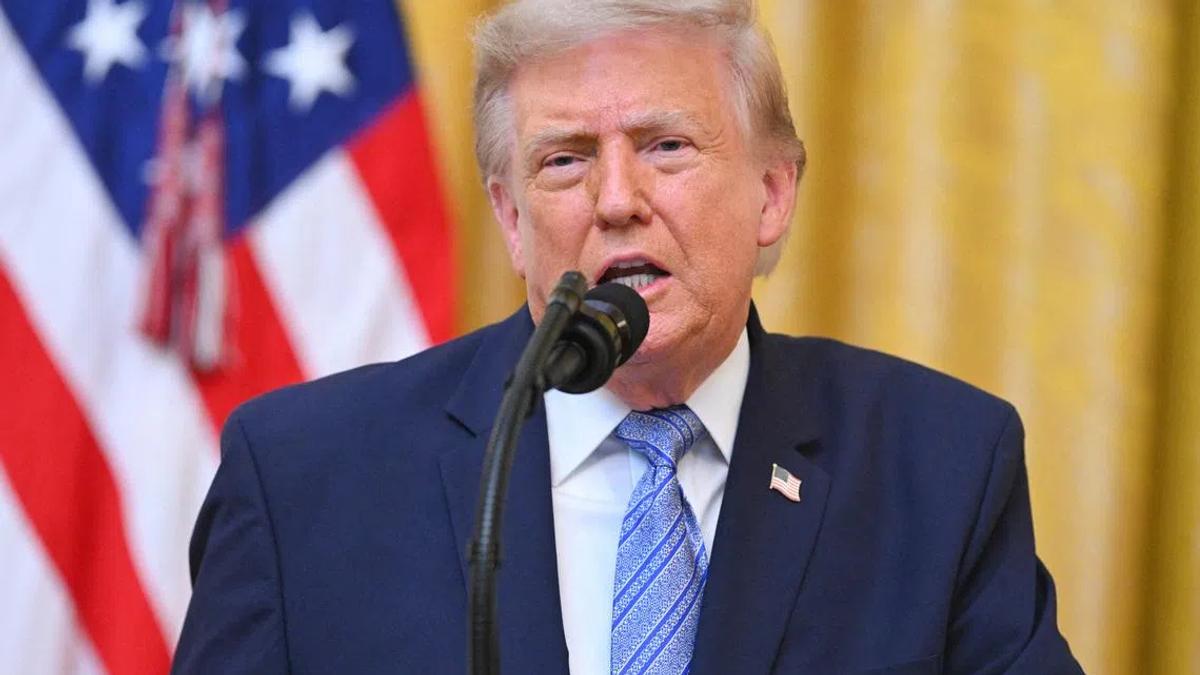
On July 16, 2026, former U.S. President Donald Trump delivered an address from the White House, intensifying his long-standing campaign to cast doubt on the integrity of American elections. During his remarks, Trump announced the declassification of intelligence documents, asserting they revealed widespread fraud and foreign interference in past electoral cycles. This move comes as part of a broader strategy that has seen Trump make over 100 claims of a “rigged” 2020 election in the first half of 2026 alone, aiming to galvanize support for the SAVE America Act.
The SAVE America Act, a legislative proposal championed by Trump, seeks to impose stringent voter identification requirements and expand federal intervention in election administration. While the Republican-controlled U.S. House of Representatives has passed the bill multiple times with a simple majority, it has consistently failed to secure the 60 votes necessary to overcome a filibuster in the Republican-led Senate, highlighting deep partisan divisions over election reform.
Trump's recent declassification of documents and public statements focused on three primary areas of alleged electoral vulnerability and interference:
Trump accused the Chinese government of actively influencing U.S. elections, specifically targeting Republicans in the 2018 midterms and attempting to undermine his own re-election prospects in 2020. He further claimed Beijing compromised U.S. voter data. However, these assertions contradict a 2021 U.S. intelligence assessment, which concluded that while China considered conducting influence operations to alter the 2020 election outcome, it ultimately decided against doing so. This assessment, conducted under John Ratcliffe, then Trump’s Director of National Intelligence and now his CIA Director, did note that China had sought to collect information on U.S. voters, public opinion, and political parties since at least 2008. Crucially, the report clarified that any voter data obtained by China was non-confidential and was not used to alter votes.
Drawing on CIA documents, Trump cited purported election-rigging by former Venezuelan President Nicolas Maduro to argue that U.S. voting machines were susceptible to hacking and digital vote manipulation. While a CIA document summarizing intelligence reporting between 2004 and 2020 did indicate the Venezuelan government possessed the capability to digitally manipulate votes, there is no evidence presented by Trump or corroborated by independent investigations that such techniques have ever been employed in U.S. elections. A widely circulated theory among Trump supporters, alleging the Maduro government hacked U.S. voting machines in 2020, has been thoroughly debunked by election security experts.
Trump also claimed that a Department of Homeland Security review identified approximately 278,000 non-U.S. citizens registered to vote in federal elections, in violation of U.S. law. This claim has been a recurring theme for Trump and his allies in their push for tighter voting restrictions. While some Republican-led states have voluntarily shared voter data with the Trump administration to identify and remove purported non-citizens from their rolls, the administration has lost 15 lawsuits seeking to compel other states, predominantly Democratic-led, to submit similar data. Independent studies, such as one by the Bipartisan Policy Center, have consistently found non-citizen voting to be exceedingly rare, identifying non-citizens in only 0.04% of cases when states sought to verify voter eligibility. Election experts have voiced concerns that large-scale purges based on such claims could inadvertently disenfranchise eligible voters.
President Trump's persistent efforts to delegitimize U.S. election results and processes carry significant geopolitical ramifications. Domestically, these claims contribute to a deepening erosion of public trust in democratic institutions, fostering political polarization and potentially undermining the peaceful transfer of power—a cornerstone of American democracy. The repeated questioning of electoral integrity, particularly when amplified by a former president, risks normalizing skepticism towards foundational democratic norms.
Internationally, the spectacle of a major global power grappling with internal disputes over its electoral legitimacy can diminish its standing and influence. Allies may view the U.S. as less stable and reliable, potentially impacting alliances and cooperative efforts on critical global issues. Adversaries, conversely, may exploit perceived weaknesses in U.S. democratic resilience to advance their own narratives and strategic interests, portraying the U.S. as hypocritical in its promotion of democracy abroad. The selective declassification and interpretation of intelligence for domestic political ends also risks compromising the integrity and non-partisanship of U.S. intelligence agencies, potentially hindering international intelligence sharing and cooperation.
Furthermore, the direct accusations against China and Venezuela, even if unsubstantiated by broader intelligence consensus, exacerbate already strained diplomatic relations. These allegations feed into existing geopolitical tensions, particularly with China, which the U.S. views as a strategic competitor. The push for the SAVE America Act, if successful, could fundamentally alter the landscape of U.S. voting rights, potentially leading to widespread disenfranchisement and further centralizing federal control over elections, with long-term consequences for American federalism and civil liberties. The ongoing debate underscores a critical juncture for U.S. democracy, with its internal stability and global leadership role hanging in the balance.
Source referenced: STRAITSTIMES
This brief was synthesized by our Editorial Engine and reviewed by The Ground Narrative team.


