TRENDING

Thursday, 15 October 2026
----------------------
4 Jumada Al-Awwal 1448 AH
Denmark's Prime Minister Mette Frederiksen has formed a new left-leaning minority coalition government, securing her third term in office. This development has significant implications for regional politics and climate policy, particularly in the context of Greenland's autonomous status and the country's stance on industrial pork farming.
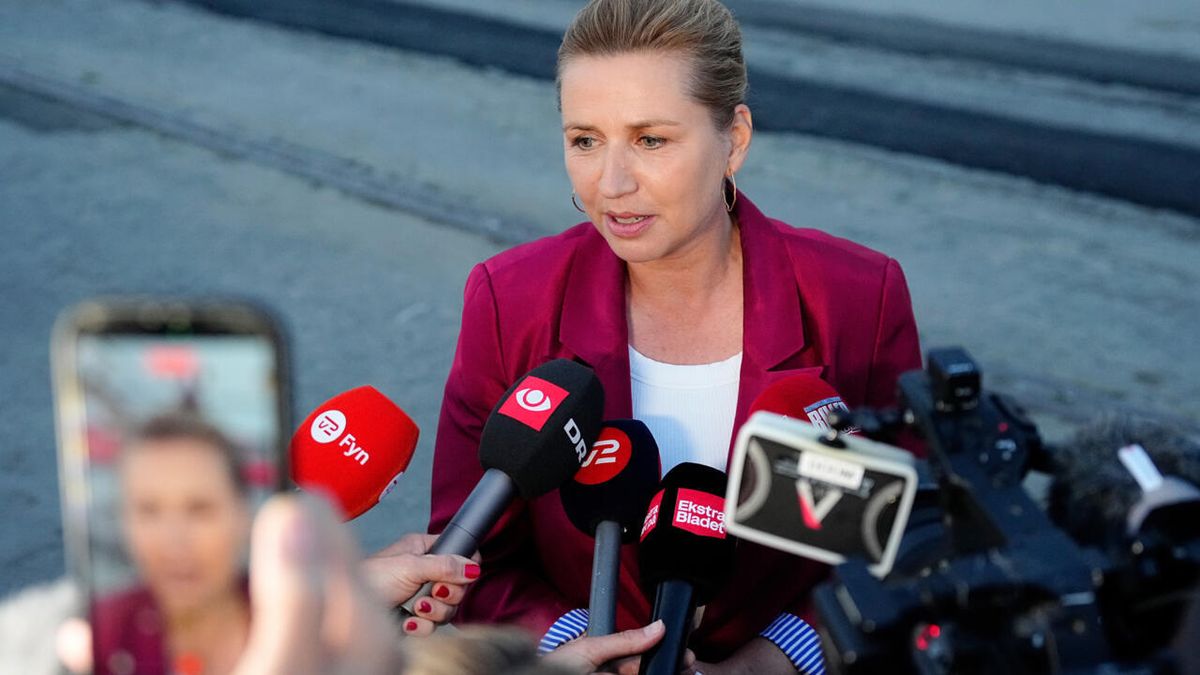
Denmark's Prime Minister Mette Frederiksen has secured her third term in office by forming a new left-leaning minority coalition government. This development has significant implications for regional politics and climate policy, particularly in the context of Greenland's autonomous status and the country's stance on industrial pork farming.
The formation of a left-leaning coalition in Denmark is a significant development, given the country's history of center-right governments. The new coalition brings together four parties, including Frederiksen's Social Democrats, the Socialist People's Party, the center-left Radikale Venstre, and the centrist Moderates. This coalition holds a slim parliamentary majority, with 82 seats out of 179.
The implications of this development are far-reaching, particularly in the context of Greenland's autonomous status. In January, Frederiksen stood up to US President Donald Trump against his threats to take over Greenland, an autonomous Danish territory. This move was seen as a significant assertion of Denmark's sovereignty over the territory.
The new coalition's stance on climate policy is also significant, particularly in the context of industrial pork farming. The industry is highly polluting but booming in Denmark, and the election campaign was dominated by the issue. Frederiksen has stated that her government's program is good for people living in Denmark and for future generations, as well as for animals.
The formation of a left-leaning coalition in Denmark has significant implications for regional politics. The country's stance on climate policy and industrial pork farming will likely influence other European countries, particularly those with similar industries. The development also has implications for Greenland's autonomous status, as Denmark's government will likely continue to assert its sovereignty over the territory.
The formation of a left-leaning coalition in Denmark, led by Prime Minister Mette Frederiksen, has significant implications for regional politics and climate policy. The country's stance on industrial pork farming and climate policy will likely influence other European countries, and the development has implications for Greenland's autonomous status. As the new government presents its program and cabinet, it will be interesting to see how these implications play out in the coming months.
Source referenced: FRANCE24
This brief was synthesized by our Editorial Engine and reviewed by The Ground Narrative team.