TRENDING

Tuesday, 6 October 2026
----------------------
25 Rabi' Al-Thani 1448 AH
Malta's Foreign Minister urges Europe to see the Mediterranean as a bridge, not a border, highlighting the urgent need for a unified response to migration and regional instability. This analysis unpacks the power dynamics behind Europe's fragmented approach and the human costs of its externalized border policies.
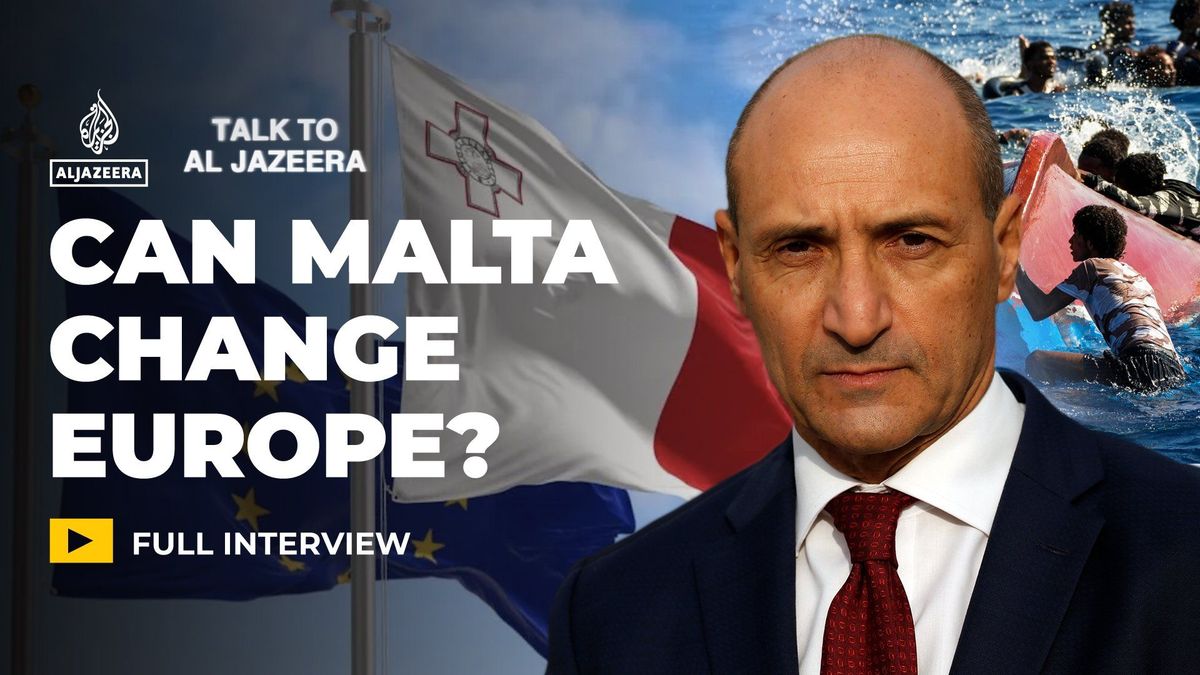
Malta's Foreign Minister Chris Fearne recently urged a re-evaluation of Europe's approach to the Mediterranean, advocating for its perception as a "bridge" connecting continents rather than a "border" dividing them. He called for a more robust and coordinated European response to escalating crises across the region, including migration, while reiterating support for a two-state solution in Israel-Palestine, continued aid to Ukraine, and efforts to stabilize Libya. Fearne's remarks underscore a growing concern among frontline European states about the fragility of international order and the uneven burden of regional instability.
The Mediterranean, far from being a neutral body of water, represents a complex interplay of power. For Malta, a small island nation at the nexus of Europe and North Africa, the "bridge or border" dilemma is not theoretical but a daily reality. The European Union's migration policy is fundamentally fractured along geographical lines. Southern European states, like Malta, Italy, and Greece, bear the immediate brunt of arrivals, creating immense pressure on their resources and political systems. This geographic reality incentivizes these nations to push for greater EU solidarity and burden-sharing, often clashing with richer, landlocked northern states less directly impacted.
The core power dynamic is Europe's desire to externalize its borders. Rather than addressing the root causes of migration or establishing robust internal asylum processing, the EU increasingly relies on agreements with North African countries—like Libya, Tunisia, and Morocco—to intercept migrants and refugees before they reach European shores. These arrangements often involve significant financial aid and political leverage, effectively deputizing non-EU states to act as Europe's border guards. This strategy allows European leaders to project an image of control to their domestic electorates, even as it shifts the human and moral costs elsewhere.
The human cost of this fragmented approach is borne overwhelmingly by those seeking safety or a better life. Migrants and refugees, often fleeing conflict, poverty, or climate-induced instability, face perilous journeys across the Mediterranean. Thousands have drowned, their deaths becoming grim statistics. Those who survive are frequently subjected to exploitation by human traffickers, detained in overcrowded and inhumane facilities in North Africa, or face uncertain futures in Europe marked by xenophobia and bureaucratic hurdles. For the communities in frontline European states, the influx can strain public services, exacerbate social tensions, and fuel anti-immigrant sentiment, even as local economies sometimes become reliant on migrant labor. The people making these journeys, and the communities directly impacted by their arrival, are rarely consulted in the high-level policy discussions that shape their fates.
While European officials often speak of upholding international law and human rights, the practical application of these principles becomes highly selective when it comes to migration. The "rule of law internationally does not always apply," as Fearne noted, is a stark admission of this selective enforcement. What is often downplayed or omitted is Europe's own historical and contemporary role in the instability of many origin countries—from colonial legacies to military interventions (e.g., Libya in 2011) and economic policies that can exacerbate poverty.
Furthermore, the long-term demographic and economic implications for Europe are rarely discussed openly. As Europe faces an aging population and labor shortages, migration, if managed humanely and strategically, could offer solutions. Instead, the narrative is dominated by crisis management and border control, obscuring the potential benefits and the moral imperative to uphold international protection standards. The reliance on often authoritarian regimes in North Africa to control flows also creates a moral hazard, implicitly endorsing practices that may violate human rights in exchange for border security.
The future of the Mediterranean as a "bridge" or "border" will hinge on several factors. Watch for shifts in EU internal solidarity mechanisms, particularly how member states respond to proposals for mandatory burden-sharing or common asylum processing. The stability of North African nations, especially Libya, remains critical; any further collapse could trigger even larger migratory movements. European elections will also be key, as nationalist and anti-immigrant parties continue to gain traction, potentially pushing policies further towards stricter border controls and less humanitarian aid. Finally, the escalating impacts of climate change in Africa and the Middle East will almost certainly increase displacement, testing Europe's capacity and willingness to adapt its migration policies beyond mere containment. The question remains whether Europe will choose to invest in genuine regional stability and shared responsibility, or continue to externalize its problems, leaving the human cost to others.
Source referenced: ALJAZEERA
This brief was synthesized by our Editorial Engine and reviewed by The Ground Narrative team.