TRENDING

Monday, 26 October 2026
----------------------
15 Jumada Al-Awwal 1448 AH
Saudi Arabia, Turkey and Pakistan gathered in Tehran under the Mecca Joint Defence Agreement as Houthi attacks intensify. The meeting reveals shifting power balances and a looming toll on ordinary people across the region.
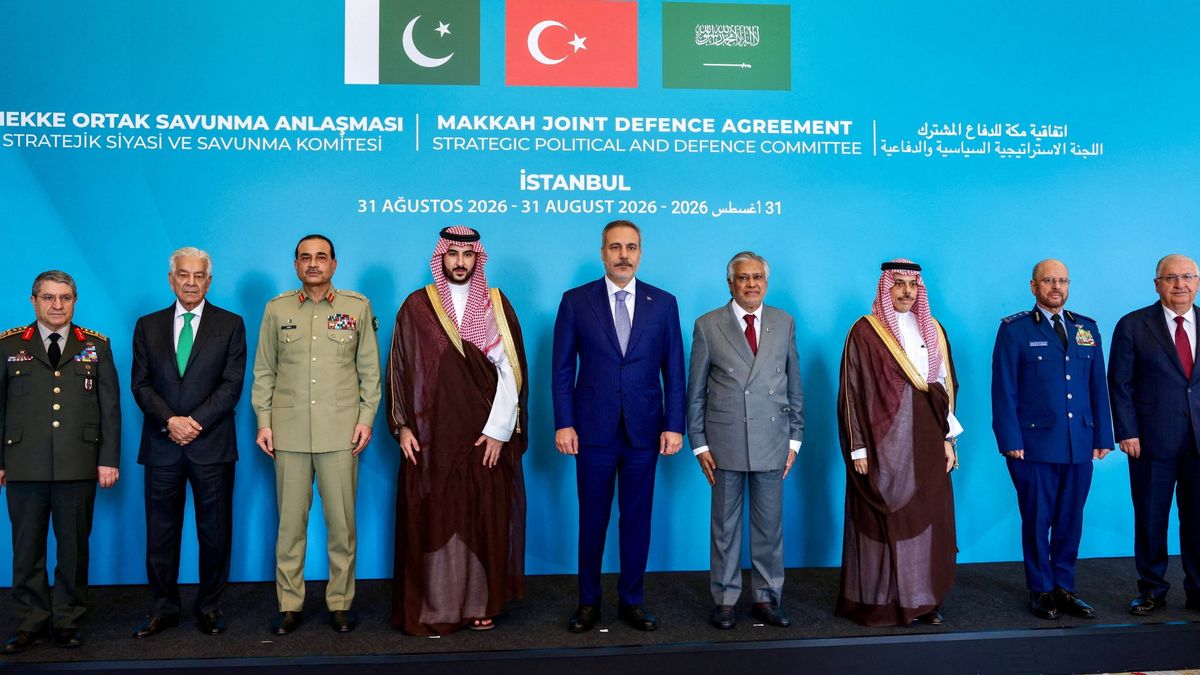
Delegations from Saudi Arabia, Turkey and Pakistan arrived in Tehran this week for the first high‑level gathering of the Mecca Joint Defence Agreement since its signing in August. The talks, confirmed by Saudi deputy minister Rayed Krimly and Iran’s deputy security chief Ali Bagheri Kani, were framed as a de‑escalation effort after a surge of Houthi missile and drone attacks on Saudi territory. Participants included Saudi Defence Minister Khalid bin Salman Al Saud, Pakistani military chief Asim Munir and Turkish intelligence chief Ibrahim Kalin, each meeting with Iranian officials led by Mohsen Rezaei.
The alliance rests on three intersecting incentives. First, Saudi Arabia seeks to shield its oil‑rich heartland from Houthi strikes that threaten both security and export revenues, especially as the US‑Israel war on Iran drags on. Second, Iran leverages the pact to break its diplomatic isolation, presenting itself as a regional security broker capable of coordinating a collective response to what it calls “American‑led aggression.” Third, the United States watches the talks with a mix of alarm and strategic calculation: a unified front could complicate Washington’s ability to pressure Tehran while also offering a channel for back‑channel negotiations through Pakistan. Economic trade‑offs are evident as Saudi investors weigh the cost of deeper military cooperation against the need to keep oil markets stable, while Turkey hopes the pact will boost its defence exports and cement its role as a bridge between the Gulf and the wider Muslim world. Military doctrine also shifts; the agreement’s Article 1 obliges members to use “all necessary means” against any attack on a partner, effectively extending each nation’s rules of engagement beyond its own borders.
The Houthi campaign, now backed by Iranian‑supplied missiles and drones, has escalated civilian casualties in Yemen’s already fragile northern provinces. Air‑defence interceptions over Saudi Arabia have forced many Yemeni families to flee their homes, fearing retaliation that could spill over the border.
Millions of migrant workers from South Asia and Africa live in Saudi cities and oil fields. Heightened military readiness means longer curfews, restricted movement and the risk of being caught in cross‑border skirmishes. Their wages, already vulnerable to oil‑price swings, face further pressure if the pact leads to sustained deployments of foreign troops on Saudi soil.
Pakistan’s involvement ties its armed forces more closely to Iranian strategic calculations. While the government touts a diplomatic win, families of soldiers stationed near the Persian Gulf worry about being drawn into a conflict that could pit them against US‑aligned forces, potentially jeopardising remittances that sustain many households back home.
Official statements stress “de‑escalation” and “regional stability,” yet several layers remain hidden. Iranian media downplays Tehran’s demand that the United States halt talks on ending the US‑Israel war, framing the condition as a bargaining chip rather than a hardline stance. Meanwhile, Saudi public diplomacy omits the kingdom’s growing reliance on Iranian‑sourced security guarantees, a shift that could undermine its long‑standing narrative of independence from Tehran. The US‑Israel war is portrayed as a distant conflict, but its ripple effects—fuel price volatility, arms sales, and the politicisation of the Gulf—are largely absent from the public discourse. Finally, the role of Pakistan as an intermediary is highlighted, yet the strategic cost to its own security apparatus and the potential for domestic backlash against deeper entanglement with Iran receive scant attention.
Analysts should monitor three converging signals. First, any change in US policy toward Iran, especially regarding sanctions relief or direct negotiations, could either reinforce or unravel the Tehran‑based alliance. Second, the speed and scope of regional security deployments—such as joint exercises or the stationing of Iranian‑aligned air‑defence systems in Saudi Arabia—will indicate how far the pact moves from paper to practice. Third, the frequency and intensity of Houthi attacks will test the alliance’s credibility; a successful collective response could embolden the bloc, while failure may push individual members back toward unilateral strategies. Keeping an eye on these dynamics will reveal whether the Mecca pact becomes a stabilising framework or a new flashpoint for ordinary people across the Middle East.
It is a security pact signed by Saudi Arabia, Turkey and Pakistan in August 2026 that obliges each member to treat an armed attack on any partner as an attack on all, allowing the use of all necessary means to protect each other's territorial integrity.
If the alliance leads to increased military deployments, migrant workers could face curfews, disrupted wages and heightened risk of collateral damage, while Yemeni civilians may see intensified fighting along the border.
Source referenced: ALJAZEERA
This brief was synthesized by our Editorial Engine and reviewed by The Ground Narrative team.


