TRENDING

Tuesday, 6 October 2026
----------------------
25 Rabi' Al-Thani 1448 AH
A US-sponsored agreement to stabilize the Lebanon-Israel border is challenged after Israeli troops intrude on a 'pilot zone' village, erecting a barrier and injuring Lebanese soldiers. The incident casts doubt on diplomatic efforts and the safety of returning civilians.
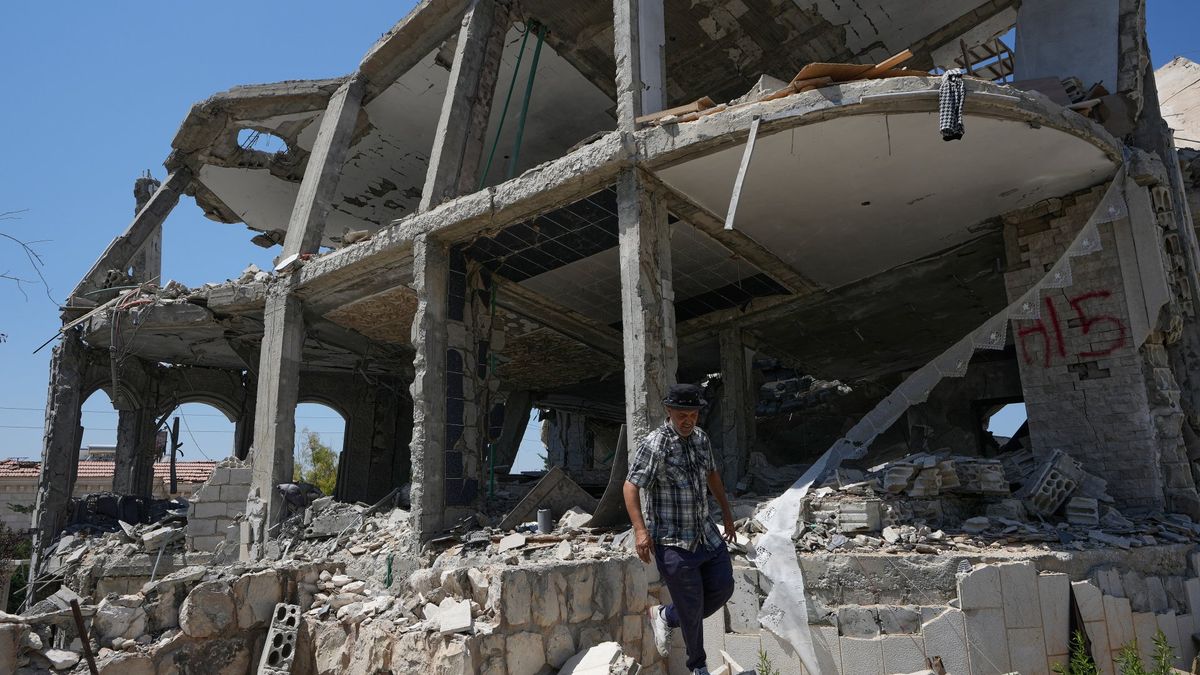
In the southern Lebanese village of Zawtar al-Gharbiyah, three Lebanese soldiers were injured while attempting to defuse unexploded ordnance. This incident followed closely on the heels of an Israeli military incursion into the same village, where troops reportedly advanced overnight and erected a new earth barrier, just 100 meters from the village square. This move directly challenges a US-sponsored framework agreement signed in June, which designated Zawtar al-Gharbiyah as a "pilot zone" for Lebanese army deployment and phased Israeli withdrawal, intended to allow residents to return.
Israel's actions in Zawtar al-Gharbiyah illustrate a calculated assertion of power, testing the boundaries of a recently brokered agreement. Despite the framework accord envisioning a phased Israeli withdrawal in return for Hezbollah's disarmament, Israel appears to be creating new facts on the ground. Its denial of awareness regarding the incursion, despite eyewitness accounts from the village mayor, Lebanon's state news agency, and an AFP correspondent, is a familiar tactic designed to maintain plausible deniability while advancing strategic objectives. For Israel, these incursions serve multiple purposes: reinforcing a perceived security buffer, signaling resolve ahead of further negotiations, and potentially pre-positioning for future border demarcations. Lebanon, meanwhile, finds itself in a precarious position. Its army, deployed to reassert sovereignty and facilitate civilian return, is directly confronting Israeli military actions that undermine its authority and the very agreements it is tasked with upholding. The US, as the mediator of the June agreement, sees its diplomatic efforts challenged, highlighting the difficulty of enforcing peace when one party acts unilaterally.
The immediate human cost of this geopolitical maneuvering is borne by the residents of southern Lebanon. Zawtar al-Gharbiyah was one of two "pilot zones" where the Lebanese army had deployed, allowing approximately 50 families to begin returning home. Now, these hopes are dashed. The presence of new barriers, ongoing shelling in nearby towns like Mansouri, and the constant threat of unexploded ordnance make life on the border untenable. Villages along the line of contact are becoming uninhabitable, forcing displacement and destroying livelihoods. The injured Lebanese soldiers are a stark reminder of the physical dangers faced by those attempting to clear the remnants of conflict and secure their land. Beyond the immediate casualties, there is the psychological toll of perpetual insecurity, where agreements are fragile and the promise of peace can be undone overnight by a bulldozer.
What is conspicuously absent from official narratives, particularly from Israel, is a frank acknowledgment of the deliberate nature of these incursions and their direct challenge to the US-brokered agreement. The Israeli military's claim of "not aware of such an event" stands in stark contrast to the physical evidence and multiple reports. This downplays the strategic intent behind such actions, framing them as isolated incidents rather than part of a broader pattern of asserting control and influencing future negotiations. Furthermore, the effectiveness of "framework agreements" themselves is being quietly undermined. Such accords are only as strong as the political will to enforce them, and when a powerful actor can violate terms with impunity, the entire diplomatic architecture becomes fragile. The deeper, untold story is how these seemingly localized incidents are integral to the larger, unresolved questions of border demarcation, regional power balance, and the future role of non-state actors like Hezbollah, all of which are being negotiated on the backs of ordinary citizens.
All eyes will now be on the upcoming round of US-mediated talks in September. The credibility of the June framework agreement, and indeed the entire diplomatic process, is at stake. Readers should watch for any official statements or actions from the US regarding the violation of its mediated accord. Will there be condemnation, or will the incident be quietly absorbed into the ongoing negotiation process? Observe whether Israel continues its pattern of incursions and barrier construction in other "pilot zones" or along the border, signaling its intent to establish new facts on the ground. Conversely, any significant Lebanese or international pushback, or a more robust enforcement mechanism for the agreement, could alter the dynamic. The return of civilians to border villages will be a key indicator of whether genuine stability can be achieved, or if these communities remain pawns in a larger, unending struggle for control.
Source referenced: ALJAZEERA
This brief was synthesized by our Editorial Engine and reviewed by The Ground Narrative team.