TRENDING

Monday, 5 October 2026
----------------------
24 Rabi' Al-Thani 1448 AH
The United States ends Operation Inherent Resolve, leaving Iraq’s Kurdish Peshmerga to guard their autonomy alone. A rushed unification of rival militias aims to fill the security vacuum, but the human stakes are steep.
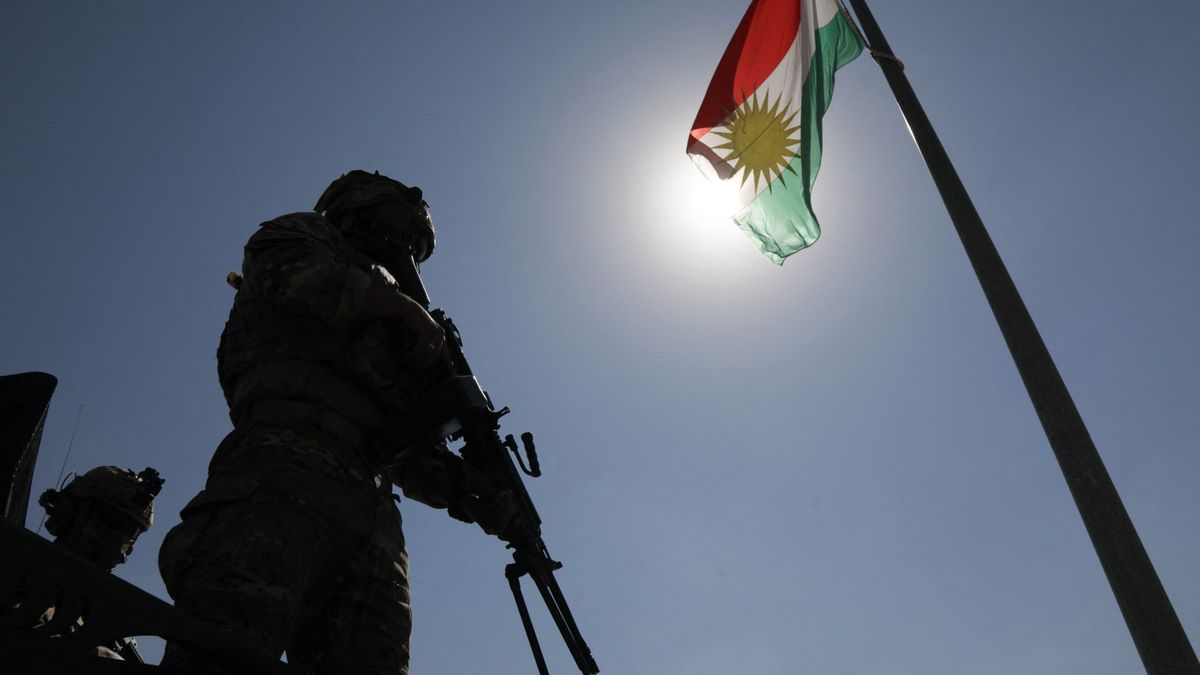
On 1 October 2026 the United States formally concluded Operation Inherent Resolve, completing the withdrawal of its coalition forces from Iraq after a twelve‑year campaign against IS IL. Hours later the Kurdish Regional Government announced that the long‑splintered Peshmerga forces of the KDP and PUK had been merged under a single command, presenting it as a new era of self‑reliance.
The withdrawal removes the U.S. security umbrella that has underpinned Kurdish autonomy since the early 2000s. Without American air‑defence systems and logistical support, Erbil must renegotiate its power balance with Baghdad and with Iran‑aligned militias that have long leveraged the U.S. presence as a pretext for their own armament. The internal unification of the Peshmerga serves two strategic purposes: it curtails party patronage that has historically fragmented Kurdish military effectiveness, and it offers a single bargaining chip in negotiations with the Iraqi federal government. For Baghdad, the U.S. exit eliminates a diplomatic lever used by Washington to pressure Iraq to disarm Iran‑linked groups, potentially easing internal sectarian tensions if a new legal‑political framework can replace force.
The most immediate victims are the Kurdish civilians who rely on the Peshmerga for protection against residual IS IL cells and cross‑border drone strikes. Rural families in the Makhmur district and the disputed areas around Sinjar now face a security vacuum that could invite renewed insurgent activity. In Erbil, the economic ripple is palpable: contractors who supplied the U.S. bases, from food vendors to construction firms, confront sudden loss of revenue, threatening livelihoods across the city’s informal sector. Meanwhile, Iraqi soldiers stationed in mixed‑ethnicity zones must stretch thin to cover the gaps left by departing coalition assets, raising the risk of accidental clashes with Kurdish units still adjusting to the new command structure.
Official statements from Washington and Erbil emphasize “sovereignty” and “regional stability,” but they largely downplay the strategic value of the air‑defence systems that were removed. Those systems not only shielded Kurdish towns from Iranian‑backed drone attacks but also acted as a deterrent against any resurgence of IS IL. Their absence is framed as a routine hand‑over, yet the reality is a significant degradation of early‑warning capability for the Kurdish population. Additionally, the narrative of a seamless Peshmerga unification masks deep‑seated rivalries; the two geographically distinct commands retain separate supply chains and loyalties, a fissure that could be exploited by both Baghdad and Tehran to weaken Kurdish leverage.
Watch for joint security patrols announced by Erbil and Baghdad in the disputed territories—these will reveal whether the promised coordination can survive without U.S. mediation. The next few months will also show if Iran‑aligned militias exploit the vacuum to expand their influence in the Kurdish hinterland, especially around oil‑rich areas. Finally, any foreign procurement moves by the KRG—such as seeking Turkish or Russian arms to replace lost U.S. equipment—will signal a shift in the regional balance of power and could redraw alliance lines across the Middle East.
Source referenced: ALJAZEERA
This brief was synthesized by our Editorial Engine and reviewed by The Ground Narrative team.