TRENDING

Thursday, 17 September 2026
----------------------
6 Rabi' Al-Thani 1448 AH
A war crimes tribunal in The Hague has sentenced former Kosovo President Hashim Thaci to 25 years for atrocities during the 1998-1999 war, forcing a nation to reconcile its liberation narrative with uncomfortable truths about its past.
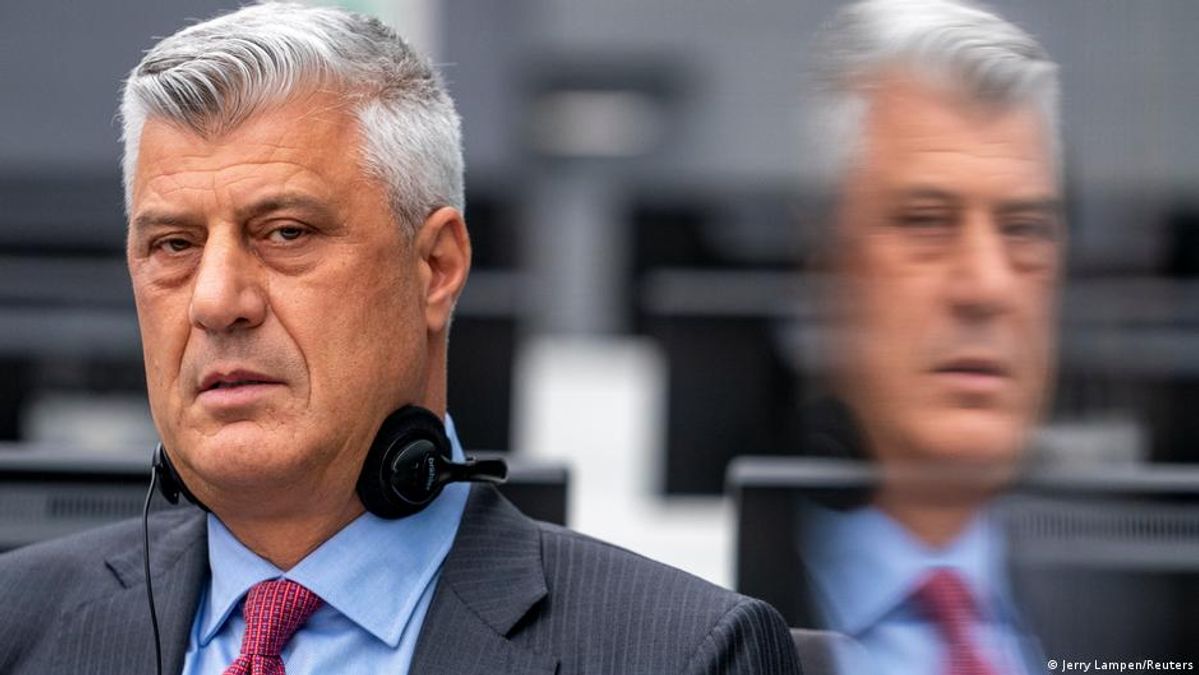
Former Kosovo President Hashim Thaci, a revered figure and ex-commander of the Kosovo Liberation Army (KLA), was sentenced to 25 years in prison by a war crimes tribunal in The Hague. The court found Thaci guilty of murder, torture, and illegal detention of political opponents and perceived collaborators during and immediately after Kosovo's 1998-1999 war for independence from Serbia. Three other former KLA leaders were also tried alongside him, convicted of similar crimes.
This verdict is a stark demonstration of how international justice mechanisms, even those established under national law but staffed internationally, can assert authority over deeply entrenched national narratives. The Kosovo Specialist Chambers (KSC), though deeply unpopular in Kosovo, represents a compromise born from sustained international pressure to address alleged KLA crimes after local efforts failed due to political interference and witness intimidation. For the international community, particularly the EU and US, supporting the KSC is an exercise in promoting rule of law and accountability, crucial for Kosovo's aspirations for deeper integration and regional stability.
For Serbia, the verdict offers a degree of validation for its long-standing claims of KLA atrocities, potentially shifting the narrative balance in ongoing disputes over Kosovo's statehood. However, for many Kosovars, the KSC is perceived as a politically motivated instrument, undermining their national struggle and targeting their heroes while Serbian perpetrators largely escape similar scrutiny from *this specific* tribunal. The power dynamic here is a clash between universal legal principles and deeply held national identity, with external actors wielding significant influence through the judicial process, shaping the historical record and future political leverage.
The human cost of this verdict is borne by multiple layers of Kosovar society. First, the victims of the KLA's alleged crimes—many of whom were ethnic Serbs, Roma, or Albanian political opponents—finally see a measure of justice, however belated. Their suffering, often overshadowed by the larger narrative of Serbian ethnic cleansing, is now officially acknowledged, offering some closure. Second, the Kosovar public faces a profound internal conflict. For a generation, Thaci and the KLA have been celebrated as liberators, the architects of their nation's freedom. To now see these figures condemned as war criminals forces a painful re-evaluation of their foundational myths. This creates deep emotional distress, division, and a sense of betrayal among those who view the KSC as an affront to their struggle. The verdict risks exacerbating ethnic tensions within Kosovo and further complicating the already fragile reconciliation process with Serbia. Ordinary citizens, who lived through the brutal conflict and its aftermath, are now forced to grapple with a legal outcome that challenges their collective memory and national identity, without having had a direct say in the establishment or proceedings of the tribunal.
What powerful actors—both within Kosovo and internationally—often downplay or omit is the inherent selectivity and political context of post-conflict justice. While the KSC focuses exclusively on KLA crimes, the broader narrative of the Kosovo War involved extensive atrocities committed by Serbian forces, including a systematic campaign of ethnic cleansing that killed thousands of ethnic Albanian Kosovars. While some Serbian officials have faced justice through other international courts, the perception in Kosovo is that the international community has disproportionately targeted KLA figures, creating an imbalance in accountability. This selective focus, while legally justifiable by the KSC's mandate, fuels resentment and undermines its legitimacy in the eyes of many Kosovars.
Furthermore, the role of external powers, particularly the US and NATO, in supporting the KLA during the war, and subsequently in establishing and funding the KSC, is a complex layer often glossed over. The current push for accountability, while framed as upholding universal justice, also serves the geopolitical interests of stability and rule of law in a region still prone to volatility, sometimes at the expense of local perceptions of fairness and historical context. The full spectrum of wartime suffering and accountability remains an uncomfortable truth for all parties involved.
The immediate aftermath will likely see continued protests in Kosovo and a deepening of internal political divisions. Watch for how Kosovo's leadership navigates the public outcry while maintaining its international commitments. The verdict could embolden Serbia in its diplomatic efforts to challenge Kosovo's sovereignty, potentially stalling any progress in EU-mediated normalization talks. Crucially, observe the long-term impact on Kosovo's national identity and historical narrative. Will this verdict lead to a more nuanced, self-critical examination of the past, or will it solidify a narrative of victimhood and perceived injustice against the international community? The path forward for reconciliation within Kosovo and between Kosovo and Serbia will largely depend on how these conflicting narratives are managed, and whether the international community can demonstrate a more balanced approach to justice that addresses all victims of the conflict.
Source referenced: DW
This brief was synthesized by our Editorial Engine and reviewed by The Ground Narrative team.


