TRENDING

Monday, 5 October 2026
----------------------
24 Rabi' Al-Thani 1448 AH
Thousands gathered in Tehran for the funeral of Supreme Leader Ayatollah Ali Khamenei, killed in US-Israeli attacks, chanting for revenge. The event underscored a volatile succession, solidified the 'Axis of Resistance,' and highlighted the complex interplay of conflict and diplomacy in the Middle East.
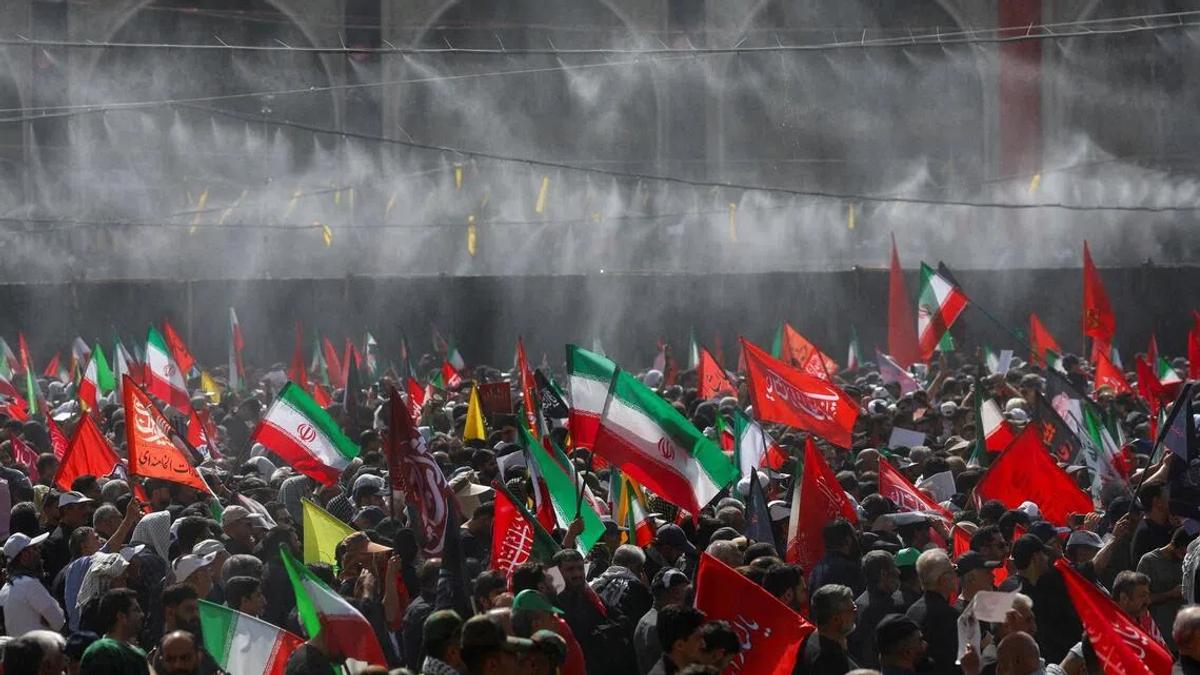
On July 4, 2026, thousands of mourners converged on Tehran's Grand Mosalla prayer complex for the funeral of Iran's Supreme Leader, Ayatollah Ali Khamenei. The somber occasion was marked by fervent chants of "revenge, revenge," reflecting deep public anger and a collective vow to avenge his death. Khamenei, who had led Iran for over three decades, was killed in late February by what Iranian authorities described as US-Israeli attacks, an event that dramatically escalated regional tensions into a full-blown conflict.
The assassination of a sitting Supreme Leader represents an unprecedented escalation in the long-standing shadow war between Iran, the United States, and Israel. This act, occurring on February 28, 2026, triggered a regional war that has since spread across the Middle East, fundamentally altering the geopolitical landscape. The funeral, therefore, was not merely a ceremony of mourning but a powerful political statement, reinforcing the regime's narrative of external aggression and galvanizing public support for its retaliatory stance.
The funeral also served as a critical moment for the formal introduction and consolidation of power for Iran's new Supreme Leader, Mojtaba Khamenei, son of the deceased leader. While Mojtaba remained out of public sight during the ceremonies, mourners carried his portraits, signaling a potentially dynastic succession within the Islamic Republic. This transfer of power, occurring under such volatile circumstances, underscores the resilience of Iran's clerical establishment and its capacity for internal continuity, even amidst profound external pressure and conflict. The smooth transition, despite the assassination, aims to project stability and strength both domestically and internationally, preventing any perceived power vacuum that adversaries might exploit.
The presence of the yellow flag of Hezbollah, the Iran-backed militant group, among the mourners was a potent symbol of the enduring strength and strategic importance of Iran's "Axis of Resistance." This network of allied groups across the Middle East, united in their opposition to Israel and the United States, has been central to Iran's regional foreign policy. Hezbollah, actively engaged in battles with Israeli forces in southern Lebanon since the outbreak of the regional war, represents a critical component of Iran's deterrence and projection of influence. The funeral provided a platform to reaffirm these alliances and signal a continued commitment to confronting perceived adversaries through proxy forces, even as the new leadership takes the helm.
Paradoxically, the funeral and the ongoing calls for revenge unfolded against the backdrop of a preliminary deal signed in June between the United States and Iran, aimed at ending the regional war. This diplomatic overture, despite sporadic exchanges of fire continuing since the agreement, highlights a complex strategic calculus. Both Washington and Tehran appear to recognize the immense costs and unpredictable trajectory of an uncontrolled regional conflict, prompting efforts to de-escalate even while maintaining confrontational postures. The preliminary deal suggests a mutual interest in preventing a wider conflagration, yet the deep-seated animosity and the public demand for retribution following Khamenei's assassination present significant challenges to achieving a lasting peace.
The assassination of Ayatollah Ali Khamenei and the subsequent regional war mark a profound turning point in Middle Eastern geopolitics. The event has not only intensified the long-standing rivalry between Iran and its adversaries but has also demonstrated a willingness by external powers to target the highest echelons of Iranian leadership. The succession of Mojtaba Khamenei, coupled with the fervent calls for revenge, suggests that Iran's foreign policy under the new leadership may lean towards a more assertive and potentially retaliatory stance, even as diplomatic channels remain open. The future stability of the region hinges precariously on the delicate balance between these demands for retribution, the ongoing military engagements, and the fragile diplomatic efforts to contain a conflict with potentially catastrophic global implications. The world watches closely to see how Iran's new leadership will navigate these complex pressures, and whether the preliminary deal can evolve into a more permanent resolution, or if the calls for revenge will ultimately dictate the region's trajectory. The legacy of Khamenei's death will undoubtedly shape Iran's strategic decisions for years to come. The unprecedented nature of the assassination and the subsequent regional war underscore the high stakes involved for all actors in the Middle East and beyond.
Source referenced: STRAITSTIMES
This brief was synthesized by our Editorial Engine and reviewed by The Ground Narrative team.


