TRENDING

Wednesday, 11 November 2026
----------------------
1 Jumada Al-Thani 1448 AH
A church shooting in Jordan exposed how U.S. security assistance fuels a heavy‑handed security state that prioritizes regime stability over citizen safety. The analysis traces the flow of aid, the opaque counter‑extremism program, and the human price paid by Christians and Syrian civilians.
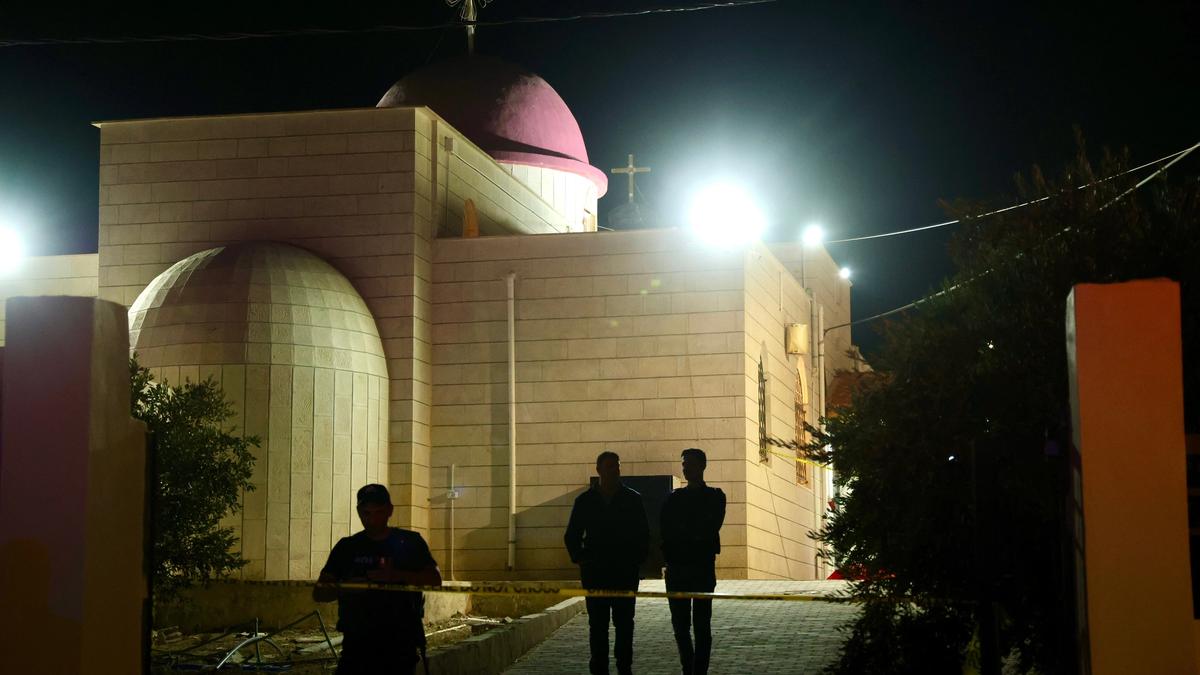
On 23 October 2026 gunmen opened fire on mourners at St. George’s Greek Orthodox Church in the village of Hmoud, killing nine and wounding at least 34. The attackers—brothers Hazza and Mishal Mohammad and their brother‑in‑law Ahmad Sami Hussein—were captured after a three‑day manhunt, during which a police patrol was reportedly stationed inside the church earlier in the month. The trio had recently been released from prison after serving sentences for terrorism‑related offenses, raising immediate questions about surveillance failures. Within days of the arrests, the Jordanian air force bombed four locations in Syria’s Daraa and Suwayda governorates, killing seven civilians, including three children, in what the government claimed were Islamic State hideouts linked to the attackers.
Jordan’s security architecture is heavily shaped by United States assistance that began in earnest after the 2015 peace treaty with Israel. Over the past decade, Washington has funneled roughly $5 billion in military aid, alongside hundreds of millions for border surveillance, intelligence sharing, and the controversial Countering Violent Extremism (CVE) unit. The aid is conditioned on Jordan’s role as a regional stabilizer, but the funding structure gives the monarchy and its security services broad discretion to allocate resources without transparent oversight. The CVE program, shuffled between ministries, has become a bureaucratic shell that justifies raids, preventive arrests, and expansive anti‑terror laws while sidestepping the socioeconomic drivers of radicalization. European Union and Canadian contributions add another $200 million, reinforcing a security‑first model that privileges intelligence‑driven operations over community‑based prevention.
The immediate victims were members of Jordan’s tiny Christian community, a group that has historically enjoyed relative safety in a Muslim‑majority nation. Their loss reverberates through families who now face heightened fear of sectarian targeting. Beyond the church, the Syrian airstrikes claimed civilian lives—women, children, and elderly—who had no direct link to any militant network. The Jordanian government offered condolences but no compensation, leaving bereaved families to shoulder both emotional trauma and economic hardship. On the home front, the pervasive surveillance apparatus, funded by foreign aid, curtails civil liberties for ordinary Jordanians, who live under the constant threat of arbitrary detention under broad anti‑terror statutes.
While officials tout the effectiveness of U.S. aid, they rarely disclose how funds are allocated within Jordan’s sprawling security complex. The CIA’s covert financing of the General Intelligence Directorate remains opaque, and public records show no audit of the billions spent on surveillance equipment or border programs. Moreover, the Jordanian intelligence services have been accused of using CVE resources to monitor political dissent, effectively conflating legitimate opposition with extremist threats. The European Union’s financial contributions are similarly shrouded; reports indicate that a sizable share of the €200 million earmarked for policing has been absorbed by joint military‑police operations that lack civilian oversight. This lack of transparency allows the monarchy to claim a hard‑line stance against terrorism while deflecting scrutiny over human‑rights abuses.
Observers should track three developing fronts. First, any shift in U.S. policy toward Jordanian aid—particularly in the wake of domestic debates on foreign military assistance—could reshape the funding landscape and pressure the monarchy to reform its security practices. Second, the joint Jordan‑Syria security committee announced after the airstrikes may become a conduit for further cross‑border operations, potentially expanding Jordan’s military footprint in Syrian territory. Finally, civil‑society groups within Jordan are beginning to demand accountability for the CVE program; their ability to mobilize could force a re‑evaluation of how foreign aid is tied to human‑rights benchmarks. Monitoring these signals will reveal whether the current model of security assistance continues to prioritize regime stability at the expense of civilian safety.
On 23 October 2026 gunmen opened fire at St. George’s Greek Orthodox Church in Hmoud, killing nine worshippers. The attackers were three brothers—Hazza and Mishal Mohammad and their brother‑in‑law Ahmad Sami Hussein—who had recently been released from prison after terrorism convictions.
Since 2015 the United States has provided about $5 billion in military and surveillance aid, plus funding for a Countering Violent Extremism unit. Critics argue the aid fuels a heavy‑handed security state, lacks transparency, and is used to suppress dissent as much as to combat terrorism.
Source referenced: FOREIGNPOLICY
This brief was synthesized by our Editorial Engine and reviewed by The Ground Narrative team.