TRENDING

Sunday, 25 October 2026
----------------------
14 Jumada Al-Awwal 1448 AH
The recent 15-hour fight between Israel and Iran has exposed the complex dynamics at play in the region, highlighting Israel's bind between its desire for military action and its reliance on US President Donald Trump's diplomatic efforts.
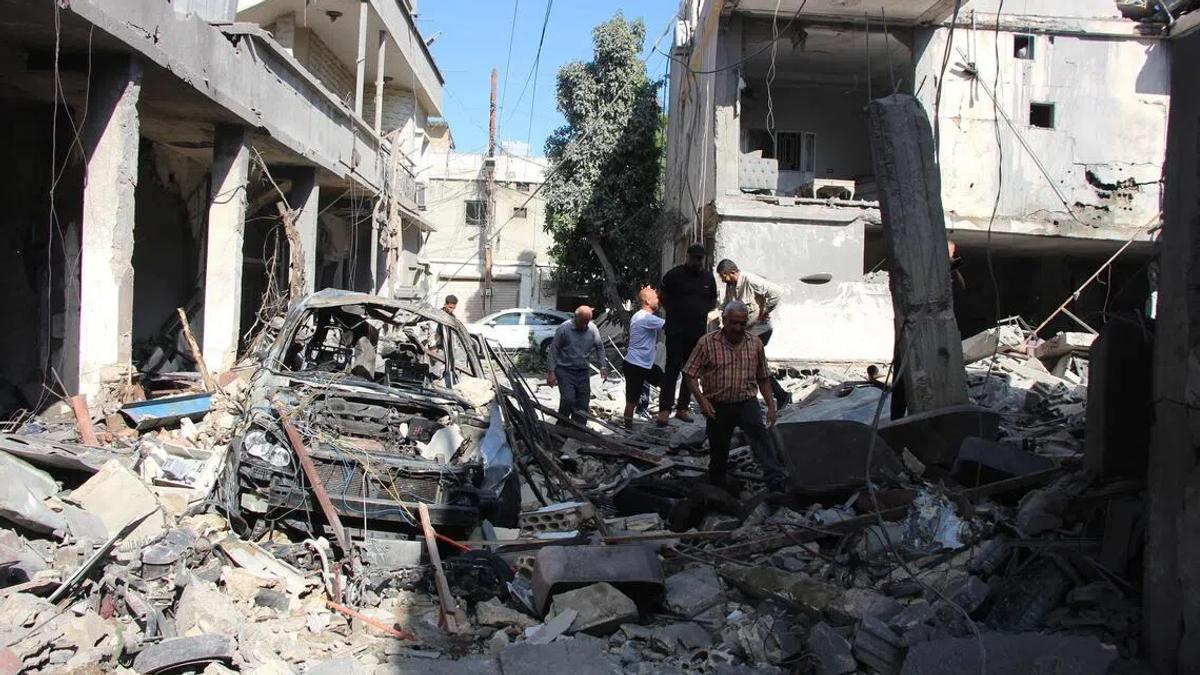
The recent 15-hour fight between Israel and Iran has exposed the complex dynamics at play in the region, highlighting Israel's bind between its desire for military action and its reliance on US President Donald Trump's diplomatic efforts.
The conflict began when Hezbollah, an Iranian proxy, fired rockets at Israel, prompting a retaliatory strike on the Dahiyeh, a Hezbollah stronghold in Beirut. Iran responded by firing around 30 missiles at Israel, followed by a missile attack from its ally in Yemen, the Houthis. This escalation has altered the balance of power in the region, with Iran now confident in its ability to retaliate against Israeli counterstrikes.
The conflict is a continuation of the long-standing rivalry between Israel and Iran, with both sides seeking to impose their own "equation" on the battlefield. Israel has traditionally sought to prevent Iran from developing a nuclear weapon, while Iran has sought to expand its influence in the region. The recent conflict has highlighted the challenges facing Israel in its efforts to prevent Iran's nuclear program, particularly in light of the US's diplomatic efforts to reach a deal with Iran.
The conflict has significant implications for the region, with Iran's confidence in its ability to retaliate against Israeli counterstrikes potentially emboldening its proxies in Lebanon and Yemen. This could lead to further instability in the region, particularly if Iran's nuclear program continues to advance.
The conflict has also highlighted the challenges facing Israel in its efforts to prevent Iran's nuclear program, particularly in light of the US's diplomatic efforts to reach a deal with Iran. If a deal is reached, it is likely to be far less than ironclad in deterring Iran's nuclear program, potentially reviving its economy and increasing its influence in the region.
The conflict has also highlighted the significant disadvantage facing Israel in its efforts to prevent Iran's nuclear program, particularly in light of the US's diplomatic efforts to reach a deal with Iran. As long as President Trump does not want to resume hostilities with Iran, Israel can do little to prevent Iran's nuclear program from advancing.
The recent 15-hour fight between Israel and Iran has exposed the complex dynamics at play in the region, highlighting Israel's bind between its desire for military action and its reliance on US President Donald Trump's diplomatic efforts. The conflict has significant implications for the region, with Iran's confidence in its ability to retaliate against Israeli counterstrikes potentially emboldening its proxies in Lebanon and Yemen. The future consequences of the conflict are uncertain, but one thing is clear: Israel's bind is likely to continue, with significant implications for the region and the world.
The conflict has significant strategic implications for the region, with Iran's confidence in its ability to retaliate against Israeli counterstrikes potentially emboldening its proxies in Lebanon and Yemen. This could lead to further instability in the region, particularly if Iran's nuclear program continues to advance.
The conflict has also highlighted the significant disadvantage facing Israel in its efforts to prevent Iran's nuclear program, particularly in light of the US's diplomatic efforts to reach a deal with Iran. As long as President Trump does not want to resume hostilities with Iran, Israel can do little to prevent Iran's nuclear program from advancing.
The conflict has significant implications for the future of the region, with Iran's confidence in its ability to retaliate against Israeli counterstrikes potentially emboldening its proxies in Lebanon and Yemen. This could lead to further instability in the region, particularly if Iran's nuclear program continues to advance.
The recent 15-hour fight between Israel and Iran has exposed the complex dynamics at play in the region, highlighting Israel's bind between its desire for military action and its reliance on US President Donald Trump's diplomatic efforts. The conflict has significant implications for the region, with Iran's confidence in its ability to retaliate against Israeli counterstrikes potentially emboldening its proxies in Lebanon and Yemen. The future consequences of the conflict are uncertain, but one thing is clear: Israel's bind is likely to continue, with significant implications for the region and the world.
Editor's Note: The analysis is based on publicly available information and may not reflect the full range of perspectives on the conflict.
Source referenced: STRAITSTIMES
This brief was synthesized by our Editorial Engine and reviewed by The Ground Narrative team.