TRENDING

Friday, 13 November 2026
----------------------
3 Jumada Al-Thani 1448 AH
At COP31 leaders pledged urgent climate action and a revamp of finance flows. The article unpacks the power dynamics, the hidden costs, and what to watch next.
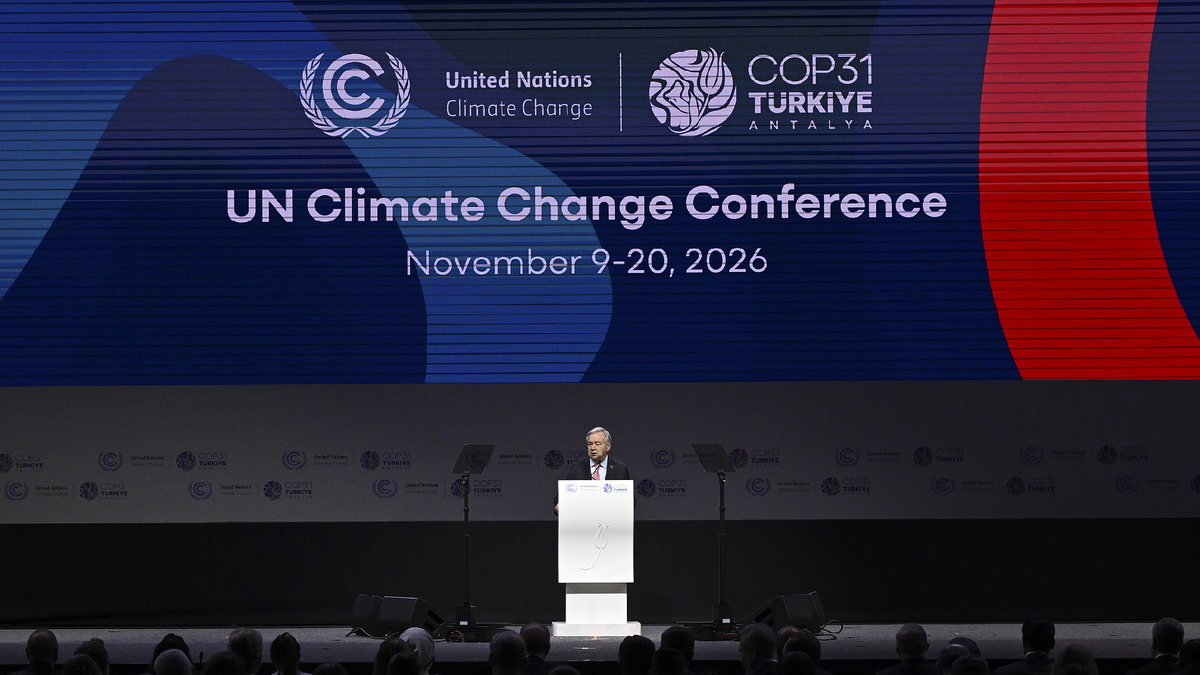
The 31st United Nations Climate Change Conference opened in Antalya, Turkey, on November 12, 2026 with a high‑profile leaders’ summit. UN Secretary‑General Antonio Guterres warned that 2025 set a new emissions record and that the past four years were the hottest on record, urging cooperation on problems no single country can solve alone. Leaders from the Pacific Islands, Australia, China, the European Union and other blocs pledged to turn climate ambition into concrete finance and implementation measures, with a particular focus on making climate finance more predictable and accessible.
Guterres called for a wind‑down of fossil fuels and suggested that major oil firms should be taxed on windfall profits to fund recovery and adaptation. He highlighted that solar power now supplies almost three‑quarters of the growth in global electricity demand, underscoring the economic case for clean energy. Turkish President Recep Tayyip Erdogan framed the summit as a moral responsibility to the most vulnerable nations, while Australian Prime Minister Anthony Albanese stressed that the decade is a narrow window to keep warming below 1.5 °C.
The rhetoric of urgency masks a web of competing incentives. First, oil‑producing states such as Saudi Arabia, Russia and the United States face a shrinking market share as renewable costs plunge. Their governments balance domestic political survival—often tied to energy subsidies and employment in the fossil sector—against the need to appear cooperative on the global stage. By advocating for modest windfall‑taxes rather than outright bans, they preserve a revenue stream while placating climate‑active constituencies.
Second, developed economies that historically emitted the bulk of greenhouse gases carry the diplomatic burden of financing the transition. The United Nations Framework Convention on Climate Change (UNFCCC) finance architecture, built around the Green Climate Fund, is under pressure to deliver predictable cash flows. Yet donor countries wrestle with domestic budget constraints, election cycles, and lobbying from industries that could lose out under stricter climate policies. The push for “accessible, predictable, and responsive” finance is therefore a negotiation between donor fatigue and the political capital gained by appearing a climate leader.
Third, emerging economies like India, Indonesia and many African states sit at the crossroads of development and decarbonisation. Their growth models still rely heavily on coal and cheap energy, making them sensitive to any abrupt policy shift that could jeopardise industrialisation. Consequently, they demand technology transfer, low‑interest loans, and capacity‑building support, leveraging the moral argument of historical responsibility to extract concessions.
Finally, the private sector—particularly global oil majors and renewable investors—plays a dual role. While oil firms are targeted for windfall taxes, they also own the pipelines, refineries and distribution networks that can be repurposed for hydrogen or biofuels. Renewable developers, meanwhile, seek stable policy environments and long‑term power purchase agreements. The financing mechanisms discussed at COP31, such as blended finance and climate‑linked bonds, are designed to align private profit motives with public climate goals, but the balance of risk and reward remains heavily skewed toward investors.
The most immediate victims of climate inaction are the Pacific Island nations whose leaders highlighted at the summit. Rising sea levels threaten to erase entire cultures, displace millions, and undermine food security. Even modest delays in finance translate into lost time for building sea walls, relocating schools, and preserving freshwater lenses. The human toll is not just economic loss but the erosion of identity and sovereignty.
In coal‑rich regions of India, South Africa and the United States, the promised transition risks turning into a job‑loss crisis. Workers who have spent generations in mines face unemployment without robust retraining programs. While the summit touts clean‑energy jobs, the geographic mismatch means many communities will experience a period of economic hardship before new opportunities materialise.
Cities across China, Brazil and Nigeria already grapple with air pollution, heat stress and water scarcity. Climate‑related infrastructure projects—such as resilient housing and flood‑proof transport—are often financed through international loans that come with conditionalities. If these funds are delayed or insufficient, the urban poor will continue to bear the brunt of extreme weather events, rising energy costs, and deteriorating public services.
Forests in the Amazon, Congo Basin and Southeast Asia act as carbon sinks, yet they are also home to Indigenous peoples whose land rights are frequently ignored. Climate finance that channels money to large‑scale reforestation or carbon‑credit schemes can marginalise these communities, stripping them of traditional livelihoods and exposing them to land grabs.
Official statements at COP31 stress collective responsibility, but they rarely mention the behind‑the‑scenes influence of oil and gas lobby groups. These actors have funded think‑tanks and political campaigns that shape the language of “just transition” to protect their bottom lines. By advocating for modest windfall taxes rather than systemic restructuring, they ensure that profit‑preserving mechanisms stay intact.
While the summit lauds “predictable” finance, many developing nations receive funds through blended finance structures that combine concessional loans with private‑sector capital. The private component often carries higher interest rates, creating a debt‑service burden that can outweigh the climate benefits. This nuance is omitted from most press releases, which focus on the headline‑grabbing totals of pledged dollars.
The narrative of cooperation masks an emerging rivalry between the United States and China over green technology dominance. Both powers are racing to secure supply chains for lithium, rare earths and battery manufacturing. The competition drives export‑control policies and strategic investments that could reshape global trade patterns, yet the summit’s language sidesteps this power play.
Most discussions centre on mitigation—cutting emissions—while adaptation funding remains chronically under‑funded. The gap between the $100 billion annual adaptation pledge and actual disbursements is widening, but the summit’s agenda gives it only a peripheral mention. This omission downplays the reality that many vulnerable communities will suffer irreversible losses regardless of mitigation progress.
In the weeks ahead, watch for the formalization of the windfall‑tax proposal and how it is negotiated in the UNFCCC’s finance track. The language of the final COP31 decision text will reveal whether the tax is a binding commitment or a voluntary guideline. Also monitor bilateral agreements between major oil exporters and climate‑finance institutions, as these will indicate whether private profit is being genuinely aligned with climate goals.
Another key signal will be the rollout of blended‑finance pilots in the Pacific and Sub‑Saharan Africa. Early performance data—especially debt‑service ratios—will show whether the model is sustainable or merely a new form of fiscal colonialism. Finally, keep an eye on technology‑transfer negotiations between the EU, United States, and China. The outcome will shape the next decade of renewable‑energy supply chains and could either deepen or mitigate the emerging green‑tech rivalry.
By tracking these developments, ordinary citizens can gauge whether the lofty promises of COP31 translate into real resources for the communities most at risk, or whether powerful actors will continue to shape the climate agenda to suit their own interests.
It is a suggested levy on excess profits earned by oil and gas companies, intended to fund climate‑adaptation and mitigation projects in vulnerable nations.
Blended finance mixes concessional aid with private‑sector capital, which can provide larger sums but may also increase debt obligations and expose borrowers to market risks.
Source referenced: CGTN
This brief was synthesized by our Editorial Engine and reviewed by The Ground Narrative team.