TRENDING

Friday, 16 October 2026
----------------------
5 Jumada Al-Awwal 1448 AH
The US military's interception of Iranian missile and drone attacks on regional neighbors and its subsequent self-defense strikes on Iran's Qeshm Island have heightened tensions between the two nations, with far-reaching implications for regional stability and global energy markets.
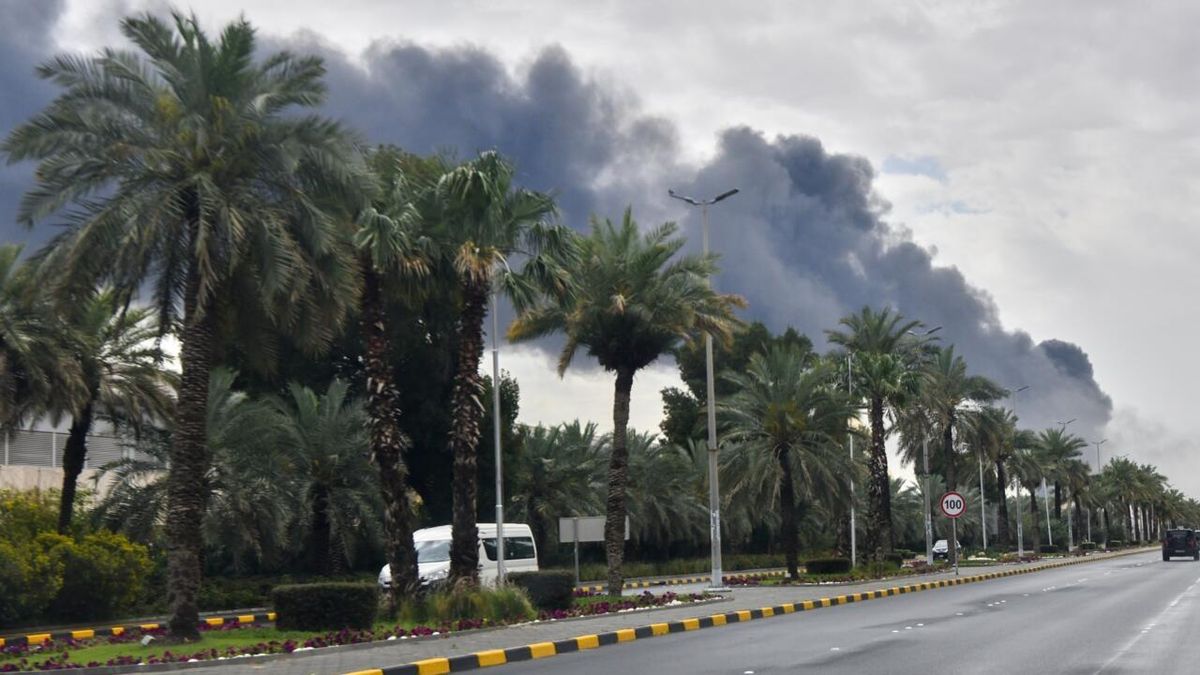
The recent intercept by the US military of Iranian missile and drone attacks on regional neighbors, including Kuwait and Bahrain, marks a significant escalation in tensions between the two nations. The US Central Command's statement that all Iranian missiles failed to hit their intended targets and were intercepted or fell short suggests a high degree of preparedness and effectiveness in the US military's defense systems.
The current tensions between the US and Iran are rooted in a long-standing rivalry that has been exacerbated by the US withdrawal from the Joint Comprehensive Plan of Action (JCPOA) in 2018. The US has since imposed severe economic sanctions on Iran, which has led to a significant decline in the country's oil exports and a severe economic crisis. Iran's Revolutionary Guards Corps (IRGC) has repeatedly threatened to retaliate against the US for its actions, and the recent attacks on regional neighbors are a manifestation of this threat.
The escalation of tensions between the US and Iran has significant implications for regional stability. The Middle East is a critical region for global energy markets, with the Strait of Hormuz being a key chokepoint for oil exports. The US military's self-defense strikes on Iran's Qeshm Island have raised concerns about the potential for further escalation and the impact on regional stability.
The conflict in the Middle East has already had a significant impact on global energy markets. The European Bank for Reconstruction and Development (EBRD) has downgraded its economic forecasts, citing the energy price shock triggered by the Middle East war. European gas prices have exceeded those in the US by a factor of five, and electricity prices in Europe are also much higher than in the US. The conflict has delivered a new shock to regions already navigating weakness in manufacturing industries and fragile fiscal positions.
The US military's actions in intercepting Iranian missile and drone attacks and conducting self-defense strikes on Iran's Qeshm Island are likely motivated by a desire to protect its regional allies and maintain stability in the Middle East. The US has a long-standing commitment to protecting its allies in the region, and the recent attacks on regional neighbors have raised concerns about the potential for further escalation.
The escalation of tensions between the US and Iran has significant implications for regional stability and global energy markets. The conflict has already had a significant impact on global energy markets, and further escalation could lead to a significant increase in oil prices and a decline in economic growth. The US military's actions in intercepting Iranian missile and drone attacks and conducting self-defense strikes on Iran's Qeshm Island have raised concerns about the potential for further escalation and the impact on regional stability.
The recent intercept by the US military of Iranian missile and drone attacks on regional neighbors and its subsequent self-defense strikes on Iran's Qeshm Island have heightened tensions between the US and Iran, with far-reaching implications for regional stability and global energy markets. The conflict has already had a significant impact on global energy markets, and further escalation could lead to a significant increase in oil prices and a decline in economic growth. The US military's actions in intercepting Iranian missile and drone attacks and conducting self-defense strikes on Iran's Qeshm Island have raised concerns about the potential for further escalation and the impact on regional stability.
Editor's Note: The analysis is based on publicly available information and may not reflect the full range of strategic motivations and implications of the conflict.
Source referenced: FRANCE24
This brief was synthesized by our Editorial Engine and reviewed by The Ground Narrative team.