TRENDING

Sunday, 25 October 2026
----------------------
14 Jumada Al-Awwal 1448 AH
US President Donald Trump's decision on Iran strikes hangs in the balance as the conflict widens across the Middle East, threatening global oil supply and regional stability.
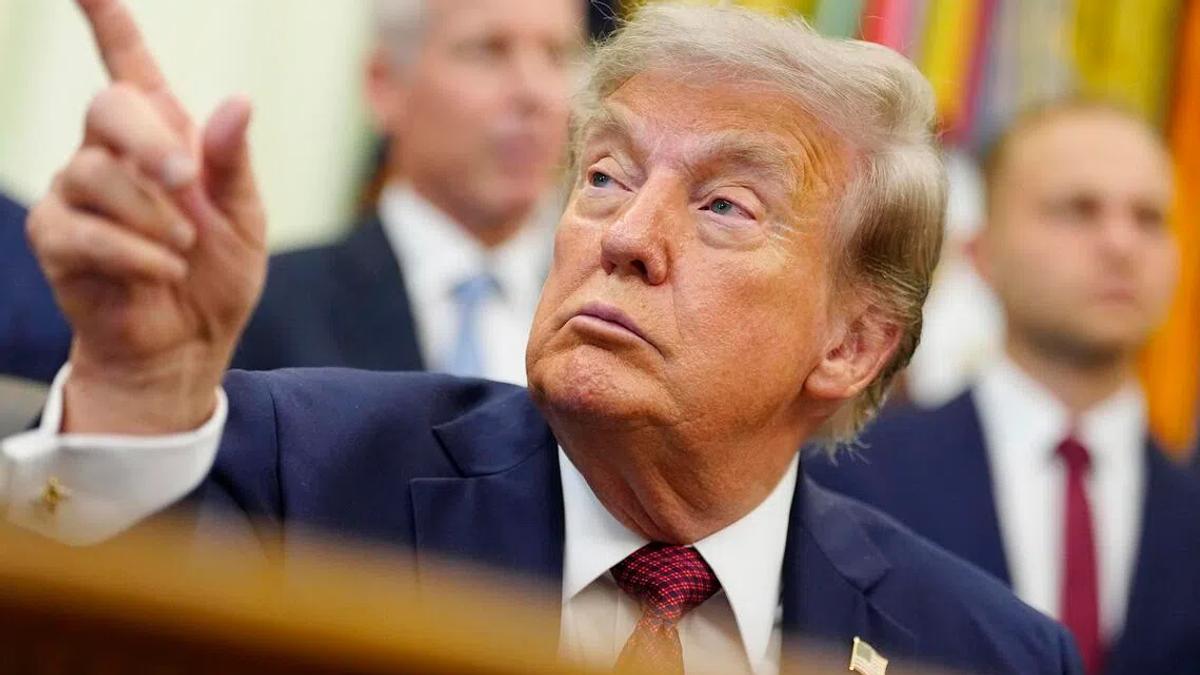
The ongoing conflict between the United States and Iran has reached a critical juncture, with US President Donald Trump weighing the possibility of harder strikes against Iran. The war, which Trump once predicted would last four or five weeks, is now nearing its fifth month, with no end in sight.
The conflict involves multiple actors, including the United States, Iran, Saudi Arabia, and Yemen's Iran-backed Houthis. The Houthis have launched attacks on oil tankers in Red Sea shipping lanes, while Saudi Arabia has responded with strikes on Houthi-held Hodeida.
The stakes are high, with the conflict threatening global oil supply and regional stability. The Strait of Hormuz, a crucial waterway for oil exports, is currently blocked by Iran, while the Houthis' blockade of Saudi Arabia's maritime routes has sparked a new front in the war.
The conflict escalated in recent days, with Iran retaliating against US strikes with attacks on US bases in Bahrain, Jordan, and Kuwait. The Houthis have also launched attacks on oil tankers in Red Sea shipping lanes.
The conflict is taking place across the Middle East, with multiple fronts in Iran, Yemen, and Saudi Arabia.
This conflict is significant because it threatens global oil supply and regional stability. The Strait of Hormuz is a critical waterway for oil exports, and any disruption to this supply chain could have far-reaching consequences for the global economy.
The international community is responding to the conflict with caution, with China and Russia urging restraint and calling for an early resumption of negotiations. The United States, meanwhile, is maintaining a hardline stance, with Trump warning Iran that it will face a "much higher level" of strikes if it does not make a deal.
The implications for the region are severe, with the conflict threatening to destabilize the entire Middle East. The Houthis' blockade of Saudi Arabia's maritime routes has sparked a new front in the war, while Iran's blockade of the Strait of Hormuz has disrupted oil exports.
The implications for the global economy are significant, with any disruption to oil supply chains having far-reaching consequences for the global economy. The conflict has already sparked a rise in oil prices, and any further escalation could have devastating consequences for the global economy.
The conflict between the United States and Iran is a complex and multifaceted issue, with far-reaching implications for the region and the global economy. The stakes are high, with the conflict threatening global oil supply and regional stability. As the conflict continues to escalate, it is essential that all parties involved exercise restraint and work towards a peaceful resolution.
Editor's Note: This analysis is based on publicly available information and may not reflect the full complexity of the situation. Further analysis and clarification may be necessary to fully understand the implications of the conflict.
Source referenced: STRAITSTIMES
This brief was synthesized by our Editorial Engine and reviewed by The Ground Narrative team.