TRENDING

Tuesday, 6 October 2026
----------------------
25 Rabi' Al-Thani 1448 AH
US President Donald Trump's declaration that the Iran-US ceasefire is 'over' raises concerns about the future of diplomatic talks and regional stability.
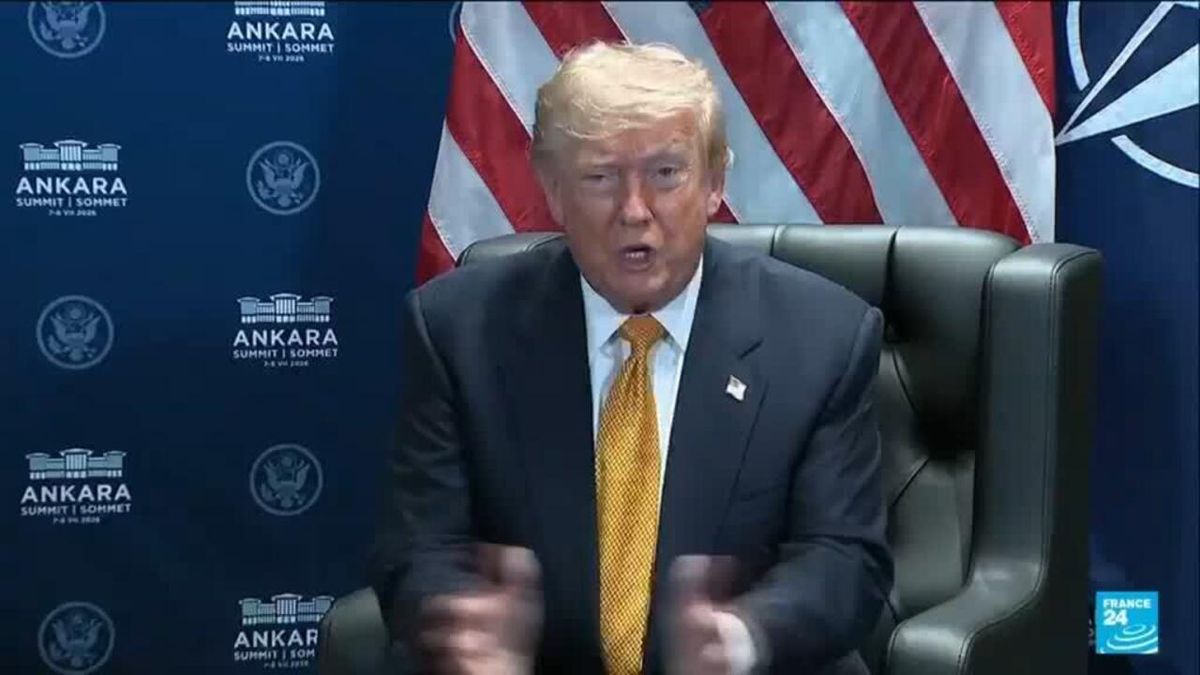
The Iran-US ceasefire, which has been in place since 2025, is facing uncertainty after US President Donald Trump declared that it is 'over.' This development has significant implications for regional stability and the future of diplomatic talks between the two nations.
The Iran-US ceasefire was established in 2025 as a result of intense diplomatic efforts led by the European Union. The agreement aimed to reduce tensions between the two nations and prevent further conflict in the region. However, the recent flare-up of fighting in the Strait of Hormuz, sparked by Iranian attacks on ships, has raised concerns about the ceasefire's viability.
US President Donald Trump made the statement at a NATO summit in Turkey, where he was asked if the truce was still intact. Trump's response, 'As far as I'm concerned, it's over,' suggests that the US is no longer committed to the ceasefire. However, he left the door open for further talks, stating that 'I'll let our wonderful negotiators keep talking if they want, but I don't see it.'
Trump's declaration raises questions about the US's strategic motivations in the region. Is the US seeking to reassert its dominance in the Middle East, or is it attempting to pressure Iran into making concessions? The US's decision to abandon the ceasefire may also be driven by domestic politics, as Trump seeks to appeal to his base by taking a tough stance on Iran.
The collapse of the Iran-US ceasefire has significant regional implications. The Strait of Hormuz is a critical waterway for global oil trade, and any disruption to shipping in the area could have far-reaching consequences for the global economy. The US's withdrawal from the ceasefire may also embolden other regional actors, such as Saudi Arabia and the UAE, to take a more aggressive stance against Iran.
The future consequences of Trump's declaration are uncertain. If the US is no longer committed to the ceasefire, it may lead to a further escalation of tensions in the region. This could result in a wider conflict, with significant humanitarian and economic costs. On the other hand, the US's decision may also create an opportunity for renewed diplomatic efforts, as Iran and the US seek to negotiate a new agreement.
The Iran-US ceasefire is facing uncertainty after Trump declared that it is 'over.' This development has significant implications for regional stability and the future of diplomatic talks between the two nations. The US's strategic motivations in the region are unclear, and the future consequences of Trump's declaration are uncertain. One thing is clear, however: the collapse of the ceasefire has the potential to destabilize the region and have far-reaching consequences for global security.
Source referenced: FRANCE24
This brief was synthesized by our Editorial Engine and reviewed by The Ground Narrative team.