TRENDING

Thursday, 15 October 2026
----------------------
4 Jumada Al-Awwal 1448 AH
Iran projects an image of a rising regional power aiming for a 'Pax Iranica' and control over vital waterways, yet faces internal leadership vacuums and rivalries that could undermine its strategic objectives. Concurrently, an investigation reveals Russia's extensive espionage network in Japan, exploiting weak laws to acquire critical technology for its military, highlighting global security vulnerabilities.
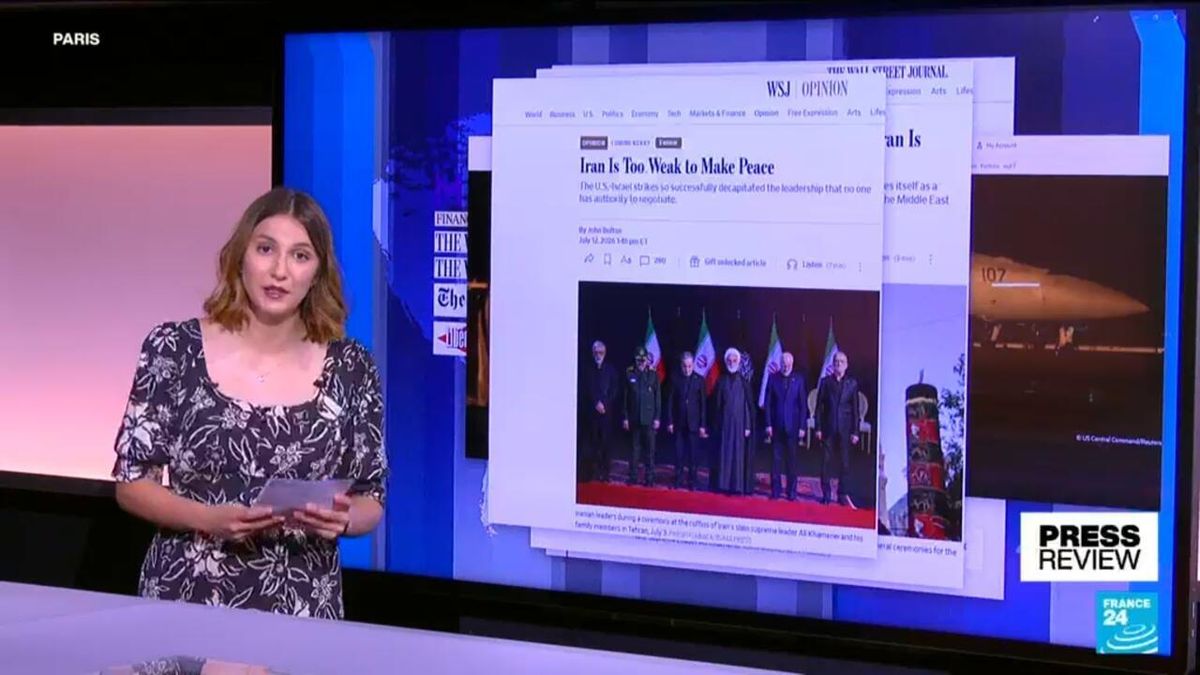
The geopolitical landscape of the Middle East is currently defined by a complex interplay of Iranian ambition and internal fragility, as Tehran navigates its strategic objectives against a backdrop of domestic challenges. According to analyses cited by *The Wall Street Journal*, Iran perceives itself as a victor in regional conflicts, envisioning a 'Pax Iranica' that would establish its hegemony across the Middle East. This strategic outlook includes a readiness to escalate tensions to maintain control over the critical Strait of Hormuz, a vital chokepoint for global energy supplies. Tehran's long-term strategy reportedly anticipates that achieving regional dominance could eventually lead to sanctions relief from Washington, underscoring a calculated approach to international relations and power projection.
However, this assertive external posture is juxtaposed with significant internal vulnerabilities. John Bolton, former US National Security Adviser, argues in *The Wall Street Journal* that Iran is 'too weak to make peace,' attributing this to successful US-Israeli strikes that have allegedly 'decapitated' its leadership, leaving a void in negotiating authority. This perspective is reinforced by *The New York Times*, which reports that the deaths of a 'large portion' of Iran's hardline leadership have prompted conservatives to intensify their confrontation with the United States, portraying compromise as both 'strategically dangerous and morally illegitimate.' French daily *Libération* further highlights this 'leadership vacuum,' noting that it fuels rivalries within the conservative camp and creates 'instability and ambiguity' regarding who truly holds sway over Iran's domestic and foreign policy, particularly in the absence of a clear Supreme Leader.
This internal dynamic presents a critical challenge to Iran's stated ambitions. A fragmented leadership, driven by competing factions and a perceived need to demonstrate strength, could lead to unpredictable escalations or hinder effective diplomatic engagement. The pursuit of regional dominance, while a clear strategic goal, may be complicated by a lack of unified command and control, potentially leading to miscalculations or an inability to capitalize on perceived gains. The tension between projecting strength externally and managing internal power struggles defines Iran's current geopolitical trajectory, making its future actions a subject of intense international scrutiny.
In a separate but equally significant development, a *New York Times* investigation has uncovered a sophisticated Russian espionage network operating within Japan, dubbed a 'den of spies.' This network, reportedly built by the Kremlin, aims to circumvent international sanctions and acquire advanced technology, particularly microchips and transmitters essential for weapons production. Dozens of Russian operatives are said to have found a foothold in Japan, attracted by the country's relatively weak espionage laws and its flourishing high-tech industry.
The implications of this operation are far-reaching. Ukrainian estimates suggest that a staggering 90 percent of Russian missiles and drones contain Japanese components, highlighting the critical role this covert acquisition plays in sustaining Russia's military capabilities, particularly in the context of ongoing conflicts. The report identifies a Russian military intelligence unit, the '20th Directorate,' as central to these operations. This revelation underscores a significant vulnerability in Japan's national security framework and its role, albeit indirect, in the global supply chain for military technology. For Japan, a nation traditionally less focused on counter-espionage compared to its Western counterparts, this poses a serious challenge to its economic security and its standing as a responsible actor in the international community committed to upholding sanctions against Russia.
These two distinct narratives—Iran's complex regional ambitions and internal struggles, alongside Russia's covert technological procurement in Japan—collectively paint a picture of a volatile and interconnected global security environment. Iran's pursuit of regional hegemony, complicated by internal power dynamics, risks further destabilizing the Middle East, with potential ramifications for global energy markets and international shipping. Meanwhile, Russia's exploitation of technological vulnerabilities in a key US ally demonstrates the persistent challenges of enforcing sanctions and controlling the proliferation of dual-use technologies. Both situations highlight the ongoing strategic competition among major powers and the multifaceted nature of contemporary geopolitical challenges, demanding nuanced diplomatic and security responses from the international community.
Source referenced: FRANCE24
This brief was synthesized by our Editorial Engine and reviewed by The Ground Narrative team.


