TRENDING

Monday, 5 October 2026
----------------------
24 Rabi' Al-Thani 1448 AH
Millions attended the funeral of Iran's late Supreme Leader, Ayatollah Ali Khamenei, who was killed in a US-Israeli airstrike, highlighting a critical juncture for the Islamic Republic. The event underscores the regime's efforts to project unity amidst a leadership transition and ongoing war negotiations, with profound implications for regional stability and international relations.
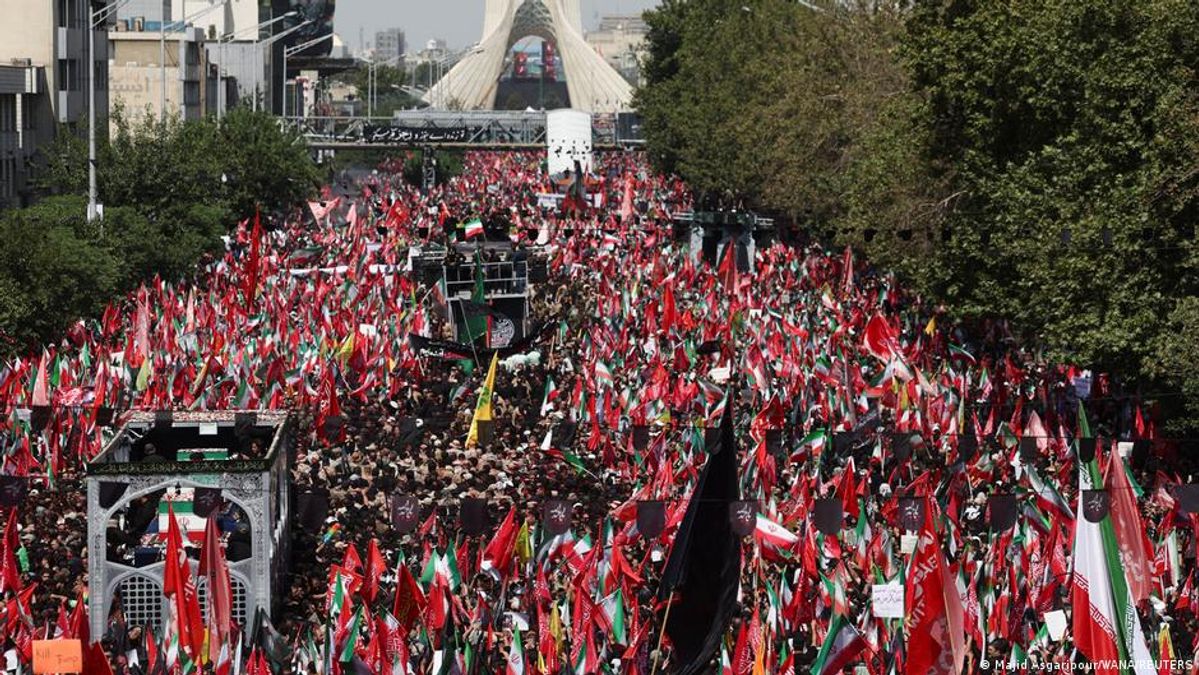
Millions of Iranians converged on Tehran for the funeral procession of Ayatollah Ali Khamenei, the nation's Supreme Leader, who was reportedly killed in a targeted airstrike attributed to the United States and Israel on February 28. The massive turnout, stretching for kilometers from Azadi Square, served as a potent display of national mourning and, critically, a strategic demonstration of the Islamic Republic's perceived strength and unity amidst an ongoing conflict. This event marks a pivotal moment for Iran, triggering a complex succession process and casting a long shadow over already fraught international negotiations.
The death of a Supreme Leader, a figure holding ultimate religious and political authority in Iran, is an event of immense consequence. The designated successor, Ayatollah Mojtaba Khamenei, son of the late leader, was notably absent from the public funeral ceremonies. Reports suggest he was severely wounded in the same airstrike that killed his father and is currently in hiding, facing threats from Israel. This absence introduces a significant element of uncertainty into the leadership transition, potentially signaling internal power struggles or a deliberate strategy to protect the new leader from immediate threats. While three other sons of Ali Khamenei made rare public appearances, Mojtaba's precarious position could complicate the consolidation of power and influence the new Supreme Leader's initial policy decisions, particularly regarding the war and Iran's posture towards its adversaries.
The Iranian regime actively encouraged the widespread participation in the funeral, leveraging the event to project an image of national cohesion and resilience to both domestic and international audiences. This mobilization is particularly significant given the wartime context, aiming to counter narratives of internal dissent or external pressure. The procession was not merely a somber occasion but also a platform for expressing fervent anti-American and anti-Israeli sentiment. Placards and banners calling for the death of US President Donald Trump and Israeli Prime Minister Benjamin Netanyahu were prominently displayed, reflecting the deep-seated animosity exacerbated by the circumstances of Khamenei's death. This public display of defiance underscores the regime's commitment to its revolutionary principles and its determination to resist perceived external aggression.
Ayatollah Ali Khamenei's death and the subsequent period of mourning have temporarily halted crucial negotiations between Iran and the United States. These talks, aimed at finding a permanent end to the ongoing conflict, have centered on two highly contentious issues: the reopening of the Strait of Hormuz and Iran's nuclear program. The Strait of Hormuz, a vital global chokepoint for oil and gas shipments, was effectively closed by Iran at the outset of the conflict, causing significant disruptions to international energy markets. Its reopening is a key demand from the international community. Simultaneously, concerns over Iran's nuclear program, which the US alleges is aimed at developing nuclear weapons (a claim Iran consistently denies), remain a central point of contention. The new leadership's stance on these issues will be critical in determining the future trajectory of the conflict and the prospects for any diplomatic resolution.
The assassination of a sitting Supreme Leader by foreign powers, coupled with the uncertain succession, introduces a new layer of volatility to an already unstable Middle East. The event could embolden hardliners within Iran, leading to a more confrontational foreign policy, or it could, conversely, create an opportunity for a shift in strategic direction, depending on the new leader's consolidation of power and policy priorities. The threats against Mojtaba Khamenei by Israel suggest a continued strategy of targeting high-value Iranian figures, raising the specter of further escalation. The coming weeks and months will be crucial in observing how the new Iranian leadership navigates these complex internal and external pressures, ultimately shaping the future of the war, regional security, and global energy dynamics.
Source referenced: DW
This brief was synthesized by our Editorial Engine and reviewed by The Ground Narrative team.