TRENDING

Friday, 2 October 2026
----------------------
21 Rabi' Al-Thani 1448 AH
Iran's state funeral for Ayatollah Ali Khamenei, drawing massive crowds, serves as a critical geopolitical spectacle aimed at projecting national unity and resilience following recent conflict with the U.S. and Israel, while spotlighting the uncertain public debut of his successor, Mojtaba Khamenei. The elaborate ceremonies are a strategic effort to consolidate power and reaffirm Iran's regional influence amidst calls for vengeance.
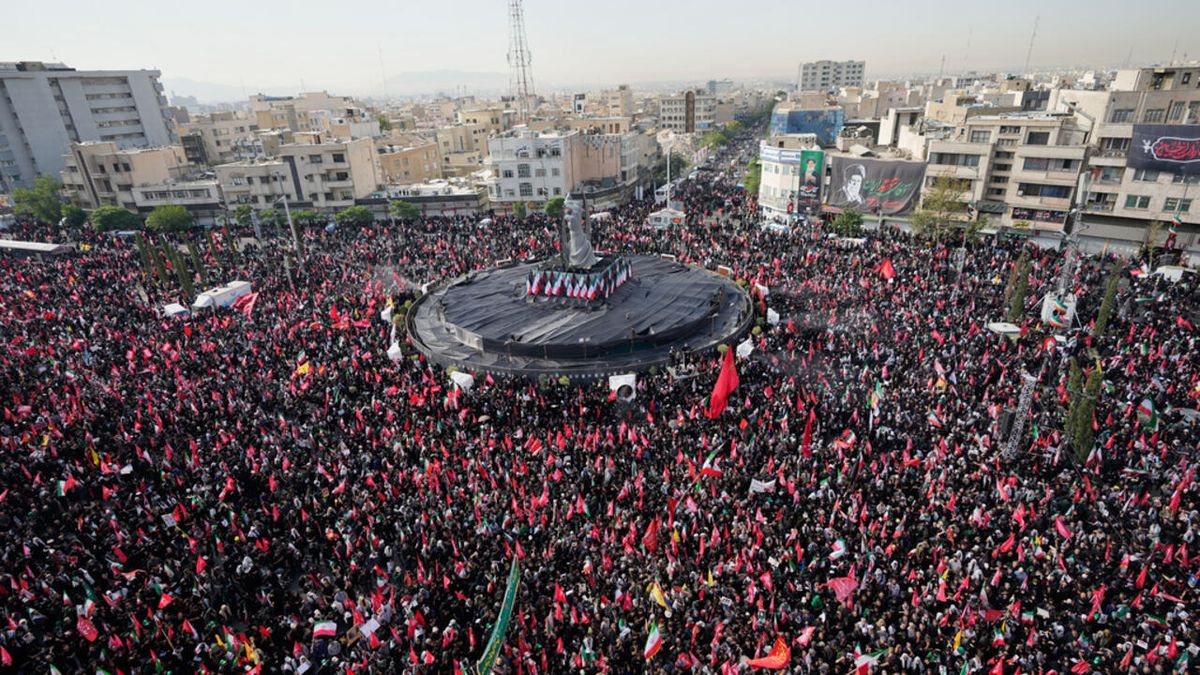
The funeral procession for Iran's late Supreme Leader, Ayatollah Ali Khamenei, which commenced on Monday, July 6, 2026, in Tehran, has rapidly evolved beyond a mere religious observance into a profound geopolitical statement. Drawing immense crowds, the state-organized ceremonies are a deliberate effort by Iranian authorities to project national unity, resilience, and defiance in the wake of a recent five-week conflict with the United States and Israel. The events, spanning several days and locations, are meticulously orchestrated to solidify the transition of power and reaffirm Iran's strategic posture in a volatile Middle East.
The scale of the mourning, with authorities preparing for crowds potentially rivaling the estimated 10 million who attended Ayatollah Ruhollah Khomeini's funeral in 1989, underscores the regime's intent to demonstrate widespread public support. This display is particularly significant given the backdrop of mass protests in January, which were reportedly met with a severe crackdown. By mobilizing millions, the government aims to counter narratives of internal dissent and present a unified front to both domestic and international audiences. The public hanging of an effigy of US President Donald Trump in Imam Hussein Square further highlights the anti-Western sentiment and calls for "revenge" that permeate the ceremonies. This sentiment is directly linked to the circumstances of Khamenei's death on February 28, the first day of the Middle East war, alongside four family members, in Israeli air strikes reportedly based on US intelligence.
The presence of high-ranking officials from regional allies, including Hezbollah, Hamas, and Houthi movements, at the funeral ceremonies is a critical diplomatic signal. Their attendance reinforces the cohesion of the "Axis of Resistance," a network of anti-US and anti-Israel armed groups supported by Tehran. This collective display of solidarity serves to underscore Iran's enduring influence across the Middle East and its commitment to its regional foreign policy, even in a period of leadership transition.
A central and intriguing aspect of the succession process is the conspicuous absence of Mojtaba Khamenei, the late leader's son, who was named Supreme Leader shortly after his father's killing. While officials have stated he was wounded in the air strikes, the severity of his injuries remains unclear, and his failure to appear publicly has fueled speculation. This unprecedented lack of public visibility for a newly appointed Supreme Leader raises questions about the stability of the transition, the extent of his injuries, and the internal power dynamics within the Islamic Republic. His absence contrasts sharply with the public appearances of other key figures, such as the new Revolutionary Guards commander, Ahmad Vahidi, and the shadowy head of the Quds Force, Esmail Qaani, both of whom were seen at the ceremonies. The regime's careful management of the funeral, including concrete barriers to prevent stampedes reminiscent of the chaos at Khomeini's funeral, suggests a desire for control amidst potential uncertainties.
The funeral ceremonies, extending to the clerical hub of Qom and the Iraqi holy cities of Najaf and Karbala before Khamenei's burial in Mashhad, are designed to project Iran's spiritual and political reach beyond its borders. This itinerary reinforces Iran's role as a regional power and a patron of Shiite holy sites, further cementing its influence in Iraq and the broader Shiite world.
The calls for "revenge" articulated by mourners and the government's emphasis on resilience carry significant geopolitical weight. With a ceasefire currently in place after five weeks of conflict, the rhetoric at the funeral suggests that the underlying tensions with the US and Israel remain potent. The future trajectory of Iran's foreign policy under Mojtaba Khamenei, particularly concerning its nuclear program, regional proxies, and relations with the West, will be closely watched. The new leadership faces the dual challenge of consolidating internal power while navigating a complex external environment marked by ongoing confrontation and the potential for renewed military action. The funeral, therefore, is not merely an end to an era but a critical juncture signaling the beginning of a new chapter for the Islamic Republic, with profound implications for regional stability and international relations.
Source referenced: FRANCE24
This brief was synthesized by our Editorial Engine and reviewed by The Ground Narrative team.


