TRENDING

Tuesday, 27 October 2026
----------------------
16 Jumada Al-Awwal 1448 AH
Despite severe economic and military losses inflicted by U.S. and Israeli pressure, Iran has largely resisted strategic capitulation, raising questions about the efficacy of current policies. The ongoing economic warfare has devastated the Iranian economy but has yet to achieve its primary objectives of regime change or significant concessions on nuclear and regional issues.
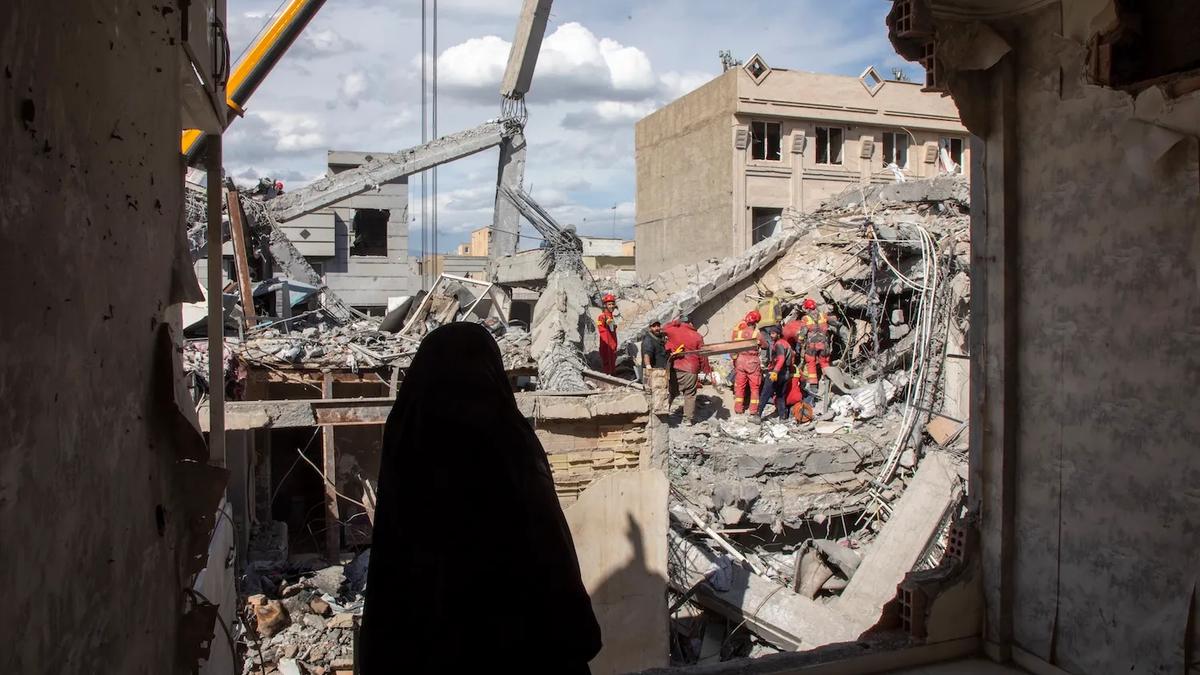
The ongoing economic and military pressure exerted by the United States and Israel against Iran has resulted in devastating costs for the Islamic Republic, yet its strategic objectives remain largely unfulfilled. While Iran's economy and military infrastructure have suffered staggering losses, the nation has demonstrated a notable resilience, maintaining its stance on critical issues and adapting to external pressures.
Since the onset of what has been described as a U.S.-Israeli war, Iran has endured immense economic and military damage. Economically, the nation faces rampant inflation, with consumer prices surging by over 88 percent by June 2026, and the Iranian rial plummeting to a record low of 1.9 million per U.S. dollar in April. Unemployment has soared, with estimates of job losses ranging from over a million to potentially 10-12 million jobs at risk, impacting roughly half of Iran's workforce. The U.S. blockade, particularly targeting the Strait of Hormuz, further threatens Iran's vital trade routes, especially its oil exports.
Militarily, a BBC investigation in June 2026 confirmed damage to more than 50 military sites across Iran, including air bases, naval assets, and compounds belonging to the Islamic Revolutionary Guard Corps (IRGC) and the paramilitary Basij. Furthermore, nearly a fifth of Iran's industrial base has been affected, with the reconstruction of key petrochemical hubs like Mahshahr and Assaluyeh projected to take over a decade. While the exact scale of losses is disputed—Iran's government estimated $270 billion in April, while other analyses range from $50 billion to $300 billion—the consensus is that the economic and infrastructural damage is profound.
The primary motivation behind this sustained pressure from Washington and Tel Aviv has been multifaceted, though with some divergence in ultimate goals. Israeli officials, such as Finance Minister Bezalel Smotrich, have explicitly stated Israel's objective to "undermine and weaken the regime in Iran—to the point of overthrowing it." U.S. President Donald Trump, while initially considering regime change, later revised his stated goals to denying Iran a nuclear weapon and ensuring the freedom of navigation in the Strait of Hormuz. Both nations have employed military strikes and economic sanctions, including a blockade, as tools to achieve these ends, hoping to either force concessions from the Iranian government or incite an internal uprising.
However, the strategy has encountered significant challenges. Military intervention, particularly the bombing of civilian targets like a girls' school, has alienated the Iranian populace, effectively ruling out any chance of widespread internal support for U.S. or Israeli actions. Instead of fostering dissent, the war appears to have pushed economic grievances to the background, potentially strengthening hardliners within the Iranian government and increasing the population's threshold for enduring hardship. Iranian President Masoud Pezeshkian's recent statement, "The economy and people’s livelihoods are the most important front in confronting the enemy," underscores the regime's recognition of economic pressure as a key battleground.
Despite the severe economic pain, Iran has demonstrated remarkable resilience and adaptability. Having faced Western sanctions for years, Iran has developed sophisticated methods to circumvent them, including utilizing a "shadow fleet" of ships that turn off transponders and engaging in mid-sea oil transfers. This long history of enduring sanctions has arguably hardened the Iranian state and its people against external economic coercion.
Furthermore, Iran has shown a willingness and capacity to escalate regionally. It has activated its proxies, notably the Houthis in Yemen, who control the Bab el-Mandeb strait, another critical maritime chokepoint. Recent Houthi missile and drone attacks on Saudi oil facilities on the Red Sea serve as a stark reminder of Iran's ability to widen the conflict and disrupt global energy supplies and shipping lanes, thereby testing the resolve of its adversaries and imposing costs on the global economy. Experts warn that continued pressure could prompt Iran to further disrupt shipping, lay mines, or increase attacks on U.S. bases, escalating the conflict beyond its current scope.
The current situation presents a strategic conundrum. While the economic war has inflicted undeniable damage on Iran, it has not yielded the desired strategic outcomes for the U.S. and Israel. Neither nation has articulated a convincing "day after" strategy, nor have their efforts sufficiently weakened the Iranian government to the point of collapse. Former Israeli national security advisor Yaakov Amidror acknowledged that while the Iranian state has been weakened, it has not been enough to incite regime change.
The experience suggests that increasing economic pain in the midst of conflict may not lead to sustainable political change or soften the stance of Iran's hardliners. Instead, it risks further entrenching the current regime, fostering greater nationalistic resolve, and potentially provoking dangerous regional escalations. The effectiveness of economic warfare as a standalone tool for achieving complex geopolitical objectives, particularly regime change or fundamental policy shifts, remains highly questionable in the Iranian context, highlighting the need for a comprehensive and nuanced approach that considers both the costs inflicted and the unintended consequences generated.
Source referenced: FOREIGNPOLICY
This brief was synthesized by our Editorial Engine and reviewed by The Ground Narrative team.