TRENDING

Wednesday, 21 October 2026
----------------------
10 Jumada Al-Awwal 1448 AH
Sonam Wangchuk's hunger strike sparks a nationwide movement, echoing a long tradition of using fasting as a means of protest in India.
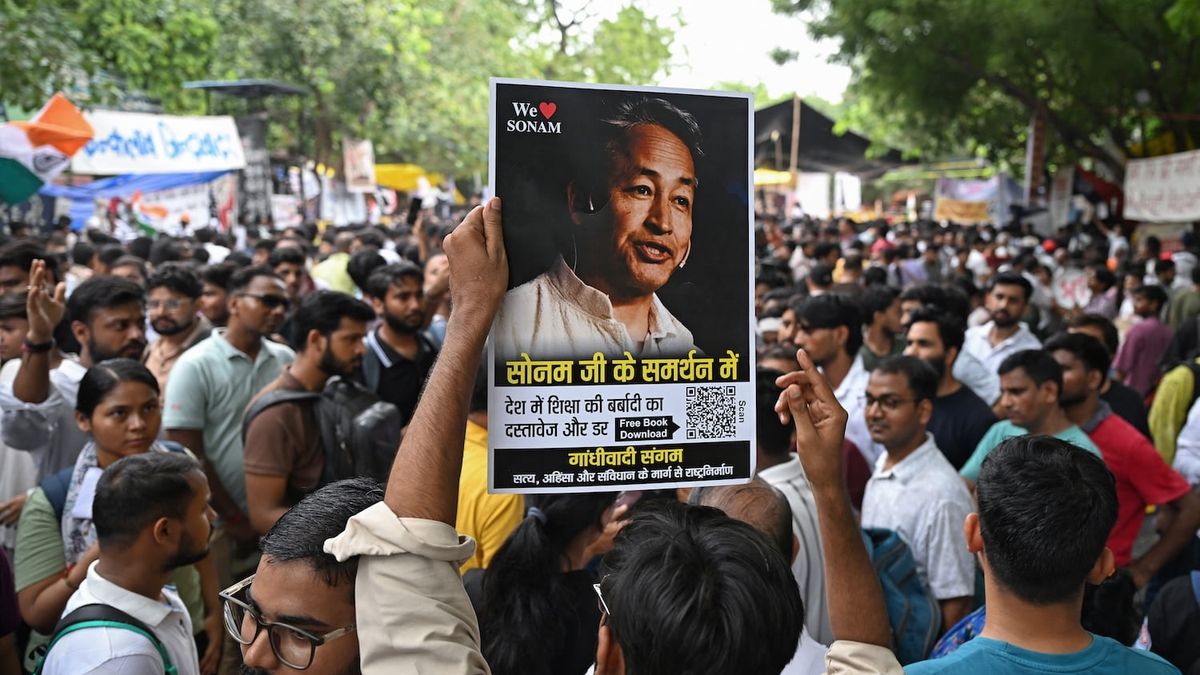
Sonam Wangchuk, a 59-year-old Indian activist, has been on a hunger strike for 20 days, demanding accountability from the government after medical school entrance exam papers were leaked in May. His fast has sparked a nationwide movement, with thousands of demonstrators marching towards Parliament and staging sit-ins outside the Indian Prime Minister's residence.
Wangchuk's fast is not an isolated incident. Fasting has been a long-standing tradition in Indian politics, dating back to the colonial era. Mohandas Gandhi, the father of Indian independence, used fasting as a means of protest against the British Empire and to discipline his own followers. Gandhi's most consequential fast was in 1932, when he fought against the colonial government granting a separate electorate to the Dalits.
The fast has proven to be a powerful tool in Indian politics. In 1952, Potti Sriramulu began an indefinite fast in Madras (now known as Chennai) demanding a separate, Telugu-speaking state of Andhra Pradesh. His death set off riots across the Telugu-speaking districts of Madras province, and within two weeks, Indian Prime Minister Jawaharlal Nehru announced that Andhra Pradesh would be created.
Wangchuk's fast is a modern-day equivalent of Sriramulu's. He demands the resignation of Education Minister Dharmendra Pradhan and an overhaul of the exam system that has betrayed the students who trust it. The movement has gained momentum, with thousands of students joining Wangchuk's hunger strike in solidarity.
The movement has regional implications, with the Cockroach Janta Party emerging as a force to be reckoned with. The party's focus on exam integrity has struck a chord among aspirant youth, who face bleak job prospects and believe that the best way to climb the ladder of success is through education. If that system is rigged, what are the young to do?
The future consequences of this movement are uncertain. Will the government listen to the demands of the students, or will it continue to ignore their pleas? The movement has the potential to reshape Indian politics, but it also risks being co-opted by the government. Only time will tell.
Sonam Wangchuk's hunger strike has sparked a nationwide movement, echoing a long tradition of using fasting as a means of protest in India. The movement has regional implications, with the Cockroach Janta Party emerging as a force to be reckoned with. The future consequences of this movement are uncertain, but one thing is clear: the students will not be silenced.
Editor's Note: The analysis is based on publicly available information and may not reflect the full complexity of the situation.
Source referenced: FOREIGNPOLICY
This brief was synthesized by our Editorial Engine and reviewed by The Ground Narrative team.