TRENDING

Monday, 5 October 2026
----------------------
24 Rabi' Al-Thani 1448 AH
New Delhi is abandoning its quiet diplomacy to openly challenge the US on trade, security, and immigration, signaling a significant shift in a crucial global relationship. This public friction highlights the domestic pressures driving India's foreign policy and the transactional nature of US power under the Trump administration.
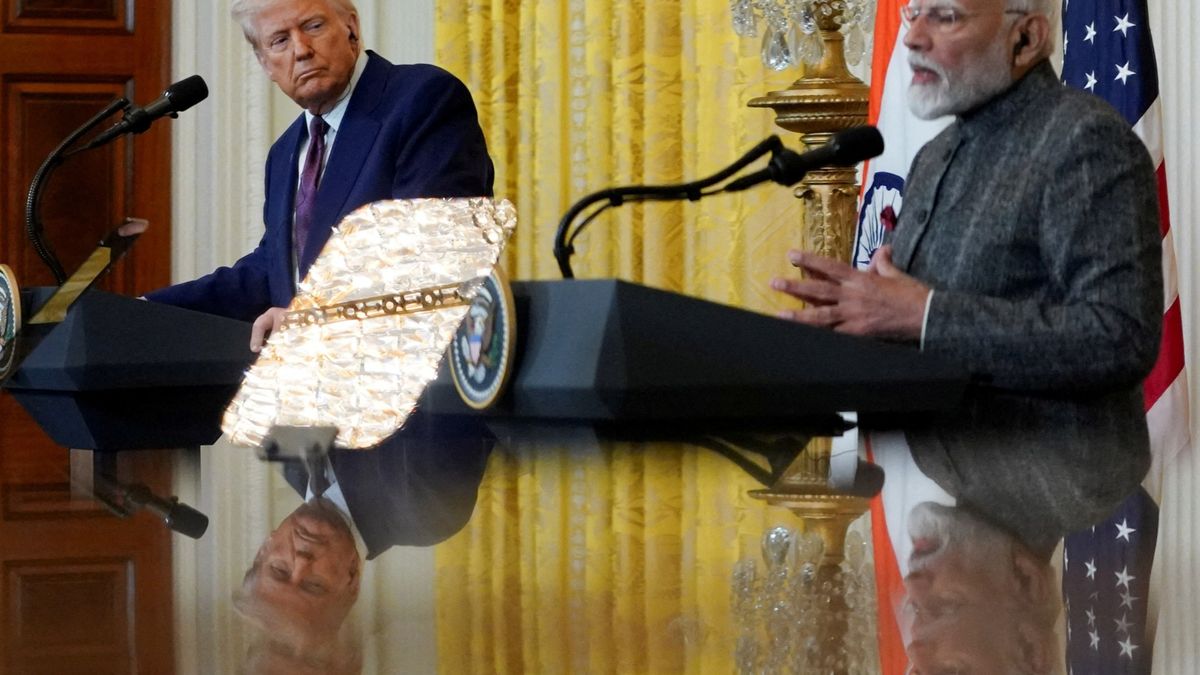
India’s Foreign Affairs Minister S. Jaishankar recently delivered a stark public assessment of the United States, criticizing Washington's insensitivity to India's concerns over 'terrorism,' its warming ties with rival Pakistan, and its 'self-centered' trade policies. This direct critique, voiced at an event in New York, marks a notable departure from India's long-standing tradition of addressing bilateral disagreements with friendly nations, particularly the US, through quiet, behind-the-scenes diplomacy. The shift comes amidst rising bilateral tensions and follows a formal, rather than friendly, phone call between Indian Prime Minister Narendra Modi and US President Donald Trump.
This public pivot by India is a calculated move, reflecting a complex interplay of domestic political pressures and a re-evaluation of the US-India relationship under the transactional lens of the Trump administration. For decades, the US-India relationship enjoyed broad bipartisan support in both capitals, often framed as a strategic counterweight in the Indo-Pacific. However, Trump's 'America First' doctrine has introduced volatility. India, a rising global power, is now asserting its autonomy more forcefully, unwilling to be perceived as bowing to US pressure. The US, under Trump, prioritizes immediate economic gains and transactional diplomacy, evident in its tariff policies and its willingness to engage Pakistan, irrespective of India's long-standing security grievances concerning cross-border terrorism. New Delhi's public stance is a direct response to what it perceives as a lack of reciprocity and understanding from Washington, particularly on issues central to India's national interest and sovereignty.
While diplomats and leaders negotiate, the human cost of these power dynamics is borne by ordinary citizens. Indian farmers, for instance, are directly affected by the ongoing trade disputes, as India maintains protectionist policies for its agricultural sector, creating friction with US demands for market access. More broadly, the tightening of H1B visa regulations and increased fees under the Trump administration directly impact hundreds of thousands of Indian professionals and students who seek economic opportunities and mobility in the US. These restrictions not only limit individual aspirations but also contribute to a growing negative public sentiment in India towards the US. Furthermore, the perceived US intervention in the India-Pakistan Kashmir dispute and its warming ties with Islamabad exacerbate regional instability, leaving populations in contested areas vulnerable to the consequences of heightened tensions.
What governments and official statements often downplay is the long-term strategic erosion caused by short-term transactional gains. The US-India partnership is frequently touted as crucial for regional stability and a counterbalance to other rising powers. Yet, the current public friction, driven by trade protectionism and perceived slights on security concerns, chips away at this strategic foundation. Neither side openly acknowledges the broader geopolitical implications of a weakened US-India alignment, particularly in the context of global power shifts. For India, the public criticism also serves a crucial domestic purpose: Prime Minister Modi faces mounting pressure from opposition parties and upcoming state elections. By taking a tougher stance against the US, Modi's government can project strength and independence to its electorate, deflecting accusations of subservience. This internal political calculus, while a significant driver, is often framed externally as purely a response to US actions.
The immediate future of the US-India relationship hinges on several key developments. Observers should closely watch the progress of the bilateral trade agreement, especially the implementation (or reversal) of the new 100 percent US tariffs on countries, like India, that purchase Russian oil. This tariff could be a 'deal-breaker' and force India to make difficult choices that further strain ties. Domestically, the outcome of India's upcoming state elections will reveal the extent to which Modi's public posture resonates with voters and if it will embolden or constrain his foreign policy decisions. Finally, how the Trump administration continues to engage with Pakistan, particularly concerning Kashmir and counter-terrorism, will be a critical indicator of whether the US prioritizes its traditional strategic alignment with India or continues its transactional approach, potentially further alienating New Delhi.
Source referenced: ALJAZEERA
This brief was synthesized by our Editorial Engine and reviewed by The Ground Narrative team.


