TRENDING

Thursday, 8 October 2026
----------------------
27 Rabi' Al-Thani 1448 AH
Supporters of former prime minister Imran Khan have launched a long march toward Islamabad, testing the limits of Pakistan’s civilian‑military bargain. The protest wave revives old grievances while exposing fresh human and political risks.
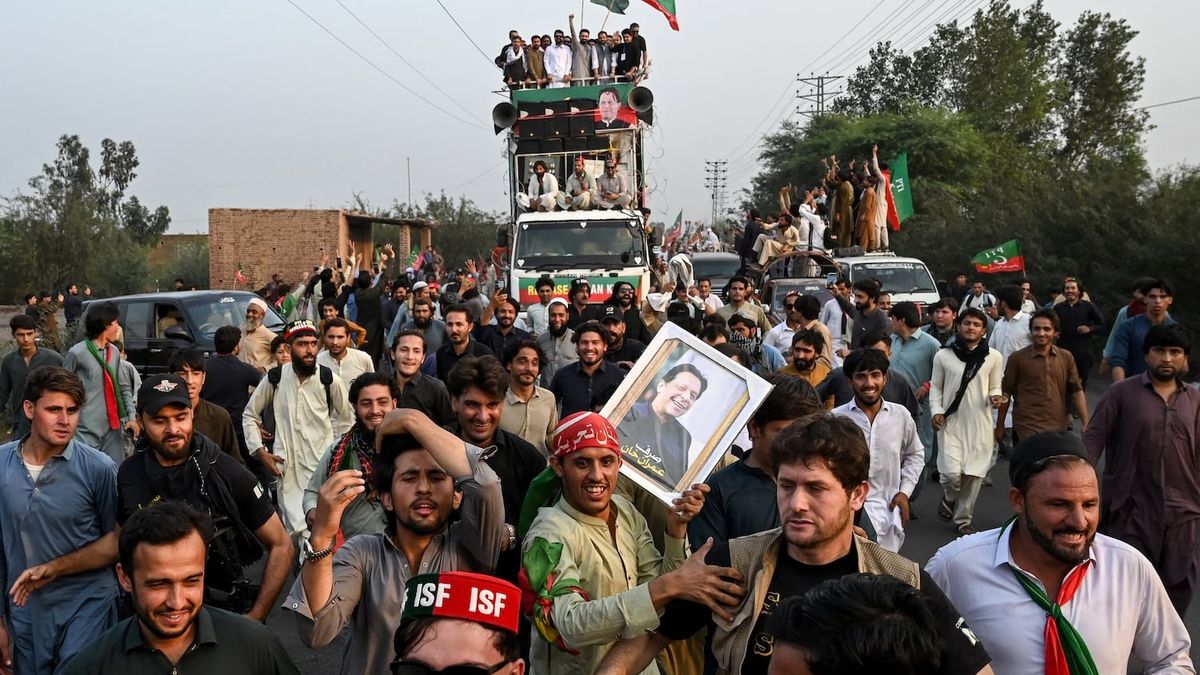
Supporters of former prime minister Imran Khan began a so‑called long march from Khyber Pakhtunkhwa on Sunday, aiming to converge on the capital within days. The Pakistan Tehreek‑e‑Insaf (PTI) crowd, draped in red and green, claims the march is a demand for Khan’s release after more than three years behind bars on corruption charges the party calls politically motivated. Government officials, led by Prime Minister Shehbaz Sharif, have warned against entering Islamabad, sealing roads with shipping‑container barriers and deploying additional security forces.
Pakistan’s post‑2000 politics has been defined by a tacit power‑sharing pact between elected leaders and the Pakistani military. The army controls key ministries, influences foreign policy, and enjoys a privileged budget. When Imran Khan fell from power after the 2022 no‑confidence vote, he accused the military and the United States of conspiring against him, a charge that strained the civilian‑military equilibrium. His subsequent criticism of senior generals has kept the army on high alert, treating PTI mobilization as a direct challenge to its authority.
For Shehbaz Sharif, the march is a test of his coalition’s durability. His government relies on a fragile alliance of regional parties and technocrats, many of whom fear that a mass protest could trigger a caretaker‑government scenario that the military could exploit. By framing the march as a security threat, Sharif can justify emergency powers, keep the army on his side, and sideline rival opposition parties that might otherwise capitalize on public discontent.
Pakistan is already wrestling with energy shortages, a depreciating rupee, and a looming balance‑of‑payments crisis. A large‑scale protest in the capital would likely disrupt trade routes, deter foreign investment, and pressure the International Monetary Fund negotiations that are critical for the country’s fiscal stability. The government therefore balances the cost of a heavy‑handed crackdown against the economic fallout of a prolonged street movement.
The march also reverberates beyond Pakistan’s borders. India watches closely, fearing that a destabilized neighbour could spill over into the contested Kashmir region. Meanwhile, Pakistan’s recent Mecca Joint Defense Agreement with Turkey and Saudi Arabia adds a diplomatic layer: any internal unrest could undermine its credibility as a mediator in the Iran‑Saudi rivalry and the Yemen conflict.
As protesters block highways and set up temporary camps, commuters in Islamabad and surrounding towns face daily disruptions. Vendors who depend on foot traffic report losses of up to 40 % during peak protest days. The city’s informal economy—street food stalls, garment tailors, and daily‑wage laborers—bears the brunt of curfews and security checkpoints.
Imran Khan’s health, already described by his family as deteriorating, becomes a flashpoint. Denial of regular medical examinations and restricted visitation rights exacerbate the suffering of his two UK‑based sons, who have been denied visas. The broader PTI network of detained activists faces overcrowded jails, limited legal counsel, and the risk of being caught in a broader security sweep.
The march’s launch point in Khyber Pakhtunkhwa has drawn police attention away from routine security patrols along the Afghan border. Rural villages report increased checkpoints, delayed aid deliveries, and a rise in extortion by local power brokers exploiting the security vacuum.
Women participating in the march often confront harassment from both security forces and rival political groups. Reports of tear‑gas exposure and arbitrary arrests have a chilling effect on female political participation, a setback for the modest gains made in gender representation over the past decade.
Official statements from the army emphasize “law and order,” but insiders suggest back‑channel talks between senior generals and PTI elders. These negotiations aim to extract a face‑saving concession—perhaps a limited house arrest for Khan—in exchange for a pledge not to destabilize the capital. The public narrative downplays any willingness to compromise, preserving the image of an uncompromising security apparatus.
Both the United States and China monitor the unrest for signs of shifting alignment. Washington, still wary of Khan’s anti‑U.S. rhetoric, quietly supports Sharif’s hardline stance, while Beijing watches for an opening to deepen its economic foothold through the China‑Pakistan Economic Corridor. Neither power wants a sudden regime change that could jeopardize existing projects, so diplomatic cables downplay the protest’s potential to alter foreign policy.
State‑run broadcasters have limited live coverage of the march, labeling it “illegal agitation.” Independent journalists report that internet throttling has been deployed in key transit corridors, curbing real‑time reporting. The omission of on‑ground testimonies creates a vacuum that official statements fill with vague security warnings.
The government’s latest macro‑economic releases downplay the fiscal impact of the protests, presenting a steady growth outlook despite rising inflation and disrupted supply chains. Analysts warn that the true cost—lost tax revenue, increased security spending, and stalled infrastructure projects—may be hidden to preserve investor confidence.
- Security Response: Whether the army opts for a limited containment strategy or a full‑scale crackdown will signal its tolerance for civilian dissent and shape the next phase of civil‑military relations.
- Khan’s Health Updates: Any official medical report on Imran Khan could trigger a surge in protest intensity or provide the government a pretext for tighter restrictions.
- International Reactions: Statements from the United States, China, and the Mecca pact partners will reveal how external powers weigh stability against strategic interests in Pakistan.
- Economic Indicators: Watch for sudden shifts in the rupee, IMF negotiation updates, and inflation data that could reflect the indirect cost of the march.
- Grassroots Mobilization: The ability of PTI to sustain momentum beyond the capital—especially in rural Khyber Pakhtunkhwa and Balochistan—will determine whether the protest remains a single‑city event or evolves into a broader challenge to the state.
The long march is more than a street protest; it is a pressure test of Pakistan’s fragile power architecture. How the state, the military, and the international community respond will shape the country’s trajectory for years to come.
Khan was convicted on corruption charges that his supporters label politically motivated. The judiciary has upheld the sentence, but his family says he has been denied proper medical care and visitation rights.
A mass protest in the capital could force the government to negotiate, risk a security crackdown, or trigger a broader political crisis that tests the civilian‑military balance.
Editor's Note: Analysis based on publicly available reports and expert assessments up to October 2026.
Source referenced: FOREIGNPOLICY
This brief was synthesized by our Editorial Engine and reviewed by The Ground Narrative team.