TRENDING

Monday, 5 October 2026
----------------------
24 Rabi' Al-Thani 1448 AH
Hamas has dissolved its Gaza governing body, signaling a move towards a technocratic committee, but the critical issue of its disarmament remains unresolved. This political maneuver, part of a stalled US-brokered ceasefire, highlights deep divisions over Gaza's post-conflict governance and regional stability.
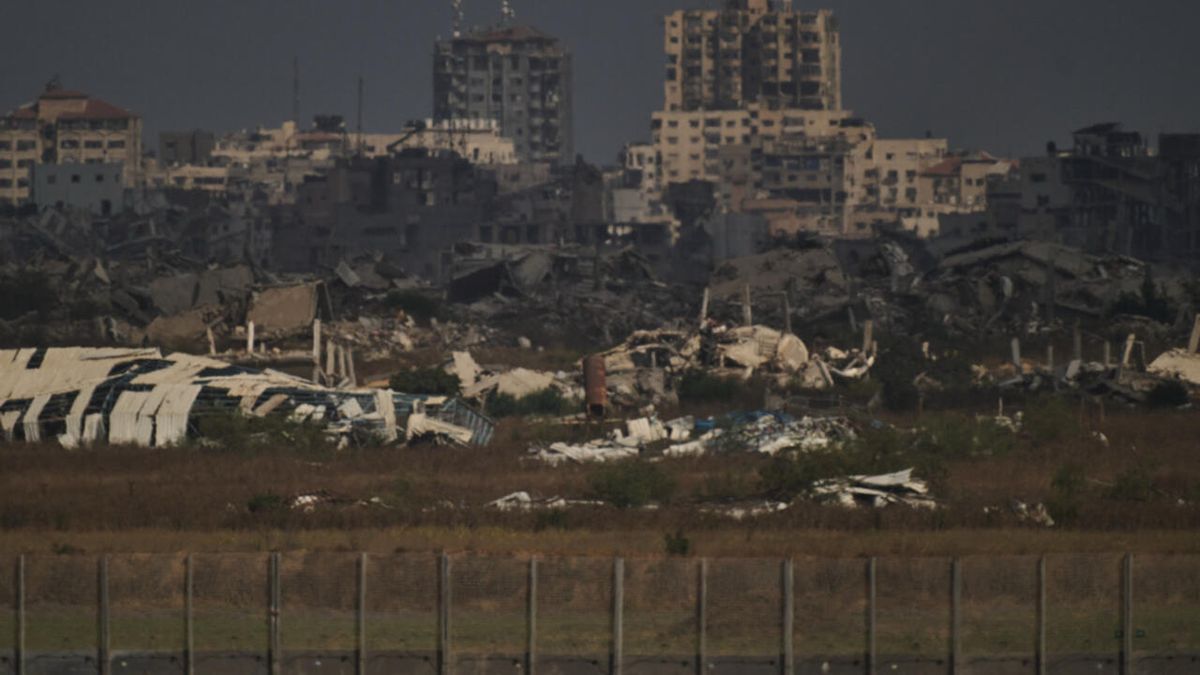
The Palestinian movement Hamas announced on Monday, July 6, 2026, its decision to dissolve its governing body in the Gaza Strip, a significant political maneuver after nearly two decades of direct rule. This move is intended to pave the way for a technocratic committee to assume civilian administrative responsibilities, signaling a potential, albeit complex, shift in the governance landscape of the war-devastated territory. The announcement comes as part of ongoing, yet stalled, efforts to implement the second phase of a ceasefire agreement brokered by the United States last October.
Hamas seized control of the Gaza Strip in 2007 following a violent confrontation with rival Palestinian faction Fatah, establishing its de facto government. For nearly 20 years, the group has managed the day-to-day affairs of the densely populated enclave, a period marked by multiple conflicts with Israel and a stringent blockade. The current initiative to transition governance stems from a ceasefire agreement reached in October 2025 between Hamas and Israel, mediated by then-US President Donald Trump. This agreement established the "Board of Peace," which in turn created the National Committee for the Administration of Gaza (NCAG), headed by Palestinian official Ali Shaath, with the explicit aim of establishing a nationally accepted, technocratic civilian administration.
The first phase of the ceasefire involved the exchange of Israeli hostages held by Hamas for Palestinian detainees in Israel. However, the transition to the second phase, which mandates Hamas's disarmament and a gradual withdrawal of Israeli forces from Gaza, has been mired in difficulties for months. Hamas has repeatedly expressed its readiness to relinquish day-to-day governance, but the critical issue of its disarmament remains a significant point of contention.
Hamas's decision to dissolve its governing body can be interpreted through several strategic lenses. Firstly, it aligns with the terms of the ceasefire agreement, potentially presenting Hamas as a more pragmatic actor willing to engage in a political solution for Gaza's future. By stepping aside from direct civilian administration, Hamas might seek to alleviate international pressure and potentially improve its standing among other Palestinian factions, who have reportedly welcomed the move as a "serious step." This could also be a tactical move to shift the immense burden of governing a territory ravaged by conflict and facing severe humanitarian challenges onto a new, internationally recognized body.
However, this political concession is intricately linked to Hamas's military posture. The group has explicitly stated its demand for the establishment of a Palestinian administration before it will consider handing over any part of its arsenal. This positions the dissolution of its governing body as a strategic lever, aiming to secure a legitimate Palestinian administrative structure in Gaza as a precondition for disarmament. This approach underscores Hamas's intent to maintain its military capabilities as a bargaining chip in future negotiations, highlighting the enduring challenge of separating its political and military wings.
Despite Hamas's announcement, the path to a fully functional technocratic administration in Gaza is fraught with significant obstacles. The NCAG, intended to assume administrative responsibilities, has remained based outside Gaza for months, reportedly due to strong Israeli objections to its entry into the territory. Israel's stance is complex: while it rejects any return of Hamas to power, it also currently opposes a direct takeover by the Ramallah-based Palestinian Authority. This dual rejection reflects Israel's profound security concerns and its desire to prevent any governance structure that could be perceived as a conduit for Hamas influence or a threat to its security.
Furthermore, Israeli forces have expanded their presence in Gaza in recent months, now controlling nearly 70 percent of the territory. This increased military footprint complicates any immediate withdrawal and raises questions about the practical sovereignty and operational capacity of a new Palestinian administration. The ongoing negotiations in Cairo between Hamas, other Palestinian factions, and mediators have struggled to bridge these fundamental differences, particularly concerning the sequence of disarmament, Israeli withdrawal, and the establishment of the new administration.
The dissolution of Hamas's governing body, while a notable political development, does not automatically resolve the core geopolitical tensions. It shifts the onus onto the international community and other Palestinian actors to navigate Israel's security demands and Hamas's conditions for disarmament. The success of the NCAG, led by Ali Shaath, hinges on its ability to gain acceptance from all key stakeholders, including Israel, and to effectively operate within a highly contested and war-torn environment. The future of Gaza's governance remains a critical determinant for regional stability, inter-Palestinian reconciliation, and the broader prospects for peace in the Middle East.
The current situation represents a delicate balance of political maneuvering and strategic deadlock. Hamas's move offers a potential opening for a new administrative framework in Gaza, but its effectiveness is contingent upon resolving the deeply entrenched issues of security, disarmament, and international acceptance. The coming months will test the resolve of all parties involved to translate this political gesture into tangible progress towards a stable and sustainable future for Gaza.
Source referenced: FRANCE24
This brief was synthesized by our Editorial Engine and reviewed by The Ground Narrative team.


