TRENDING

Friday, 13 November 2026
----------------------
3 Jumada Al-Thani 1448 AH
The 1970s saw newly independent nations launch a parallel news system to challenge Western dominance. Decades later, the legacy of that experiment still shapes who gets to tell the world’s stories.
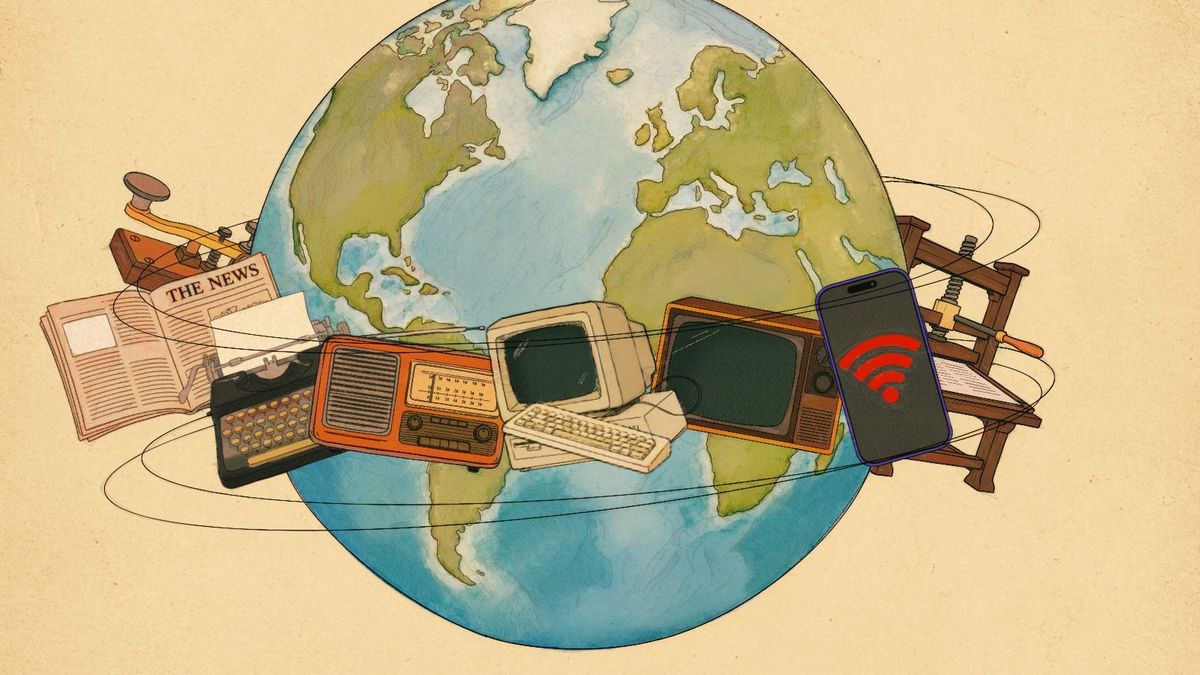
In the early 1970s a coalition of Asian, African and Latin American broadcasters and wire services launched the Non‑Aligned News Agencies Pool (NANAP), a coordinated network that exchanged stories without routing them through Reuters, AFP or AP. The effort grew out of the Non‑Aligned Movement (NAM) and was championed at UNESCO’s New World Information and Communication Order (NWICO) debates. By 1975, member agencies from Sri Lanka, Yugoslavia, Brazil, the Philippines and dozens of other states were regularly swapping dispatches, giving audiences in the Global South access to news framed by peers rather than former colonial powers.
- Historical cartel – Since the mid‑19th century, three European agencies split the world into exclusive territories, turning news distribution into an imperial infrastructure. This arrangement gave Western capitals a permanent seat at the global agenda‑setting table.
- Cold‑war leverage – The NAM offered a third‑way path, allowing countries to sidestep the binary US‑Soviet media battle. By pooling resources, members reduced dependence on superpower‑funded broadcasters and created a bargaining chip in diplomatic negotiations.
- Economic incentives – Export‑oriented economies needed reliable foreign coverage to attract investment. A home‑grown news pool meant they could showcase development projects on their own terms, potentially drawing aid and trade on more favorable conditions.
- Technological constraints – Early NANAP relied on telex, manual copy‑editing and physical typists. The labor‑intensive process limited speed but reinforced a sense of collective ownership; each story was a negotiated product rather than a commodity sold to the highest bidder.
- Institutional backing – UNESCO’s NWICO provided a formal forum where developing nations could press for a more equitable information order. Although the initiative eventually stalled under US pressure, it legitimised the idea that information is a human right, not just a market good.
Many of the early NANAP correspondents worked under precarious conditions: low pay, limited safety equipment and the constant threat of state censorship. In conflict zones—from Angola to Bangladesh—reporters risked arrest, exile or death to get a story out that Western wires would either ignore or spin.
While the network expanded, it never reached the poorest rural communities that lacked radio receivers or newspaper distribution. The digital divide meant that the promise of a balanced narrative often stayed confined to urban elites and state‑run outlets, leaving millions without a voice.
Funding NANAP required member states to subsidise news bureaus, a costly commitment for economies already grappling with debt and structural adjustment programs. In several cases, budget cuts forced agencies to downsize, leading to layoffs and a reduction in the diversity of stories produced.
- State co‑optation – While the public narrative celebrated a collective, anti‑imperial media front, many governments used NANAP as a tool to amplify official propaganda. Leaders like Indira Gandhi and Fidel Castro fed their own political agendas into the pool, blurring the line between independent reporting and state messaging.
- Western adaptation – As the Global South’s network grew, Western agencies quietly re‑engineered their own distribution models, establishing satellite bureaus and partnering with local outlets to retain influence. This strategic pivot is rarely highlighted in official histories of the era.
- Digital erasure – The shift to online platforms in the 2000s saw many NANAP archives digitised incompletely or lost altogether, erasing a crucial record of alternative narratives. The loss is seldom acknowledged in contemporary discussions about media preservation.
- Corporate interests – Multinational telecom firms later supplied the infrastructure that made real‑time news exchange possible, but they also imposed pricing structures that favored larger, wealthier agencies, subtly re‑centralising control.
- Revival of regional news alliances – New digital coalitions such as the African Press Union’s “News Hub” echo NANAP’s goals. Monitoring their funding sources and governance will reveal whether they can avoid past pitfalls of state capture.
- Policy battles at UNESCO – The upcoming review of the NWICO legacy could reopen debates on information sovereignty, especially as the United States and China vie for influence over global internet standards.
- Tech platform regulation – As social media giants become de‑facto news distributors, the fight over algorithmic bias may become the next arena where the Global South seeks to assert narrative control.
- Archival projects – Initiatives to digitise and open NANAP’s historical wire feeds could reshape academic and public understanding of 20th‑century media power. Their success will depend on transparent funding and inclusive curation.
- Grassroots media resilience – Community radio stations and citizen journalists in conflict‑prone regions continue to fill gaps left by both legacy agencies and modern platforms. Their ability to survive state pressure and commercial exploitation will be a key indicator of where the true balance of narrative power lies.
NANAP was a cooperative network launched in the 1970s by countries in the Global South to share news without relying on Western wire services, aiming for a more balanced international information flow.
UNESCO’s NWICO sought to address information inequality by encouraging developing nations to build their own media infrastructure, arguing that news is a human right rather than a commercial commodity.
The NANAP experiment inspired later regional news collaborations and highlighted the challenges of state influence, funding constraints, and digital preservation that still shape efforts for a pluralistic global news ecosystem.
Source referenced: ALJAZEERA
This brief was synthesized by our Editorial Engine and reviewed by The Ground Narrative team.