TRENDING

Saturday, 24 October 2026
----------------------
13 Jumada Al-Awwal 1448 AH
The Global South is being forced to choose between servicing debt and educating its children, highlighting a stark political hierarchy where creditors take precedence over children's rights.
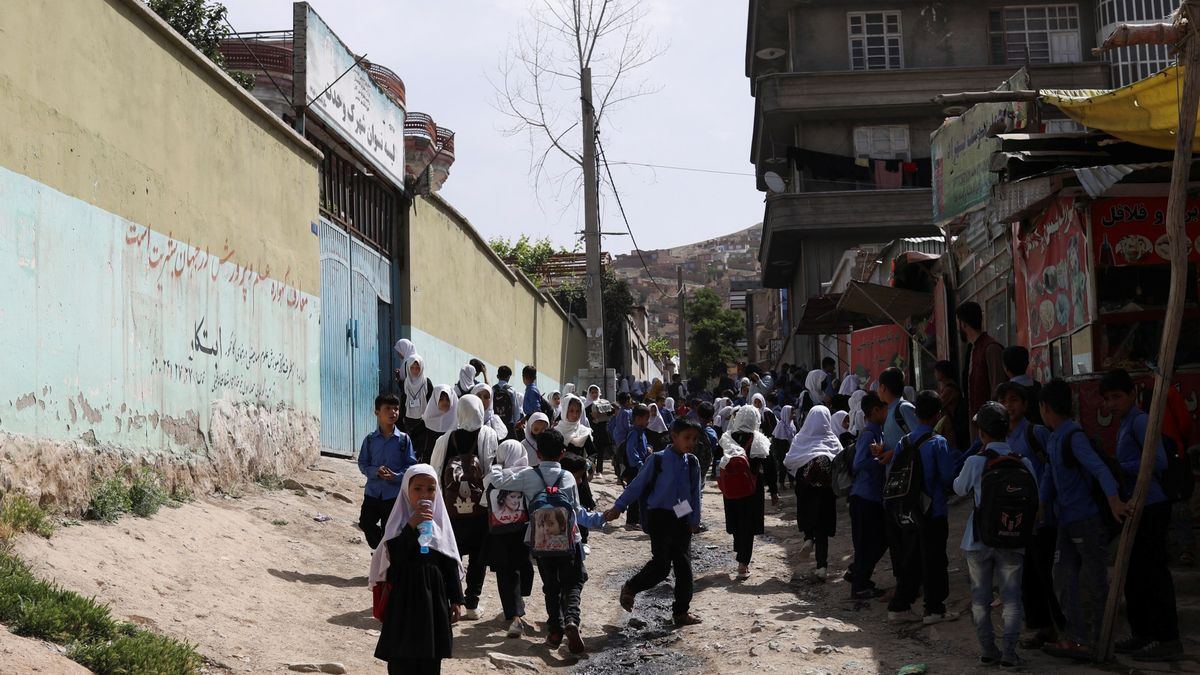
The world claims to regard education as a universal right, but its financial system tells a different story. New figures released by UNESCO show that 113 countries with a total population of 6.1 billion now spend more on servicing debt than educating their people. In low-income countries, debt payments are nearly four times education expenditure. This is not merely a sign of strained public finances, but a stark political hierarchy where creditors possess enforceable claims on government revenues, while children possess declarations, development goals, and promises.
The consequences of this impossible choice are visible in overcrowded classrooms, deteriorating school buildings, teacher shortages, unaffordable school fees, and children leaving education prematurely. These outcomes are generally described as funding gaps or failures of domestic governance, as though governments had freely decided to neglect their schools. In reality, many governments are operating inside an international financial order that sharply restricts what they can choose.
The World Bank reports that developing countries transferred $741bn more to external creditors in principal and interest between 2022 and 2024 than they received in new financing. This was the largest net debt outflow in at least 50 years. In 2024 alone, low and middle-income countries paid a record $415bn in interest. This is particularly perverse because education is not simply another item of government consumption; it is an investment in a society's future capacities. Cutting it may make debt payments easier today, but it will weaken productivity, public revenues, and social resilience tomorrow.
Debt contracts are treated as binding obligations whose breach can trigger credit downgrades, capital flight, lawsuits, and exclusion from financial markets. The right to education, by contrast, carries no comparable machinery of enforcement. No ratings agency downgrades creditors when a country cannot afford enough teachers. No financial penalty is imposed on bondholders when debt service forces children out of school. Markets do not panic when classrooms collapse. The system disciplines governments for failing creditors, not for failing children.
UNESCO has proposed expanding debt-for-education swaps, but these initiatives can only produce tangible gains if they are part of a larger solution. Debt swaps typically cover only a small fraction of what countries owe, are negotiated selectively, depend on creditor consent, and may add new layers of external monitoring to domestic spending. Most importantly, they leave untouched the principle that creditors are entitled to repayment unless they voluntarily concede otherwise. The question becomes how to persuade creditors to permit a little more education, rather than why the claims of creditors should take priority in the first place.
A more serious response would begin with large-scale debt cancellation for countries in distress, automatic suspension of payments during economic and climate emergencies, far cheaper concessional financing, and a fair multilateral mechanism for restructuring sovereign debt. At present, debt negotiations are fragmented among private creditors, bilateral lenders, and international institutions. Debtor governments must bargain with powerful financial actors while trying to avoid being punished for seeking relief. A binding United Nations framework for sovereign debt could establish shared rules, require both borrowers and lenders to act responsibly, and prevent holdout creditors from obstructing restructuring.
The world needs to move towards the idea that debt repayment cannot come at any human cost. A debt is not sustainable when paying it requires dismantling the institutions on which a society's future depends. The views expressed in this article are the author's own and do not necessarily reflect Al Jazeera's editorial stance.
Editor's Note: The analysis is based on available data and expert opinions, but the future consequences of the debt crisis are uncertain.
Source referenced: ALJAZEERA
This brief was synthesized by our Editorial Engine and reviewed by The Ground Narrative team.


