TRENDING

Monday, 5 October 2026
----------------------
24 Rabi' Al-Thani 1448 AH
Germany's Bundeswehr is experiencing a significant surge in applications, driven by a challenging economic recession and widespread job cuts. This trend, while addressing immediate recruitment needs, underscores a complex interplay between domestic economic pressures and Germany's broader strategic shift towards rearmament.
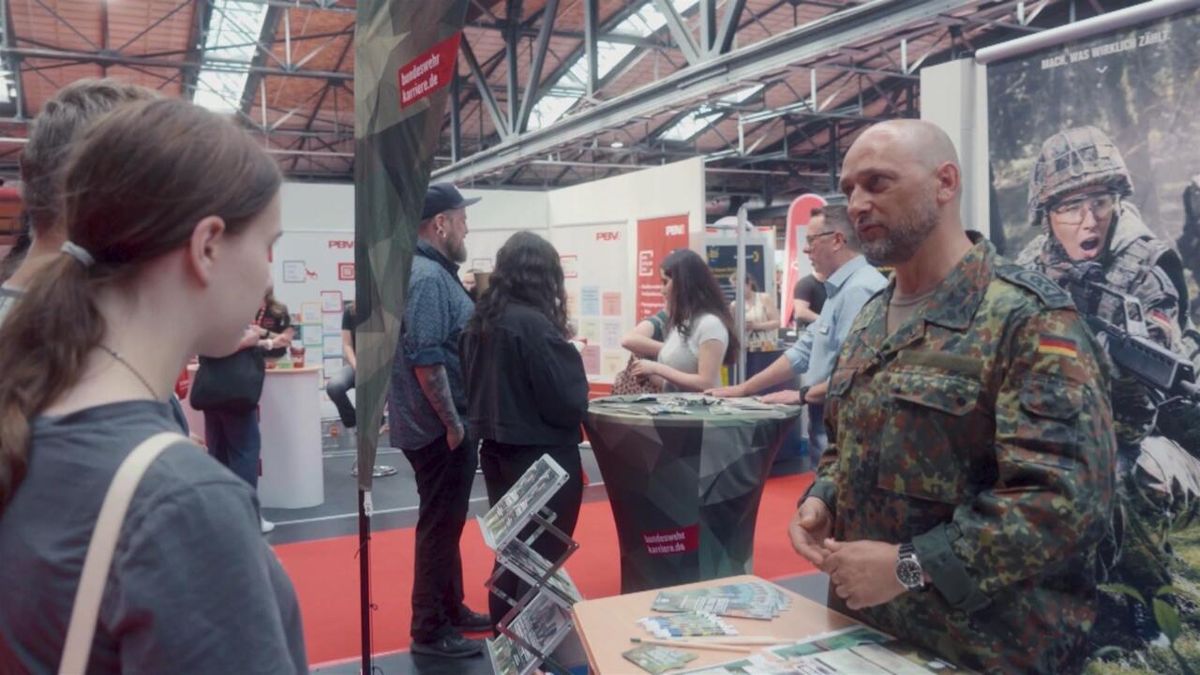
Germany's armed forces, the Bundeswehr, are witnessing a notable increase in applications, a development that reflects both the nation's current economic challenges and its evolving geopolitical posture. In January 2026 alone, applications to the Bundeswehr rose by 23 percent, signaling a significant shift in career perceptions among young Germans, particularly those from Generation Z.
This surge in interest is primarily attributed to a deepening economic recession across Germany, which has led to thousands of job losses in both industrial and service sectors. For many young people, military service is no longer a primary vocation but has become a pragmatic 'plan B' – a stable employment option offering security and a clear career path amidst a volatile job market. This economic impetus provides a crucial lens through which to understand the motivations behind the increased recruitment figures.
The timing of this recruitment trend is particularly significant given Germany's declared 'Zeitenwende' (turning point) in defense policy. Following Russia's full-scale invasion of Ukraine, Chancellor Olaf Scholz announced a historic commitment to significantly increase defense spending and modernize the Bundeswehr, reversing decades of underinvestment and a historically restrained military posture. This strategic pivot aims to bolster Germany's role in European security and within NATO, transforming its military from a primarily defensive and expeditionary force into a more robust and capable contributor to collective defense.
The influx of new recruits, even if driven by economic necessity, directly supports this strategic rearmament effort. A larger, better-staffed Bundeswehr is essential for Germany to meet its NATO commitments, enhance its deterrence capabilities, and project greater stability within Europe. The challenge, however, lies in integrating these economically motivated recruits into a force that requires high levels of commitment, specialized training, and a strong sense of purpose beyond mere employment.
The strengthening of the Bundeswehr has profound geopolitical implications for Europe and the transatlantic alliance. For decades, Germany's military capabilities were deliberately limited, a legacy of its post-World War II history. The current rearmament, supported by increased recruitment, positions Germany to become a more substantial military power within the European Union and NATO. This could lead to a more balanced burden-sharing within NATO, potentially reducing the alliance's reliance on the United States for European defense.
Furthermore, a more capable German military contributes directly to the collective security of Europe, particularly in the face of ongoing geopolitical tensions in Eastern Europe. It enhances the credibility of NATO's eastern flank and provides a stronger deterrent against potential aggression. The development of joint defense projects, such as the new battle tank unveiled by a Franco-German group, further illustrates the deepening military cooperation within Europe, with Germany playing an increasingly central role.
The shift in perception among German youth, where military service is now seen as a viable, albeit fallback, career option, represents a subtle but important societal change. While the immediate driver is economic, it could gradually normalize military service as a legitimate and respected profession, moving away from the more pacifist sentiments that have often characterized post-war German society. This cultural shift, if sustained, could have long-term implications for national identity and defense policy.
However, the reliance on economic hardship to attract recruits also presents potential challenges. A military primarily staffed by individuals seeking economic refuge might face issues related to morale, long-term retention, and the intrinsic motivation required for demanding military roles. Ensuring that these recruits develop a strong sense of purpose and commitment to military values will be crucial for the Bundeswehr's long-term effectiveness and cohesion. The German government and military leadership will need to implement robust training, integration, and retention programs to transform 'plan B' recruits into dedicated and effective service members.
In conclusion, the surge in Bundeswehr applications is a multifaceted phenomenon. It is a direct consequence of Germany's economic downturn, offering a lifeline to young people seeking employment. Simultaneously, it serves as an unexpected catalyst for Germany's strategic rearmament, bolstering its capacity to fulfill its evolving role in European and global security. The challenge now lies in harnessing this economically driven recruitment to build a resilient, highly motivated, and strategically effective military force for the future.
Source referenced: FRANCE24
This brief was synthesized by our Editorial Engine and reviewed by The Ground Narrative team.


