TRENDING

Wednesday, 11 November 2026
----------------------
1 Jumada Al-Thani 1448 AH
The Gulf Cooperation Council has approved an advanced headquarters for its Unified Military Command in Kuwait, a move that deepens regional defence integration. This analysis unpacks the power calculations, the people who bear the cost, and what to watch as the Gulf reshapes its security architecture.
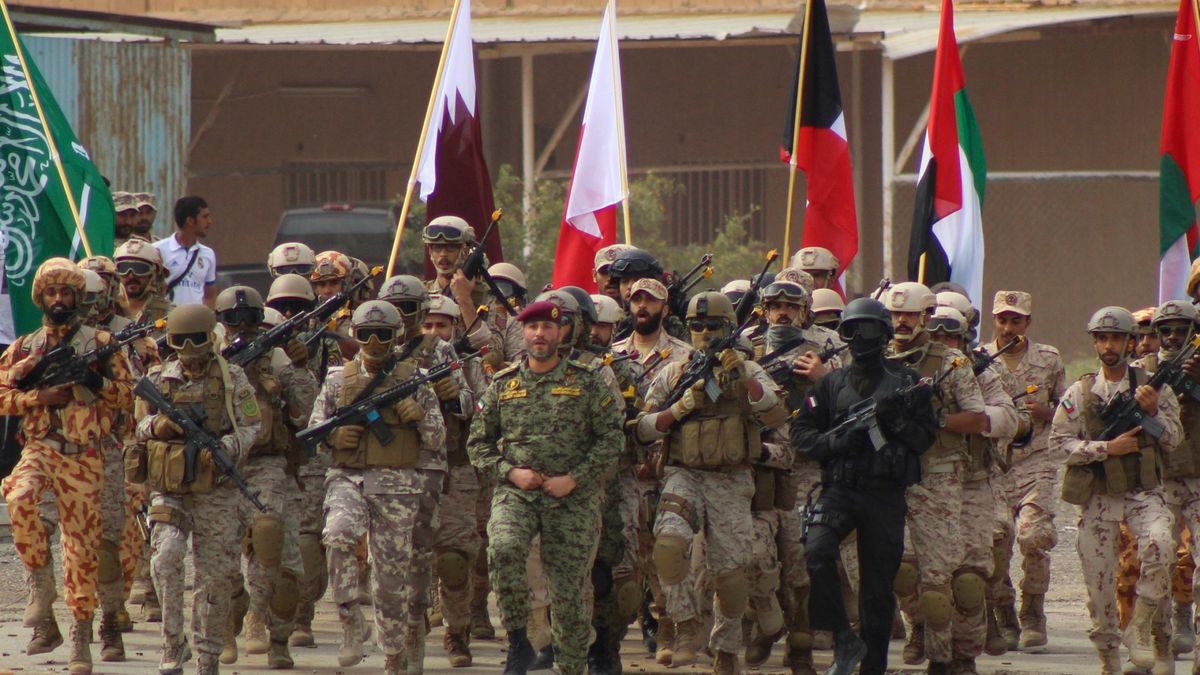
The Gulf Cooperation Council (GCC) announced that its six members will establish an advanced headquarters for the Unified Military Command in Kuwait. The decision emerged from the 23rd meeting of the GCC Joint Defence Council, attended by defence ministers from Bahrain, Kuwait, Oman, Qatar, Saudi Arabia, and the United Arab Emirates. While the exact location, troop numbers, and force composition remain undisclosed, the move signals a permanent, forward‑deployed command structure at the northern edge of the Gulf.
The GCC’s Unified Military Command, created in 2013, was intended to coordinate joint operations and present a unified front against external threats. By moving a senior command post to Kuwait, the bloc shortens decision‑making cycles and places its leadership closer to flashpoints such as the Strait of Hormuz, the Iraqi border, and the Yemeni theatre. This geographic shift enhances the GCC’s ability to project a credible deterrent, especially after the United States‑Israeli war on Iran exposed vulnerabilities in Gulf air and maritime infrastructure.
Historically, the United States has been the primary security guarantor for the Gulf, maintaining bases in Saudi Arabia, Bahrain, and Qatar. Recent developments—U.S. naval blockades, a lingering presence in the Strait of Hormuz, and a cautious stance from Washington after the February 28 war—have prompted GCC states to hedge their reliance. The new command does not replace existing U.S. partnerships; rather, it adds a layer of intra‑Gulf coordination that can feed intelligence and operational data to American forces while preserving a distinct Gulf‑led decision‑making channel.
The command complements other recent agreements: the Makkah Joint Defence Agreement linking Saudi Arabia, Pakistan, and Turkiye, and the 2025 bilateral mutual defence treaty between Saudi Arabia and Pakistan. By institutionalising a GCC‑wide command, the bloc creates a parallel structure that can operate alongside these pacts, reducing duplication and avoiding command‑and‑control friction during joint operations. It also signals to external actors—most notably Iran and Iran‑aligned militias in Iraq—that the Gulf states are moving from ad‑hoc coalition responses to a standing, integrated defence posture.
The Gulf’s economies are heavily dependent on oil and gas exports, which were severely disrupted by missile and drone attacks on shipping lanes after the Iran war began. A more coordinated command aims to protect critical infrastructure, ensuring that pipelines, ports, and refineries remain operational. By safeguarding the flow of hydrocarbons, the GCC protects not only national revenues but also global energy markets that rely on Gulf supply.
Kuwait’s capital, Kuwait City, will host the new headquarters, bringing an influx of troops, equipment, and surveillance assets. While the presence may deter attacks, it also raises the risk of the city becoming a target for hostile forces seeking to strike a symbolic command centre. Residents could face heightened security checks, restricted movement zones, and the psychological strain of living under an intensified military footprint.
Construction of the command complex and the stationing of forces will require local contractors, construction workers, and support staff. Short‑term employment opportunities may arise, but they are likely to be dominated by foreign specialists and contractors from Saudi Arabia, UAE, and Western firms. Local labour markets risk being squeezed as wages rise for security‑related jobs, potentially inflating living costs for ordinary Kuwaitis.
Large‑scale military installations bring noise pollution, increased emissions from vehicles and aircraft, and potential contamination from fuel storage. Communities near the base may experience deteriorating air quality and heightened health risks, especially if the site expands to include training ranges or live‑fire exercises.
Public statements emphasize unity, yet underlying tensions persist. Saudi Arabia and the UAE have historically led GCC defence initiatives, while Qatar and Kuwait have pursued more moderate diplomatic tracks with Iran. By locating the command in Kuwait, the bloc may be attempting to balance Saudi dominance, but the power dynamics within the command hierarchy remain opaque. Analysts suspect that senior Saudi officers will still wield disproportionate influence, a fact that official communiqués conveniently omit.
The announcement makes no mention of the commercial actors poised to profit from the new headquarters. Companies from the United States, Europe, and the Gulf are likely to secure contracts for communications systems, surveillance drones, and logistics support. Their involvement is downplayed in official rhetoric, even as they stand to reap billions in revenue—funds that ultimately flow to shareholders rather than the local populace.
While the GCC cites recent Iran‑aligned missile and drone attacks as justification, the narrative sidesteps the broader geopolitical context: the United States‑Israeli offensive that provoked the retaliation, and the ongoing sanctions regime that fuels regional instability. By focusing solely on Iranian aggression, governments shift public attention away from their own strategic miscalculations and the role of external powers in escalating the conflict.
- Operational rollout: Within the next six months, the GCC will likely reveal the command’s exact location and force composition. Satellite imagery and open‑source intelligence will track construction progress and troop movements.
- U.S. response: Watch for statements from the Pentagon and the U.S. Central Command. A tacit endorsement could indicate deeper integration, while a critical tone might signal friction over command autonomy.
- Iranian posture: Expect increased rhetoric from Tehran, possibly coupled with missile drills near the Persian Gulf. Any escalation will test the command’s deterrent credibility.
- Economic indicators: Oil export volumes and shipping lane traffic through the Strait of Hormuz will reveal whether the new command stabilises energy flows or merely adds a layer of bureaucratic complexity.
- Domestic sentiment in Kuwait: Public opinion polls and local media coverage will show whether Kuwaitis view the command as a protective shield or an unwanted militarisation of their capital.
By monitoring these threads, observers can gauge whether the GCC’s new war room truly reshapes the Gulf’s security architecture or simply adds another chapter to a long‑standing pattern of elite power consolidation.
The GCC wants a forward‑deployed command to shorten decision cycles, improve coordination against threats from Iran and Iraq, and protect vital oil infrastructure after recent missile and drone attacks.
No. The command is designed to complement existing U.S. alliances, providing a Gulf‑led decision layer while still relying on American intelligence and logistical support.
Residents may experience increased security restrictions, higher living costs due to rising wages for security jobs, and environmental impacts such as noise and air pollution from military activity.
Source referenced: ALJAZEERA
This brief was synthesized by our Editorial Engine and reviewed by The Ground Narrative team.