TRENDING

Sunday, 25 October 2026
----------------------
14 Jumada Al-Awwal 1448 AH
Southwest France is battling extensive wildfires, forcing tens of thousands of evacuations and highlighting the growing vulnerability of European nations to climate-exacerbated natural disasters. The crisis underscores significant economic, social, and resource allocation challenges for the French government and the broader European Union.
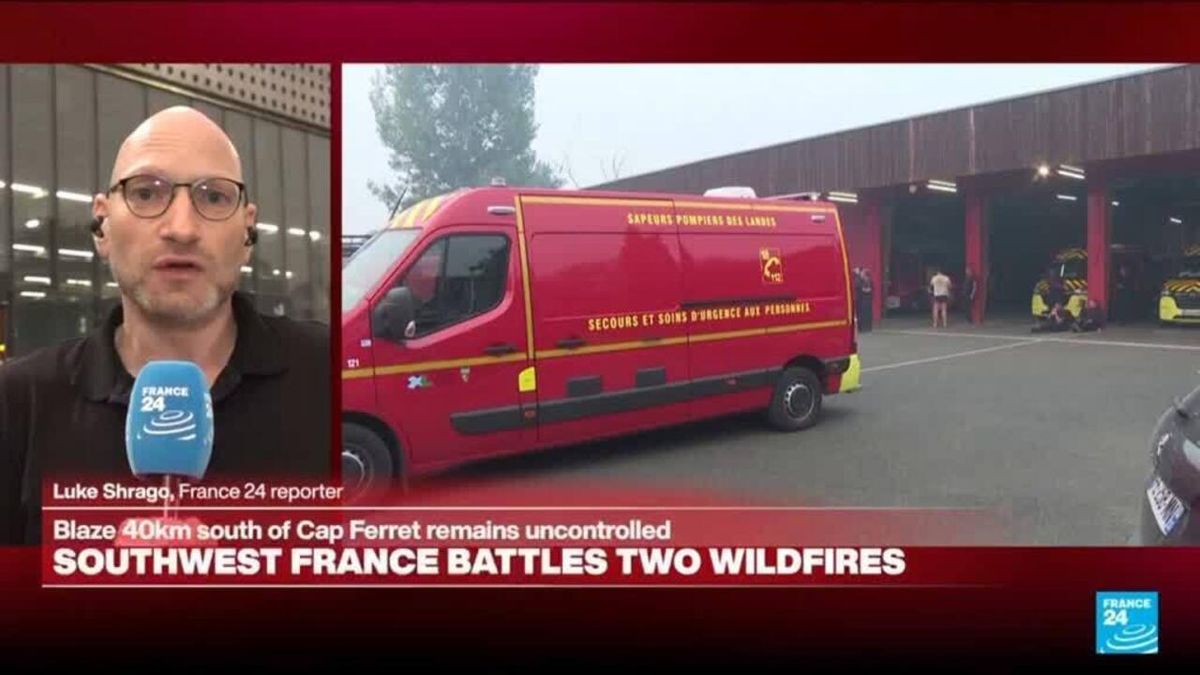
Southwest France is currently experiencing a severe wildfire crisis, with extensive blazes sweeping through the region and approaching the major city of Bordeaux. The fires, fueled by what reporters describe as "tinder-box dry conditions" and "extremely high winds," have necessitated the evacuation of over 40,000 people, including numerous tourists, as of late July 2026. This unfolding disaster represents a significant challenge for French authorities and emergency services, underscoring the increasing vulnerability of European landscapes to climate-exacerbated natural phenomena.
The immediate cause of the rapid spread has been attributed to the combination of prolonged drought conditions, which have rendered vegetation highly combustible, and powerful winds that propel the flames across vast areas. Firefighting efforts are underway, involving substantial resources and personnel, but the sheer scale and intensity of the blazes present formidable obstacles. The situation mirrors similar challenges faced by neighboring Spain, where thousands have also been evacuated due to heatwave-fueled fires near Madrid, indicating a broader regional pattern of climate-related vulnerability.
The escalating wildfire crisis in France, while a localized event, carries significant geopolitical and economic implications that extend beyond immediate disaster response. Economically, the destruction of forests, agricultural land, and potentially residential and commercial properties will incur substantial costs for recovery and reconstruction. The disruption to the vital tourism sector in a popular region like southwest France will also have a tangible impact on local and national economies. Furthermore, the immense financial and logistical burden of deploying thousands of firefighters, specialized aircraft, and emergency personnel strains national budgets and diverts resources that could otherwise be allocated to other public services or defense priorities.
From a geopolitical perspective, the increasing frequency and intensity of such climate-induced disasters in developed nations like France highlight a critical vulnerability within the European Union. These events serve as stark reminders of the tangible impacts of climate change, reinforcing the urgency for robust climate adaptation strategies and international cooperation. While France possesses advanced disaster response capabilities, a sustained or escalating pattern of such events could test the resilience of national infrastructure and social cohesion. The European Union's Civil Protection Mechanism often facilitates cross-border assistance during major emergencies, and such mechanisms may be increasingly relied upon as climate impacts intensify across the continent.
The recurring nature of severe wildfires across Europe, including this latest incident in France, points to deeper strategic challenges related to environmental security and national resilience. Governments are increasingly compelled to integrate climate change considerations into their long-term strategic planning, encompassing land management, urban development, and emergency preparedness. This includes investing in early warning systems, enhancing forest management practices to reduce fuel loads, and developing more resilient infrastructure capable of withstanding extreme weather events.
Moreover, the deployment of military assets, such as personnel and aircraft, to assist in civilian emergencies like wildfires, while a testament to national solidarity, can also highlight the strain on conventional defense resources. As climate change continues to act as a threat multiplier, exacerbating existing vulnerabilities and creating new ones, the distinction between traditional security threats and environmental security challenges becomes increasingly blurred. The French wildfire crisis, therefore, is not merely a seasonal environmental event but a significant indicator of the evolving security landscape, demanding comprehensive, multi-faceted responses that integrate climate policy with economic planning, social welfare, and national defense strategies. The international community's collective ability to mitigate and adapt to these growing climate pressures will define regional stability and global prosperity in the coming decades.
Source referenced: FRANCE24
This brief was synthesized by our Editorial Engine and reviewed by The Ground Narrative team.