TRENDING

Monday, 5 October 2026
----------------------
24 Rabi' Al-Thani 1448 AH
Massive wildfires in southwestern France and Catalonia, Spain, have forced the evacuation of thousands, highlighting the escalating impact of climate change and the critical need for enhanced cross-border disaster management in Western Europe. The blazes, exacerbated by early summer heatwaves and strong winds, underscore significant challenges to regional stability and resource allocation.
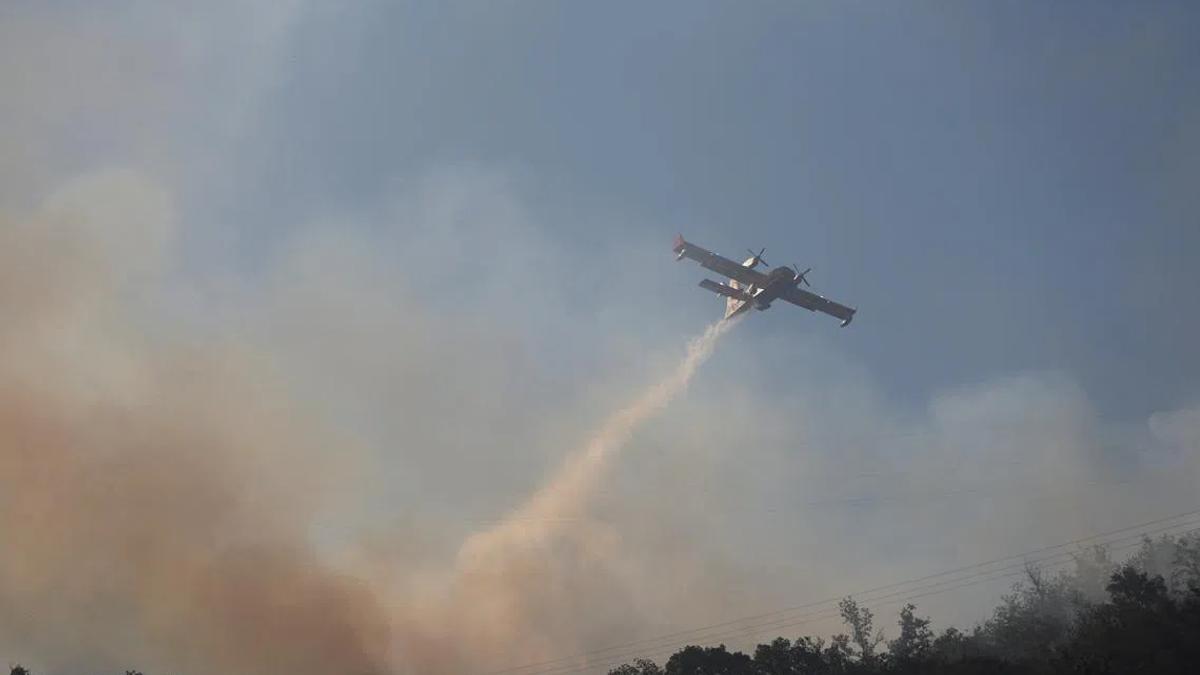
A significant wildfire event has unfolded across southwestern France and northeastern Spain, compelling the evacuation of approximately 10,000 individuals from numerous towns and villages. The conflagration, which began burning out of control on July 6, 2026, near the French Pyrenees, has scorched vast areas of land, underscoring the increasing vulnerability of the region to climate-induced disasters.
The primary affected area in France is near Ille-sur-Tet, where the blaze has consumed some 4,600 hectares in the foothills of the French Pyrenees. French Interior Minister Laurent Nunez noted the deteriorating conditions, with strong winds on July 6 expected to further fan the flames, intensifying the battle for emergency services. The proximity of the fire to the Tour de France route necessitated the closure of a leg to the public, prioritizing emergency access and minimizing the race's support motorcade.
Across the border in Spain, the fires have also caused substantial damage, particularly in Catalonia. An estimated 2,200 hectares were ravaged, with 97 percent of this destruction occurring within the protected natural area of Les Gavarres. While Catalan authorities reported the fire as stable by July 4 and anticipated its full extinguishment within the week, another significant blaze erupted in the eastern Castellon province, south of Catalonia, leading to the evacuation of 500 people and threatening the Sierra de Espadan national park, home to a vital cork oak forest.
The immediate causes of the fires are attributed to a combination of factors. Early summer heatwaves in May and June across France and Western Europe have created exceptionally dry conditions, rendering vast areas highly susceptible to ignition. Strong winds have subsequently played a critical role in rapidly spreading the blazes. Furthermore, human activity is suspected in at least one instance, with police arresting an employee in Catalonia for allegedly sparking a wildfire using an angle grinder near a roadside.
From a geopolitical perspective, these events highlight several critical implications:
* Climate Change as a Security Threat: The recurring and intensifying heatwaves, coupled with the increased frequency and severity of wildfires, underscore climate change as a direct threat to human security, infrastructure, and natural resources in Europe. The article's reference to Europe warming twice as fast as the global average provides crucial context, suggesting a long-term trend that will demand significant adaptation and mitigation strategies.
* Cross-Border Cooperation and Resource Management: The fires' disregard for national borders necessitates robust cross-border cooperation between France and Spain. Effective disaster response requires coordinated efforts in resource deployment, information sharing, and potentially joint operational command. This incident serves as a practical test case for European Union solidarity and inter-state emergency protocols.
* Economic and Environmental Costs: The destruction of thousands of hectares of forests, including protected natural areas like Les Gavarres and Sierra de Espadan, represents a substantial environmental loss. Economically, the evacuations, damage to property, disruption of major events like the Tour de France, and the long-term ecological recovery efforts will incur significant costs for both national and regional governments. The impact on tourism and local economies, particularly in rural areas, can be severe and prolonged.
* Strain on Public Services: Large-scale, simultaneous wildfires place immense strain on national and regional emergency services, including firefighters, medical personnel, and law enforcement. This can divert critical resources from other public safety needs and test the resilience of national disaster preparedness frameworks.
The escalating wildfire crisis in Western Europe points to a future where such events may become more common and intense. This necessitates a proactive approach involving enhanced climate adaptation measures, including improved forest management practices, early warning systems, and public education campaigns on fire prevention. Furthermore, the incident reinforces the importance of strengthening regional and international cooperation mechanisms for disaster response, ensuring that neighboring states can effectively support each other in times of crisis. The long-term stability and prosperity of these regions will increasingly depend on their ability to anticipate, mitigate, and respond to the growing challenges posed by a changing climate.
Source referenced: STRAITSTIMES
This brief was synthesized by our Editorial Engine and reviewed by The Ground Narrative team.