TRENDING

Monday, 5 October 2026
----------------------
24 Rabi' Al-Thani 1448 AH
France's decisive military, financial, and diplomatic intervention in the American Revolutionary War was a strategic move to weaken Great Britain, fundamentally altering the conflict's trajectory and global power dynamics. This alliance secured American independence but also inadvertently contributed to the financial and ideological pressures leading to the French Revolution.
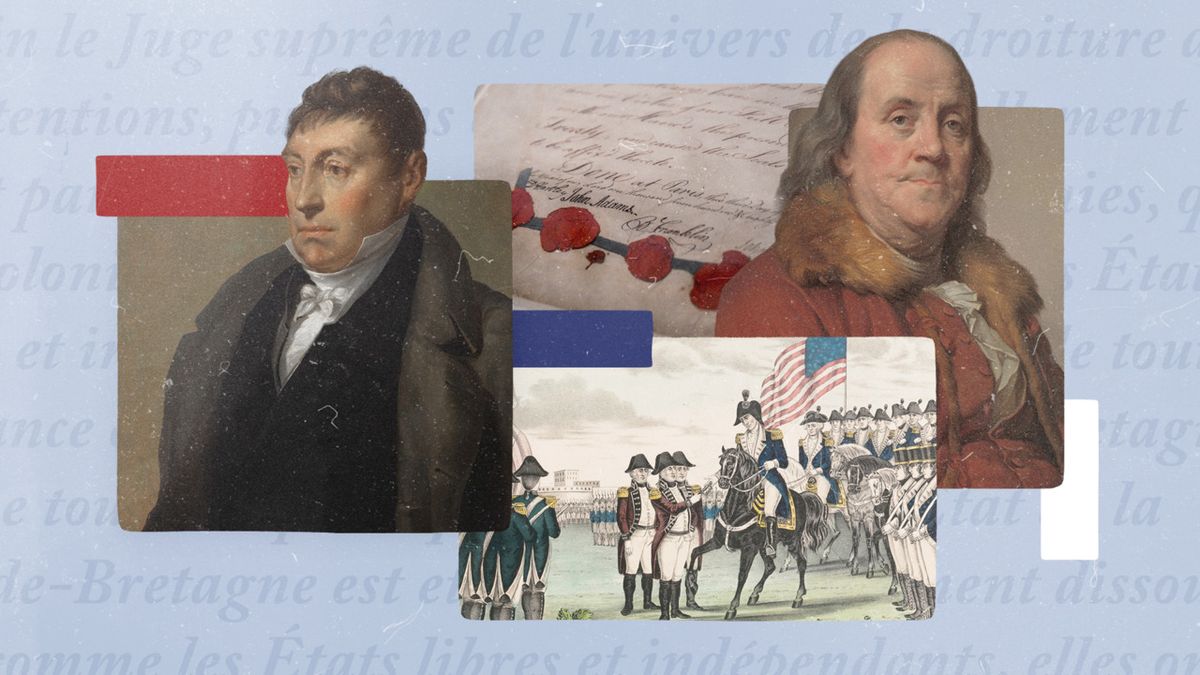
The 250th anniversary of American independence prompts a critical re-examination of the global power dynamics that shaped the birth of the United States. While often celebrated as a purely American triumph, the Revolutionary War was fundamentally an international conflict, with France's strategic intervention proving indispensable to the American cause. This alliance not only secured American sovereignty but also profoundly reshaped the geopolitical landscape of the late 18th century, with far-reaching consequences for all involved powers.
The decision by King Louis XVI's France to support the rebellious American colonies against Great Britain was not primarily driven by ideological solidarity with republican ideals, but rather by cold, calculated geopolitical interest. Following its defeat in the Seven Years' War (1756-1763), France harbored a deep desire to diminish the power and influence of its perennial rival, the British Empire. The American rebellion presented a unique opportunity to achieve this, diverting British resources and attention away from Europe and potentially weakening its global colonial network.
Initially, French support was clandestine. For over a year and a half after the American Declaration of Independence on July 4, 1776, Versailles secretly funneled weapons, ammunition, and funds to the insurgents. This covert assistance was crucial in sustaining the nascent American military effort during its most vulnerable period. The turning point for open French commitment arrived with the Battle of Saratoga in October 1777. The decisive American victory over British forces in New York convinced Louis XVI that the revolutionaries had a credible chance of success, dispelling lingering reservations about an open confrontation with Great Britain.
Following Saratoga, France moved swiftly to formalize its support. On December 17, 1777, France became the first nation to officially recognize the independence of the United States, a monumental diplomatic act that legitimized the American cause on the world stage. This recognition was swiftly followed by the signing of two historic treaties in Versailles on February 6, 1778: a commercial agreement and a Treaty of Alliance. The latter stipulated that neither nation would conclude peace with Great Britain without the consent of the other, effectively transforming the American War of Independence from a colonial rebellion into a broader international conflict involving the era's great powers.
Benjamin Franklin, serving as the American envoy in Paris, played a pivotal role in cultivating French support. His diplomatic acumen and charismatic presence captivated the French aristocracy, contrasting sharply with the more austere approach of fellow Founding Father John Adams. While Franklin solidified the alliance in the salons of Versailles, figures like the Marquis de Lafayette championed the American cause on the ground, arriving in America in June 1777 and quickly becoming a trusted confidant of George Washington. Lafayette's advocacy was instrumental in persuading Louis XVI to escalate France's military commitment.
France's entry into the war brought substantial military and naval resources to the American side. In the spring of 1778, France officially declared war on Great Britain, committing its formidable navy and army. While initial naval operations under Admiral Charles Henri d’Estaing faced setbacks, the alliance gained critical momentum with the arrival of a full-scale French expeditionary force of nearly 6,000 soldiers in Newport, Rhode Island, in the summer of 1780, commanded by the Comte de Rochambeau. This marked the first sustained presence of a major allied army fighting alongside the revolutionaries.
The year 1781 proved decisive. A perfectly coordinated Franco-American strategy culminated in the Battle of Yorktown. General Rochambeau persuaded George Washington to abandon a planned attack on New York and instead concentrate forces against British General Charles Cornwallis, who was entrenched at Yorktown, Virginia. Simultaneously, Admiral François Joseph Paul de Grasse's French fleet sailed from the West Indies, surprising the Royal Navy in Chesapeake Bay. This naval victory was critical, preventing British resupply or evacuation of Cornwallis's troops. Trapped between the combined land forces of Washington and Rochambeau and de Grasse's naval blockade, Cornwallis was forced to surrender on October 19, 1781. This combined maneuver, a testament to Franco-American military cooperation, effectively sealed the fate of the war.
The surrender at Yorktown rendered further British efforts to reconquer the colonies futile. Peace negotiations commenced, culminating in the Treaty of Paris, signed on September 3, 1783. This treaty officially recognized American independence, compelling Great Britain to acknowledge the sovereignty of its former colonies. France, having achieved its primary geopolitical objective of weakening its rival, also made peace with London on the same day.
The victory, however, came at a significant cost for France. The immense financial expenditure incurred between 1778 and 1783, estimated at over a billion livres, severely exacerbated the French monarchy's already precarious financial situation. This economic strain, combined with the ideological influence of American republican ideals—which resonated with French intellectuals like the "Americanists" who gathered around Thomas Jefferson in Paris—contributed significantly to the growing discontent that would erupt in the French Revolution just a few years later.
In conclusion, France's intervention in the American Revolutionary War was a masterstroke of 18th-century geopolitics. It transformed a localized rebellion into a global conflict, secured the birth of the United States, and fundamentally altered the balance of power in Europe and beyond. While achieving its immediate aim of weakening Britain, the long-term consequences for France itself were profound and ultimately revolutionary, demonstrating how international alliances, driven by strategic self-interest, can inadvertently trigger unforeseen domestic transformations.
Source referenced: FRANCE24
This brief was synthesized by our Editorial Engine and reviewed by The Ground Narrative team.