TRENDING

Monday, 5 October 2026
----------------------
24 Rabi' Al-Thani 1448 AH
France's highest court struck down a law banning social media for children under 15, highlighting the complex struggle between state protection and individual digital freedoms. The decision forces President Macron's government to rethink its approach to safeguarding youth online.
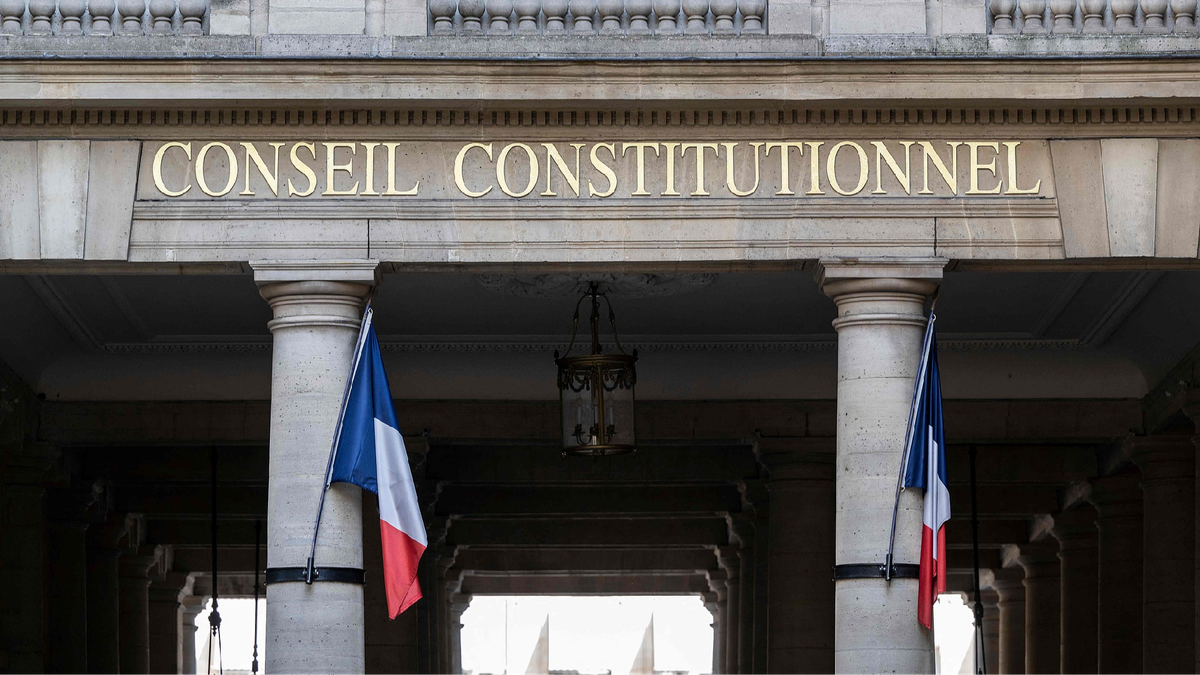
France's Constitutional Council recently struck down a government-backed law that aimed to ban social media access for children under 15. The Council ruled the measure was a disproportionate infringement on freedom of expression, noting its blanket nature failed to account for individual circumstances or establish clear risks for all online communication services. Following the decision, President Emmanuel Macron announced his commitment to revising the bill swiftly, aiming for a legally sound version before spring 2027.
This ruling underscores a fundamental tension in modern governance: the state's desire to protect its citizens, particularly the most vulnerable, against the fluid, borderless nature of the digital realm. President Macron's administration, like many governments globally, faces pressure to address concerns about minors' mental health and safety online. The initial legislation was a direct attempt to assert state control over a domain largely shaped by powerful tech corporations. However, the Constitutional Council's intervention highlights the limits of such top-down mandates within a democratic framework that prioritizes individual liberties.
The power mechanics here reveal a clash of authorities. The legislative and executive branches, driven by political will and public concern, sought to impose a broad protective measure. This was met by the judicial branch, which, acting as a constitutional arbiter, prioritized fundamental rights and legal precision. The Council's decision was not a rejection of the *goal* of child protection, but rather a critique of the *method*. It signals that any state intervention into digital life must be nuanced, respect individual agency, and be proportionate to established risks, rather than imposing a sweeping ban that treats all online platforms and all minors identically. This legal challenge also implicitly acknowledges the immense power of social media platforms, which have become integral to the social fabric, making outright bans difficult to justify legally and practically.
While the debate rages in legislative chambers and courtrooms, the primary subjects of this policy — France's children and their families — bear the direct consequences of this regulatory uncertainty. On one hand, minors are exposed to genuine risks online, from cyberbullying and inappropriate content to the documented impacts on mental health. A lack of clear, enforceable regulations leaves parents feeling disarmed and children vulnerable. The absence of a robust, legally sound framework means that the responsibility for navigating these complex digital landscapes often falls squarely on individual families, who may lack the resources or expertise to do so effectively.
Conversely, a blanket ban, as initially proposed, could have deprived young people of legitimate avenues for education, social connection, and self-expression that are now fundamental to modern life. For many, social media is not merely entertainment but a primary mode of interaction, community building, and access to information. The human cost here is a generation caught between the state's protective impulse and their inherent need for digital autonomy, with their evolving rights and needs often debated by adults without their direct input.
What remains largely unaddressed in the official discourse is the structural power of Big Tech itself. While governments grapple with how to regulate access, the social media platforms continue to operate with business models designed for maximum engagement, often at the expense of user well-being, particularly for minors. The debate focuses on state bans and constitutional rights, but rarely on the proactive responsibilities of the platforms to design safer environments, implement robust age verification, or provide transparent content moderation. The onus is placed on the state to build digital walls, rather than on the architects of the digital spaces to make them safer from within.
Furthermore, the mention of "European regulations" in the Elysee Palace's statement hints at a broader, often fragmented, struggle across the continent. France's attempt to regulate is not isolated but part of a larger European effort to rein in tech giants, exemplified by legislation like the Digital Services Act (DSA). However, the French Council's ruling underscores the difficulty of harmonizing such efforts when national legal traditions and constitutional interpretations vary. The "untold story" is the slow, arduous process of democratic states collectively trying to assert sovereignty over a digital domain that often operates beyond national borders and traditional legal frameworks.
All eyes will now be on President Macron's administration as it attempts to revise the legislation. The key question is whether the new bill will adopt a more nuanced approach, perhaps focusing on mandatory age verification technologies, stricter parental control tools, or specific content restrictions rather than an outright ban. The challenge will be to craft a law that is both effective in protecting minors and compliant with constitutional freedoms and broader European legal frameworks.
Beyond France, this case sets a precedent for how other democracies might approach the regulation of minors' online access. Will it encourage more nuanced, rights-respecting legislation, or will governments continue to push for broader bans, only to face similar legal challenges? The ongoing evolution of EU tech regulation, particularly regarding child safety online, will also be a critical area to watch. Ultimately, the struggle to balance digital freedom with genuine protection for the youngest citizens will continue to shape policy and legal battles across the globe.
Source referenced: CGTN
This brief was synthesized by our Editorial Engine and reviewed by The Ground Narrative team.


