TRENDING

Friday, 18 September 2026
----------------------
7 Rabi' Al-Thani 1448 AH
A decade after the 2016 accord, ex‑FARC cooperatives in Putumayo fear the militarized agenda of President Abelardo de la Espriella will undo their hard‑won livelihoods, while drug‑eradication plans threaten a fragile peace.
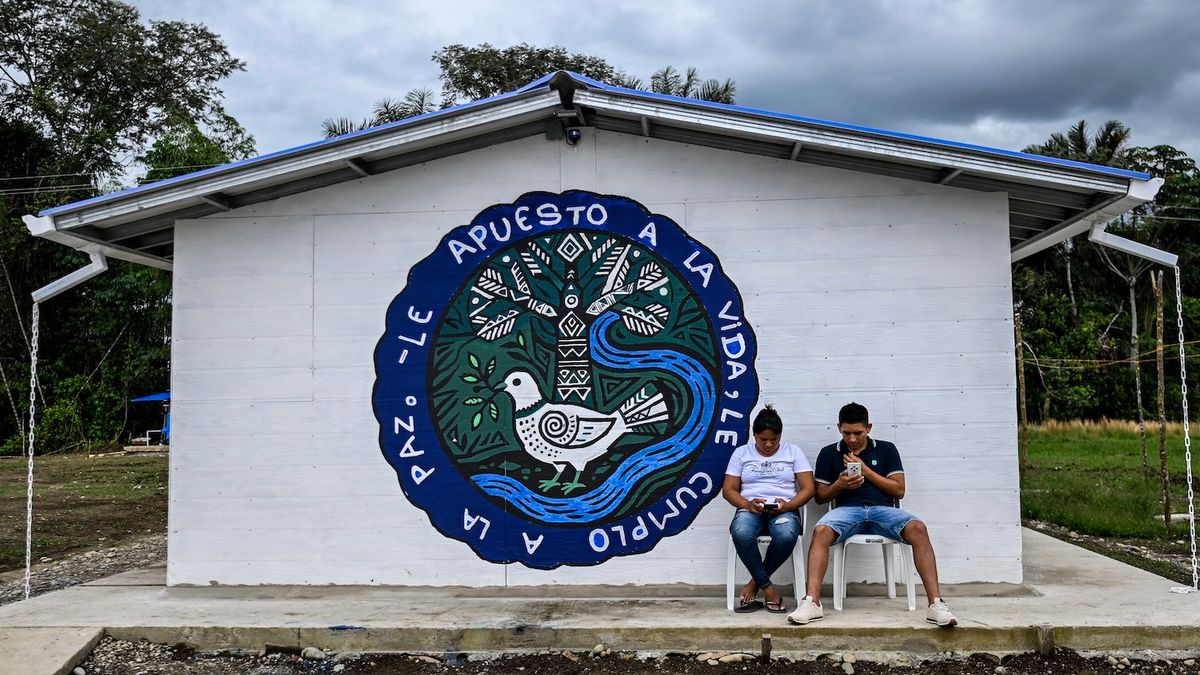
The cooperative Comuccom, a community of nearly 100 former FARC combatants and their families, has built homes, fishponds, a nursery and a daycare on land loaned by the municipality of Puerto Guzmán under the 2016 peace agreement. Since President Abelardo de la Espriella took office in August 2026, his hard‑line security stance, renewed coca‑eradication drives and the suspension of negotiations with criminal groups have sparked fresh anxiety among these ex‑combatants, who now fear a rollback of the protections the accord once provided.
De la Espriella’s approach rests on three intertwined incentives. First, political survival: after a bruising runoff, he must demonstrate decisive action against armed groups to consolidate support among security‑focused voters and the military establishment. Second, economic calculus: coca cultivation in Putumayo accounts for roughly 70 % of global cocaine output; eradicating it promises short‑term gains for international drug‑control partners and domestic fiscal relief, but ignores the lack of viable alternatives for farmers. Third, institutional legacy: by echoing former President Álvaro Uribe’s hard‑line tactics, de la Espriella taps into a familiar playbook that legitimizes large‑scale troop deployments and aerial bombings, even as civilian casualties rise. The peace agreement’s transitional justice framework—which allocated $2,400 per ex‑combatant and created security units staffed by former guerrillas—now competes with a revived militarized paradigm that treats former fighters as potential security liabilities rather than partners in reconstruction.
The human cost is most visible in the daily rhythms of La Granja de Paz. Families that once risked death on the front lines now tend fishponds and care for bees, yet they remain exposed to three overlapping threats. Violent reprisals from dissident factions persist; a 2022 attack that killed cooperative founder Jorge Santofimio Yepes still haunts the community. Economic displacement looms as coca eradication sweeps through 44,000 hectares of Putumayo, stripping many ex‑combatants of their primary cash crop without a clear substitution plan. Psychological trauma deepens as former fighters, like María A., live under the constant specter of renewed military operations that echo the Uribe era’s “scorched‑earth” tactics, endangering children and eroding the fragile sense of normalcy they have cultivated over ten years. The broader rural population—smallholders, indigenous groups and migrant laborers—shares these insecurities, often without any voice in national policy debates.
Official statements frame de la Espriella’s policies as a necessary crackdown on “criminal groups” and a fulfillment of Colombia’s international drug‑control obligations. What remains omitted is the strategic calculus of the United States and European Union, which continue to fund interdiction and eradication programs while sidelining comprehensive rural development packages. Likewise, the economic interests of multinational agribusinesses eyeing Putumayo’s fertile lands are downplayed; a militarized environment eases land grabs and reduces resistance from local communities. Finally, the political bargain between de la Espriella and the Colombian armed forces—who benefit from expanded budgets and operational autonomy—is presented as a national security imperative, masking a power shift that re‑centralizes violence under state control and marginalizes the very civilians the peace deal sought to protect.
Watch for three developments that will shape the trajectory of Colombia’s peace experiment. 1️⃣ Legislative moves on coca eradication: any new law authorizing forced removal without compensation could trigger mass protests and push former combatants back into illicit economies. 2️⃣ International funding flows: a pivot by the EU or US toward development‑oriented aid rather than pure interdiction would alter the cost‑benefit analysis for de la Espriella’s hard‑line stance. 3️⃣ Grassroots political mobilization: if cooperatives like Comuccom organize a unified front—perhaps aligning with left‑leaning municipal leaders—they could force a renegotiation of the reincorporation program and demand security guarantees. The interplay of these factors will determine whether the peace built on farms survives or collapses under renewed militarization.
Editor's Note: Analysis based on publicly available reports; on‑the‑ground conditions may evolve rapidly.
Source referenced: FOREIGNPOLICY
This brief was synthesized by our Editorial Engine and reviewed by The Ground Narrative team.


