TRENDING

Wednesday, 11 November 2026
----------------------
1 Jumada Al-Thani 1448 AH
A dazzling helicopter display at the PLA Army Aviation Institute impressed dozens of foreign military attachés. Yet the spectacle masks deeper power games and a quiet toll on ordinary Chinese lives.
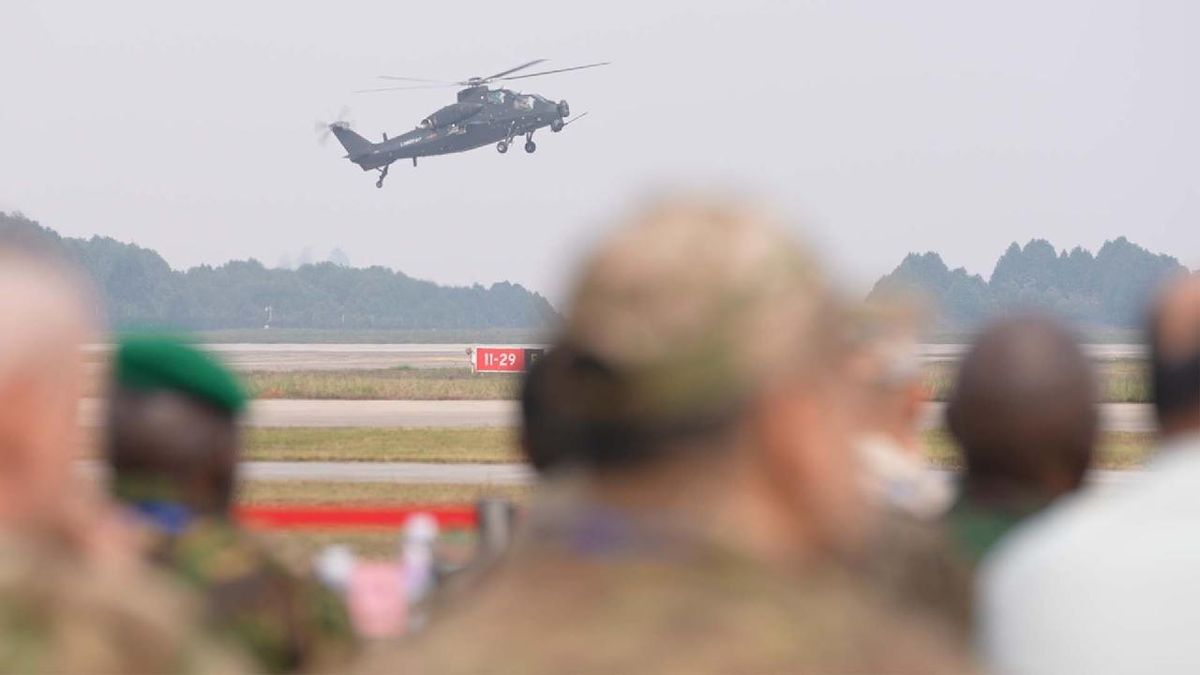
On Friday, the PLA Army Aviation Institute staged a high‑speed helicopter flight demonstration that drew military attachés from roughly fifty nations. Pilots executed tight turns, rapid ascents, and low‑level passes, prompting enthusiastic applause from the diplomatic corps. The event was billed as a showcase of China’s growing rotorcraft capabilities and an invitation for foreign observers to gauge the progress of the People’s Liberation Army (PLA) aviation branch.
China’s decision to open a military demonstration to an international audience is not merely a public‑relations stunt. First, it serves defense diplomacy: by allowing foreign officers to witness cutting‑edge tactics, Beijing signals that its air‑mobility forces are modern, professional, and ready to operate alongside—or against—global partners. Second, the display reinforces internal political narratives. The Chinese Communist Party (CCP) routinely uses military prowess to legitimize its rule, especially ahead of the upcoming Party congress where leadership continuity is debated. Third, the show feeds a competitive arms market. By flaunting advanced rotorcraft maneuvers, Chinese manufacturers hope to attract export contracts from nations that feel sidelined by Western suppliers. The presence of attachés from both NATO members and non‑aligned states creates a diplomatic balancing act, allowing Beijing to cultivate ties without overtly antagonising any single bloc.
While the sky filled with whirring rotors, the ground bore a different reality. The civilian communities surrounding the training base have endured years of noise pollution, restricted airspace, and occasional safety incidents during test flights. Construction workers who built the new hangars and simulation facilities often work under tight deadlines and limited safety oversight, leading to higher injury rates. Moreover, the rapid expansion of the aviation institute has siphoned local government funds away from public services such as schools and healthcare, leaving residents to shoulder the fiscal burden. Military families stationed at the base also face extended separations, as pilots are rotated through intensive training cycles that limit time at home. These sacrifices are rarely highlighted in official briefings, which focus instead on the technical brilliance of the display.
Official statements celebrate the show as a cost‑effective demonstration of capability, yet defense analysts note that the budget overruns associated with the new rotorcraft fleet have strained the PLA’s procurement plans. Funds diverted to acquire advanced helicopters mean fewer resources for other branches, potentially weakening overall readiness.
Neighbors such as India and Japan monitor the event closely, interpreting the display as a signal of China’s intent to project power in contested airspaces like the South China Sea. However, Chinese officials downplay any offensive connotation, framing the flight show as a routine training exercise. This framing obscures the strategic messaging aimed at deterring regional rivals.
State‑run outlets highlighted the foreign attachés’ praise, creating a narrative of international validation. Independent journalists and foreign correspondents, whose access is limited, report that the event was tightly scripted, with no room for observers to question safety protocols or ask about civilian impact. The omission of these angles shapes public perception both at home and abroad.
The next months will reveal whether the helicopter showcase translates into tangible policy shifts. Watch for future exercises that invite a broader set of foreign observers, especially from countries seeking to diversify their defense suppliers. Monitor procurement announcements from Chinese aerospace firms; a surge in export contracts would confirm the commercial motive behind the display. Finally, keep an eye on local protest activity or petitions from the civilian communities near the base, as mounting grievances could force the CCP to adjust its narrative or allocate resources to mitigate domestic discontent.
China used the event as defense diplomacy, showcasing its rotorcraft capabilities to build credibility, attract export customers, and signal military readiness to both allies and rivals.
Nearby civilians experience chronic noise, restricted airspace, and safety risks, while local budgets are redirected from public services to support the expanding aviation base.
Yes; neighboring states interpret the show as a signal of China’s growing air‑mobility power, potentially prompting them to adjust their own defense postures or seek counter‑balancing alliances.
Editor's Note: Analysis based on publicly available reports and expert assessments; some internal budget details remain unverified.
Source referenced: CGTN
This brief was synthesized by our Editorial Engine and reviewed by The Ground Narrative team.