TRENDING

Monday, 5 October 2026
----------------------
24 Rabi' Al-Thani 1448 AH
A rift within Asian football has escalated as Qatar challenges the Asian Football Confederation over its decision to join UEFA and CONCACAF in attacking FIFA President Gianni Infantino. The move exposes deep divisions within the AFC and highlights the complex power struggle within global football governance.
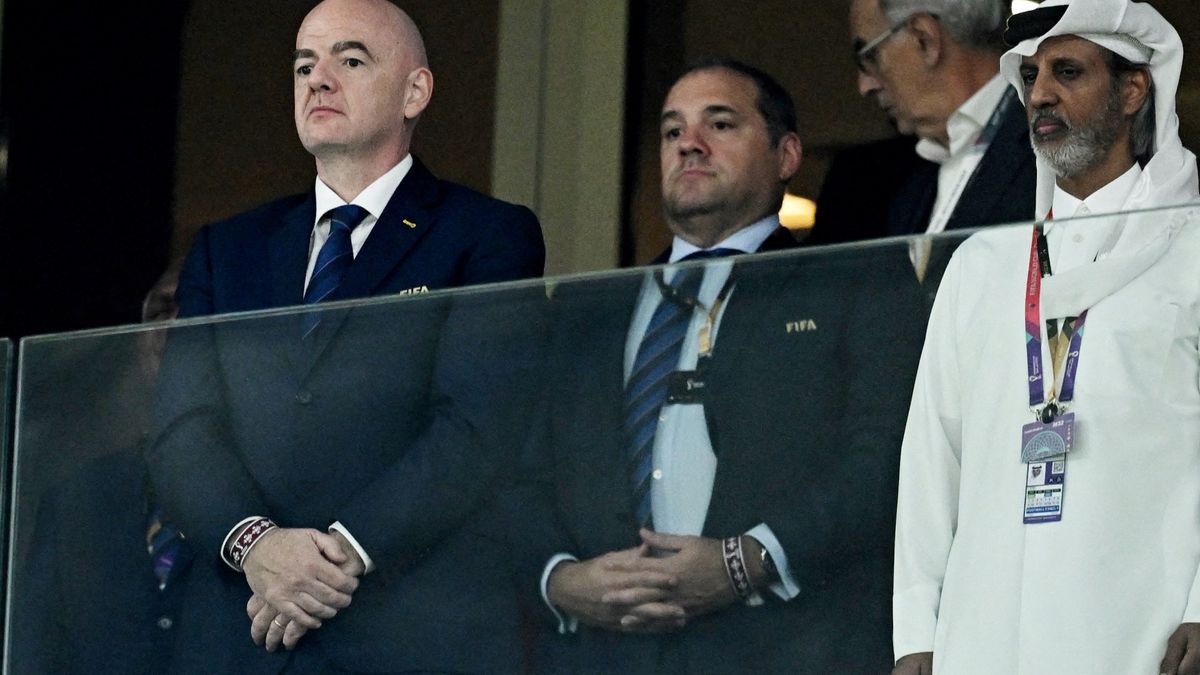
Qatar has challenged the Asian Football Confederation (AFC) over its decision to join UEFA and CONCACAF in issuing an open letter attacking FIFA President Gianni Infantino. The letter, signed by the presidents of the three confederations, called for Infantino's resignation amid controversy over his proposed private investment plan for FIFA competitions.
The intervention by Qatar's Football Association President, Hamad bin Khalifa Al-Thani, an AFC Executive Committee member and FIFA Council member, reveals the intricate web of alliances and interests within global football governance. Infantino's proposed plan to sell 20% of the World Cup's commercial rights to private investors sparked widespread criticism, leading to a U-turn. However, the backlash has also created an opportunity for various factions to assert their influence and shape the future of FIFA.
The power struggle within FIFA and the AFC has significant implications for the sport and its fans worldwide. The controversy surrounding Infantino's leadership and the proposed private investment plan has created uncertainty and instability, affecting the livelihoods of players, coaches, and staff involved in the sport. Moreover, the divisions within the AFC and FIFA may have long-term consequences for the development of football in Asia and beyond, potentially limiting access to resources, funding, and opportunities for emerging football nations.
The public statements and open letters exchanged between the various football confederations and FIFA officials only reveal part of the story. What is being downplayed or omitted is the extent of the lobbying and backroom dealings that are shaping the outcome of this power struggle. The fact that six heads of Arab national football associations, including Qatar and Morocco, have backed Infantino suggests that there are complex geopolitical and economic interests at play. The role of private investors and the potential for financial gain are also being understated, as the controversy surrounding Infantino's proposed plan has highlighted the lucrative nature of the football industry.
As the situation unfolds, readers should watch for further developments in the AFC and FIFA, particularly in the lead-up to Infantino's re-election bid next year. The response of other football confederations, such as CONMEBOL and CAF, will be crucial in determining the outcome of this power struggle. Additionally, the involvement of private investors and the potential for external influences to shape the future of football governance should be closely monitored. The fate of Infantino's leadership and the direction of FIFA will have significant implications for the sport, its fans, and the global football community as a whole.
Editor's Note: The analysis is based on publicly available information and may not reflect the full complexity of the situation.
Source referenced: ALJAZEERA
This brief was synthesized by our Editorial Engine and reviewed by The Ground Narrative team.


