TRENDING

Friday, 16 October 2026
----------------------
5 Jumada Al-Awwal 1448 AH
FIFA is considering expanding the men's World Cup to 64 teams for 2030, a move championed by some as a step towards global inclusivity but opposed by others who fear dilution of quality and logistical strain. This debate highlights a strategic struggle for power and influence within international football governance.
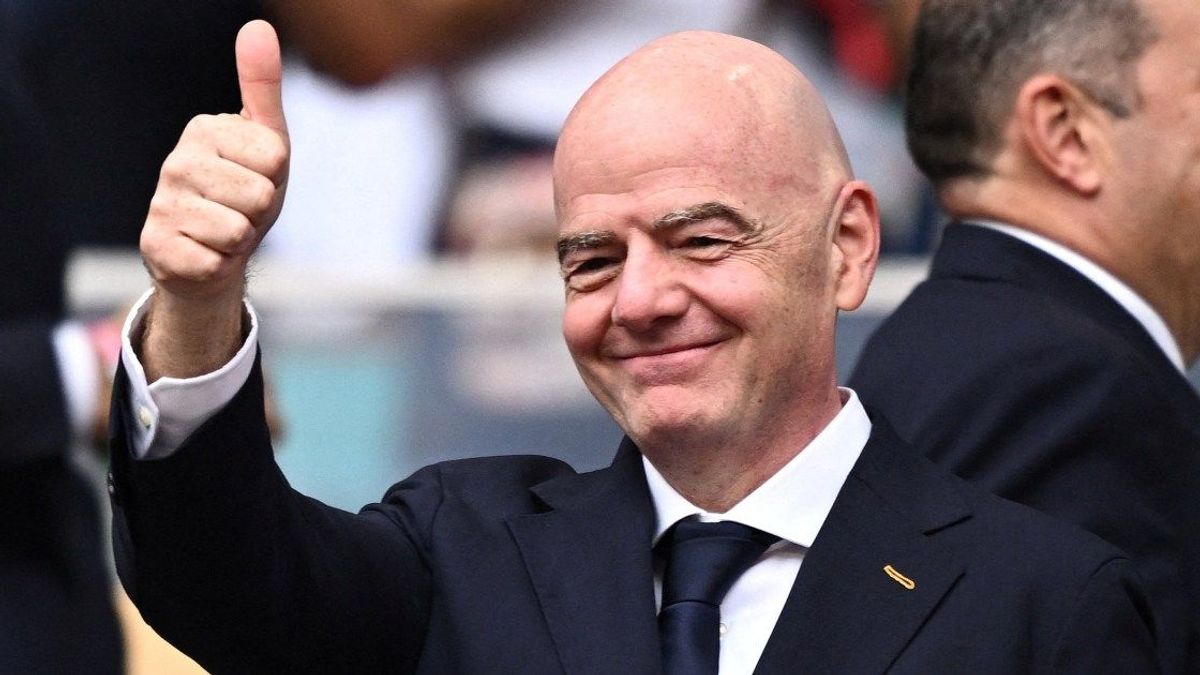
FIFA President Gianni Infantino has indicated that the possibility of expanding the men's World Cup to 64 teams for the 2030 tournament will be thoroughly examined by the organization's relevant committees. This consideration follows the successful implementation of a 48-team format for the 2026 World Cup, which Infantino lauded as a significant step towards globalizing football. The proposal, while seemingly a sporting matter, carries substantial geopolitical, economic, and diplomatic implications, reflecting a broader struggle for influence within the world's most popular sport.
The primary argument for expanding the World Cup, articulated by President Infantino, centers on inclusivity and the global development of football. He asserts that a larger tournament strengthens the sport worldwide by providing more nations with the opportunity to participate on the grandest stage. Citing the performance of smaller footballing nations in the 48-team format, Infantino emphasized that such opportunities serve as a crucial incentive for countries to invest in and improve their football programs. This perspective resonates particularly with federations outside the traditional European and South American powerhouses, offering them a greater chance at global recognition and the associated economic benefits.
The proposal has found its strongest backing in South America, specifically from CONMEBOL, the continent's football confederation. Championed by CONMEBOL President Alejandro Dominguez, the idea is framed as a fitting tribute to the World Cup's centenary in 2030, which marks 100 years since the inaugural tournament in Uruguay. For CONMEBOL, an expanded tournament would not only honor football's historical roots but also ensure a more inclusive celebration, aligning with the broader narrative of democratizing access to elite competition.
However, the proposed expansion has met with significant opposition, primarily from senior football officials in Europe (UEFA) and Asia (AFC). UEFA President Aleksander Ceferin has publicly called the 64-team proposal "a bad idea," expressing concerns about its negative impact on the World Cup's quality and the integrity of qualifying campaigns. Similarly, AFC President Sheikh Salman bin Ibrahim Al Khalifa has rejected the idea, warning that such continuous expansion could lead to "chaos" and an unsustainable model for the tournament.
This division highlights a fundamental geopolitical tension within FIFA. On one side are those advocating for broader representation and the potential for new markets, often from regions that have historically had less access to the World Cup. On the other are established footballing powers, particularly in Europe, who prioritize the competitive integrity, logistical manageability, and financial stability of the existing structure. Their concerns extend to the potential dilution of group stage competitiveness, the congestion of the international football calendar, and the increased burden on players, clubs, and host countries.
From an economic standpoint, an expanded tournament promises increased revenue streams through more matches (potentially 128 games for a 64-team format, compared to 104 for 48 teams and 64 for 32 teams). This could translate into higher broadcasting rights, sponsorship deals, and tourism revenue for host nations. However, these potential gains must be weighed against the substantial logistical and infrastructural challenges. A 64-team World Cup would demand significantly more stadiums, training facilities, accommodation, and transportation infrastructure, placing immense pressure on host nations. The 2030 World Cup is already set to be the most geographically widespread in history, with matches across six countries on three continents (Spain, Portugal, Morocco, plus centenary matches in Uruguay, Argentina, and Paraguay). Adding more teams would exacerbate these complexities, requiring unprecedented levels of coordination and investment.
Participation in the World Cup is a potent source of national prestige and soft power. For many nations, qualifying for the tournament is a moment of immense national pride, fostering unity and projecting a positive image on the global stage. Expanding the number of participants directly increases the number of countries that can harness this soft power, potentially shifting global perceptions and fostering diplomatic ties through shared sporting experiences. This aspect is a key driver for Infantino's vision of a truly global tournament, moving beyond the traditional dominance of a few footballing giants.
FIFA has not yet set a timeline for a decision on the 64-team proposal, which would ultimately require approval from the FIFA Council. The debate underscores the complex interplay of sporting ideals, economic realities, and geopolitical maneuvering within international sports governance. The outcome will not only shape the future format of the World Cup but also reflect the evolving balance of power and influence among the various regional confederations and their strategic priorities within the global football landscape. The decision will be a critical indicator of whether FIFA prioritizes further expansion and inclusivity or seeks to consolidate the tournament's competitive and logistical integrity. The ongoing discussions will undoubtedly continue to be a focal point for football federations and geopolitical observers alike.
Source referenced: ALJAZEERA
This brief was synthesized by our Editorial Engine and reviewed by The Ground Narrative team.