TRENDING

Sunday, 25 October 2026
----------------------
14 Jumada Al-Awwal 1448 AH
Massive wildfires are sweeping across France, Spain, and Scotland, forcing over 250,000 evacuations and prompting the deployment of military assets in an unprecedented display of climate-induced disaster. The crisis highlights Europe's growing vulnerability to extreme weather and the escalating demands on national emergency services.
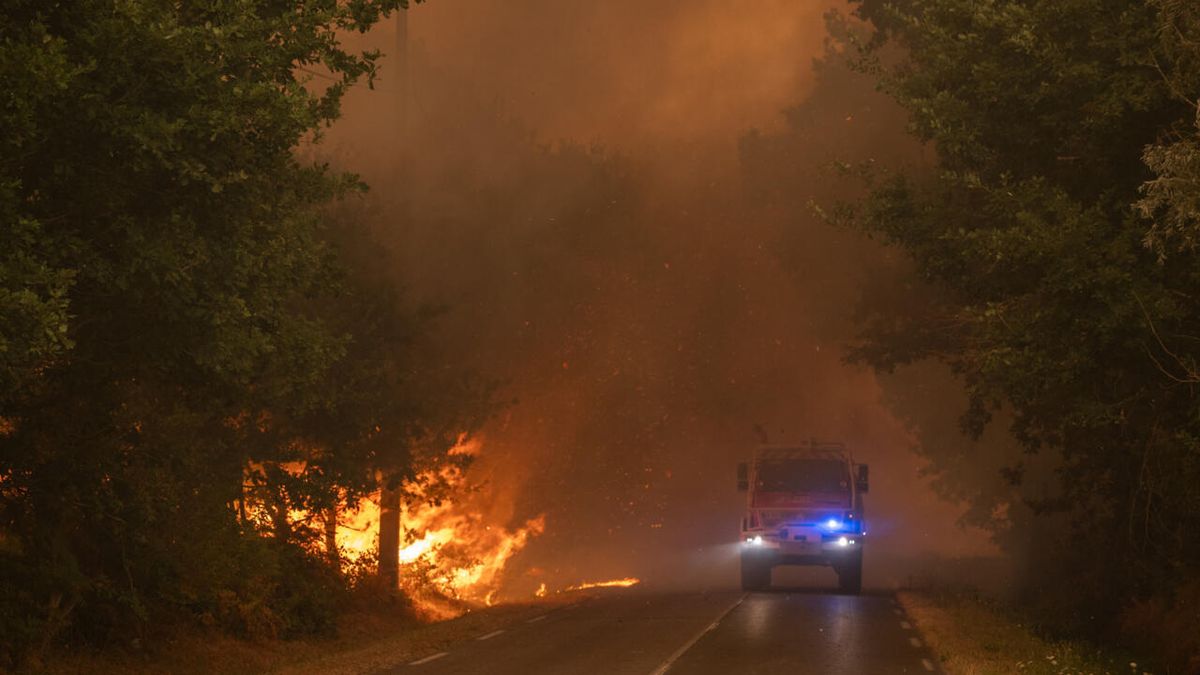
Europe is currently grappling with a series of unprecedented wildfires that have ravaged vast swathes of land across France, Spain, and Scotland. As of July 25, 2026, the scale of the disaster has necessitated the evacuation of over 250,000 people and the deployment of significant national resources, including military assets, underscoring the escalating impact of the climate crisis on regional stability and national resilience.
The most severe blazes are concentrated in southwestern France, particularly in the Gironde and Landes departments near Bordeaux, and in central Spain, affecting areas west of Madrid, including the Avila province. Additionally, Scotland's Cairngorms National Park has declared a "major incident" as a wildfire consumes hundreds of hectares. The French Interior Minister, Laurent Nunez, reported that nearly 98,000 hectares (242,000 acres) have been burned in France alone, a "historic record" nearly ten times the size of Paris, with many fires still uncontrolled. In Spain, fires near Madrid have consumed up to 25,000 hectares.
The immediate response to these catastrophic events has seen a robust mobilization of national resources. French Prime Minister Sébastien Lecornu ordered the deployment of an A400M military transport aircraft, equipped with a 20-tonne fire retardant dispensing kit, to aid firefighting efforts in the southwest. This move, initially scheduled for later in the month, highlights the critical urgency of the situation and the increasing reliance on military capabilities for civilian disaster relief. Similarly, Spanish Prime Minister Pedro Sanchez emphasized that saving lives was the top priority, as authorities continued to evacuate tens of thousands from villages near Madrid.
Hundreds of firefighters, including a contingent of 100 from Paris dispatched to the hard-hit Gironde region, are battling the blazes, often against challenging conditions. The "tinder-box dry conditions" and "extremely high winds" have been cited as primary factors fueling the rapid spread and intensity of the fires. While a temporary change in wind direction and a dip in temperatures offered some respite in Spain, officials warned of continued erratic winds, complicating containment efforts.
The widespread nature and intensity of these wildfires carry significant geopolitical and economic implications for Europe. Firstly, the sheer scale of the disaster places immense strain on national emergency services and public finances. The costs associated with firefighting, evacuations, and eventual reconstruction will be substantial, potentially diverting resources from other critical public services and economic initiatives. The destruction of vast natural landscapes also impacts biodiversity, agriculture, and tourism, with long-term economic consequences for affected regions.
Secondly, the crisis underscores Europe's collective vulnerability to the climate crisis. As climatologists like Jean-Pascal Van Ypersele have highlighted, these exceptional heatwaves and wildfires are directly linked to climate change. This shared challenge could foster greater European Union-level cooperation in disaster response, resource sharing, and the development of more robust climate adaptation strategies. However, it also exposes potential disparities in national preparedness and response capabilities, which could become a point of discussion within the bloc.
Thirdly, the deployment of military assets, such as France's A400M, for civilian disaster relief signals an evolving role for armed forces in an era of increasing climate-induced emergencies. This shift reflects a broader trend where national security considerations are expanding to include environmental threats, requiring militaries to adapt their training, equipment, and operational doctrines to support civil defense efforts.
The current wildfire crisis serves as a stark reminder of the urgent need for comprehensive climate action and enhanced disaster preparedness across Europe. The "historic record" nature of these fires suggests that such events may become more frequent and intense, demanding long-term strategies for forest management, urban planning in fire-prone areas, and investment in advanced firefighting technologies. The ability of European nations to effectively mitigate these threats, protect their populations, and rebuild resilient communities will be a defining challenge in the coming years, shaping both domestic policy and international cooperation on climate change. The events unfolding in France, Spain, and Scotland are not merely isolated incidents but a critical indicator of the profound and multifaceted impacts of a changing global climate.
Source referenced: FRANCE24
This brief was synthesized by our Editorial Engine and reviewed by The Ground Narrative team.