TRENDING

Friday, 13 November 2026
----------------------
3 Jumada Al-Thani 1448 AH
Slovakia's foreign minister met his Chinese counterpart in Beijing, signaling a renewed commitment to cooperation amidst a complex global landscape. This engagement highlights a smaller European nation's strategic pivot and its potential implications for broader EU unity.
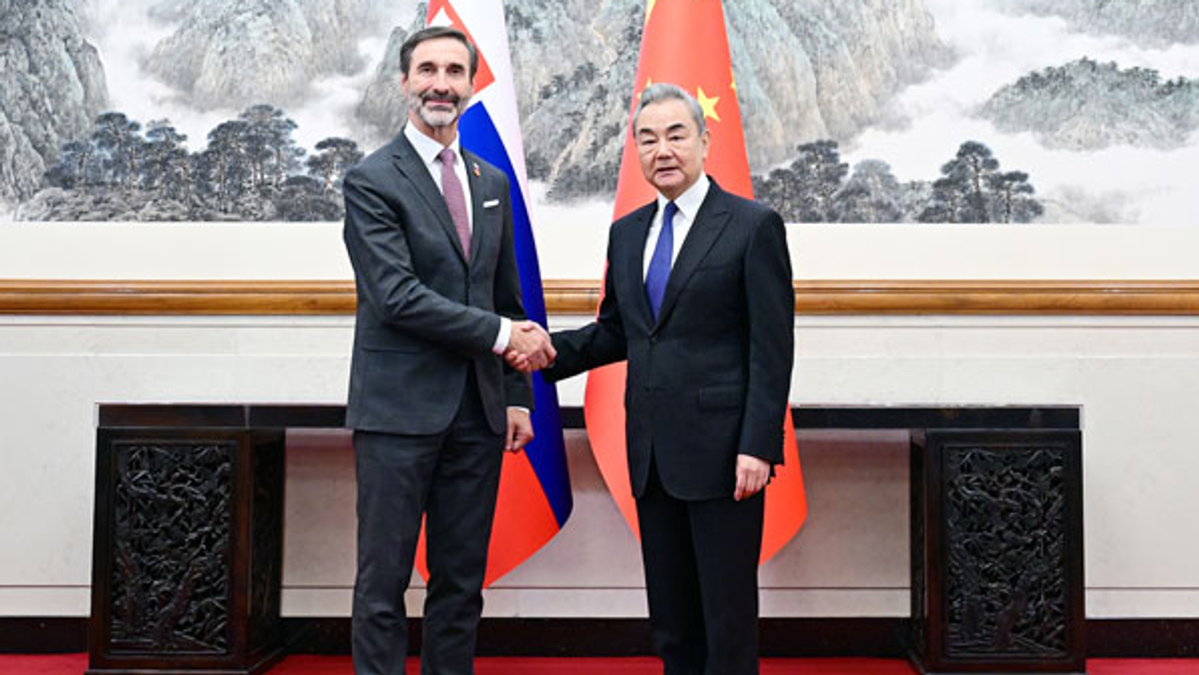
On November 10, 2026, Chinese Foreign Minister Wang Yi hosted his Slovak counterpart, Juraj Blanár, in Beijing. The high-level meeting saw both nations reaffirming a commitment to deepen their strategic partnership, consolidate political mutual trust, and expand cooperation across various sectors. Slovakia explicitly reiterated its adherence to the one-China policy, expressed opposition to protectionism, and pledged continued support for the China-Central and Eastern European Countries (CEEC) cooperation format, often referred to as the 16+1 initiative. The discussions also touched upon strengthening exchanges on party governance and state administration, alongside expanding trade, investment, artificial intelligence, science, education, and people-to-people ties.
This meeting is not merely a bilateral diplomatic exchange; it is a calculated maneuver within the larger chessboard of global power dynamics. For China, engaging with individual European Union (EU) member states like Slovakia serves multiple strategic objectives. First, it is a tactic to circumvent or dilute the EU's increasingly unified stance on
Source referenced: CGTN
This brief was synthesized by our Editorial Engine and reviewed by The Ground Narrative team.